

Quick answer: the best inflatable characters for Australian yards
An inflatable Santa Claus is the safest crowd-pleaser for a classic front lawn, an inflatable reindeer suits narrower verges and side paths, and an inflatable snowman shines near the door where its face is seen up close. Size to your space: roughly 4 to 5 feet for a porch or balcony, 6 to 8 feet for a standard lawn, 10 feet or more for acreage. Always anchor with stakes plus ballast, and deflate ahead of forecast storms. Our inflatable Christmas range covers all three.
Inflatable Santa Claus: the Classic Front-Yard Choice
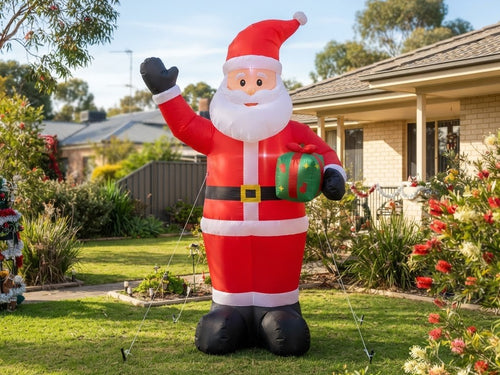
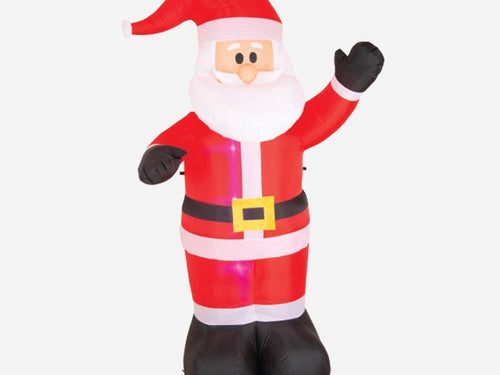
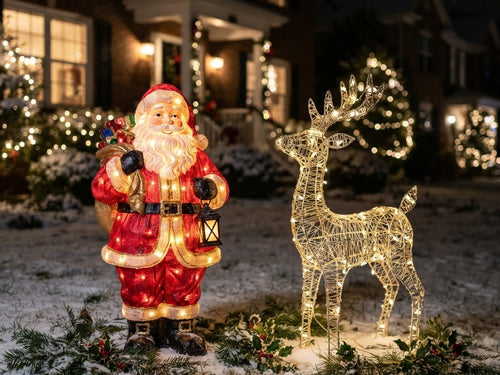
An inflatable Santa Claus is the character every passer-by recognises, and it carries the biggest style range. Santa and sleigh scenes pair him with reindeer in a single unit, which reads beautifully from the street and anchors the story of your whole display; our triple-reindeer version runs 3.6 metres. Novelty takes like musical selfie Santas and elves-in-tow builds keep things fresh for returning visitors. A single standing Santa works on lawns of any size, from a 1.2-metre entryway model to jumbo builds, and scene pieces like our 2.4-metre Santa and Snowman holiday arch turn a plain path into an entrance.
Lit designs glow from within after dark, so the display keeps working once the sun sets. Site a Santa scene where it is visible from the road without blocking your own driveway sight lines, then let the rest of the Christmas characters range build out around it.

Inflatable Reindeer: Lawn Rudolph and Party Games
The inflatable reindeer is the quiet workhorse of an outdoor display. A standing Rudolph gives a Santa scene something to point at, and small herds of two or three create a farmyard effect along a fence line. The giant inflatable reindeer is the showpiece of the family: at around six metres it becomes the landmark of a rural or acreage display, though it demands serious anchoring on windy sites.
Novelty ring-toss antler reindeer make a fun lawn game if you spot one you like, though our range focuses on the classic standing deer. Whatever the herd, reindeer pair naturally with Santas, snowmen and novelty friends. Our full inflatable collection pairs reindeer with Santas, snowmen and novelty friends.

Inflatable Snowman: Family Sets and Penguin Pairs
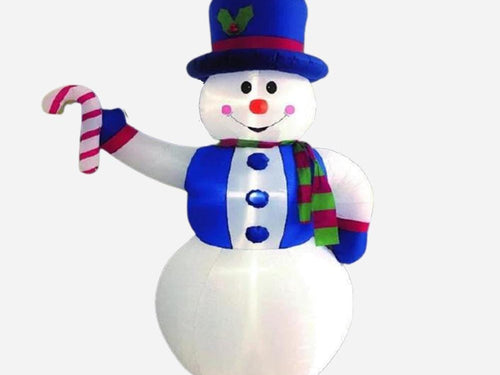
The inflatable snowman brings humour the other characters cannot match. The classic three-ball Frosty suits verandah steps and entry paths, where his face lands at eye level for arriving guests. Snowman family sets string parents and kids into a single 1.75-metre unit, and penguin characters pair perfectly alongside for a North Pole scene.
Because snowmen are round rather than tall, they suit spots where a big Santa would feel crowded: between garden beds, under eaves or on a porch corner. Browse the inflatable snowman range from small indoor greeters to front-lawn statements.
Beyond the Big Three: Trees, Arches, Baubles and Novelties
Santa, reindeer and snowmen dominate the searches, but the category stretches wider. An inflatable Christmas tree arch frames a garden path with height but no character face, candy castle props add colour pops on the lawn, and novelty characters from dinosaurs to musical elves let a display grow its own personality. For layouts using several characters together, our front-yard inflatable display guide maps zones and power runs, and our large Christmas displays range covers the oversized showpieces.

What Size Inflatable Should You Choose?
Size is the biggest decision: an inflatable that reads small from the street feels wasted, while one too big crowds the yard. Match the height to where it will be seen from, not to the size of the box.
Whatever the size, keep any inflatable clear of paths, driveways and letterbox sight lines so nothing blocks pedestrians or blinds you reversing out.
How to Anchor an Inflatable So It Does Not Blow Away
Anchoring is where Australian displays are won or lost. Storm fronts can arrive between Christmas and New Year, and official severe weather advice is to pack away loose outdoor items when damaging winds are forecast. Anchor every inflatable properly from day one:
- Site it with shelter in mind. A position behind a hedge, fence or house wall that blocks the prevailing wind reduces the load on your anchors dramatically.
- Drive the ground stakes first. Use every stake supplied, driven at an angle against the pull direction in firm soil. In sandy soil, cross two stakes per point.
- Add ballast to the base. A sandbag or two on the sewn-in base loops stops the rocking motion that works stakes loose overnight.
- Tether tall units at two heights. One low point plus one near the top stops giants leaning and rubbing on the ground.
- Deflate before severe storms. Two minutes of packing beats a shredded display; reinflate once the front has passed.
Power, Safety and Running Costs
Every outdoor inflatable runs on a continuously humming low-voltage blower, so electrical safety matters more than with any other decoration. Outdoor-rated units are typically IP44 under the AS/NZS 60529 framework, protected against water splashed from any direction, and plug-in equipment sold in Australia must carry the Regulatory Compliance Mark (RCM). Run the unit from an RCD-protected outdoor power point with an outdoor-rated extension lead, keep the plug pack elevated and dry, and never join leads mid-lawn where they can sit in a puddle.
Running costs are modest. As an estimate: a typical blower draws around 60 watts, and 6 hours a night for a 45-evening season is 270 hours, so 60W x 270h = 16.2kWh. At around $0.35 per kWh that is roughly $5.70 for the whole season. Manufacturer specs run from roughly 30W to 90W, so treat dollar figures as estimates; the full method is in our Christmas lights running costs guide.
Indoor, Balcony and Strata Displays
Indoor-rated units inside are safe: low-voltage blower and cool-touch lighting, just allow clearance from doorways and heaters. Balconies need more care: keep the inflatable fully inside the railing so it cannot overhang common property or the street, tie it down firmly, and consider a compact 4 to 5 foot size so a gust cannot catch it like a sail. In a strata scheme, by-laws can restrict changes to the appearance of your lot including balconies, so a quick note to the committee before buying beats a takedown notice after. Sizes for both settings sit in our outdoor Christmas displays range.
Setup Timing, Care and Storage
Lay out the full plan before staking anything into the lawn, including leads and inflation order. Most front-yard displays go up in the first weeks of November and come down by the first week of January. With care, a good inflatable lasts many seasons.
- Unroll, do not unfold. Creases from tight storage relax within a day or two of inflating.
- Deflate in high winds. A running blower fights the wind; a deflated unit lying flat shrugs it off.
- Dry completely before storing. Pack it away only after the dew dries, or mould starts in the box.
- Patch small tears early. A two-centimetre tear becomes seam failure if ignored; most units ship with a repair patch.
Inflatables ship on our flat-rate Australia-wide freight with orders over $199 shipping free, as the shipping policy on each product page spells out. More ideas sit in our Australian front-yard decorations guide and the wider Christmas decorations range, and our complete Christmas decor guide covers the rest of the display.
Pick Your Characters Early
Santas, reindeer and snowmen sell out fast once displays go up in November. Lock in your cast now and the front yard is done in one order.
Free shipping over $199, Australia wideFrequently Asked Questions — Inflatable Christmas Characters
How do I stop my inflatable blowing away?
Use every ground stake supplied, driven at an angle against the pull, add a sandbag on the base loops for ballast, and tether tall units at a second high point. Site the unit behind a windbreak such as a hedge or fence, and deflate or bring it inside when damaging winds or storms are forecast, as severe weather authorities advise for loose outdoor items.
Can inflatable Christmas decorations get wet?
Light rain is fine for outdoor-rated units, which are typically IP44 rated against splashing water. Heavy storms are not: wind and water together load the seams hard. Always dry the unit completely before storing so mould cannot start, and keep the plug pack off the ground in a dry spot.
Can I use a Christmas inflatable indoors?
Yes. Indoor-rated units use low-voltage blowers that are safe inside, and many smaller characters are sold as indoor greeters. Give the unit clearance from doorways, walkways and heaters. Indoor versions usually skip the weather proofing of outdoor models, so keep them inside.
How much does it cost to run an inflatable?
As an estimate, a typical 60W blower running 6 hours a night for 45 evenings uses about 16.2kWh (0.06kW x 270h), which at around $0.35 per kWh is roughly $5.70 for the entire season. Specs vary from roughly 30W to 90W between models, so scale from there.
What size inflatable should I buy?
Roughly 4 to 5 feet for porches, balconies and indoor corners, 6 to 8 feet for a standard front lawn, and 10-foot or giant 20-foot units for acreage or standout corner blocks. Match the height to the viewing distance: the further the audience, the taller the inflatable needs to be.
Why does my inflatable keep deflating or leaning?
Check that the blower intake is clear and the zip is fully closed. Leaning almost always means one anchor has slack, so re-stake and add a second tether. Slight softening on cold nights is normal because the fabric stiffens, and small tears should be patched immediately with the supplied kit.
When should I put inflatables up and take them down?
Set up from early November once spring storms ease, and take the display down by the first week of January. Deflating each night in exposed spots extends fabric and motor life, and store the unit fully dry in its box away from summer shed heat.
Are inflatables safe around kids and pets?
Yes, with basics observed: blowers are low voltage and internal LEDs run cool. Keep leads tidy and off walkways, connect through an RCD-protected outlet with outdoor-rated leads outside, and supervise toddlers near tethers and stakes so nothing tips or trips.