

Quick answer: what makes a great Australian front yard Christmas display?
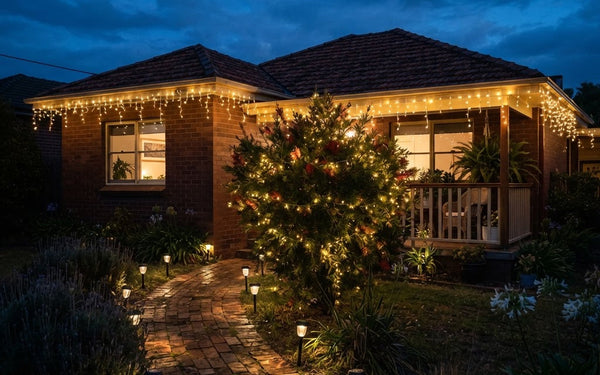
A standout Australian front yard display works five zones in harmony: front door, roofline, windows, fence and garden. Because our Christmas falls in 30–40°C heat with harsh UV and sudden summer storms, every piece needs to be genuinely weatherproof: IP44-rated as a minimum for sheltered spots, IP65 or better for exposed lawns and rooflines, with UV-stabilised materials that will not crack or fade in a fortnight of full sun. Solar stake lights and motifs thrive almost anywhere in Australia, while low-voltage mains sets anchored to the roofline give the consistent brightness that makes the whole street stop and stare.
The five front yard zones (and what to dress each one with)
Christmas World recommends planning your display zone by zone before you buy a single decoration. It keeps the look cohesive and stops the classic mistake: a spectacular roofline with a bare, forgotten garden below it.
Zone 1: Front door and porch decorations
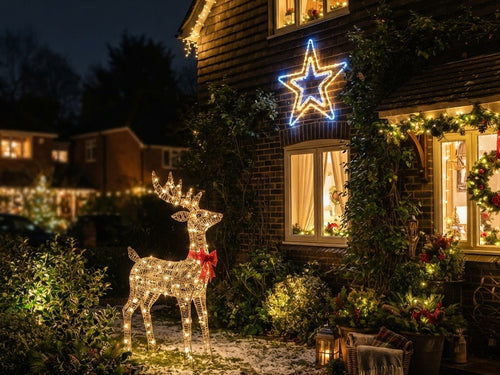
Your front door is the handshake of the whole display, so start here. A UV-stable Christmas wreath on the door paired with a pre-lit garland around the frame instantly reads as "Christmas" from the street. For verandah posts and steps, LED lanterns or a pair of small, flocked accent trees add height without clutter. Mount with over-door hangers or heavy-duty outdoor adhesive hooks rather than nails, especially on rendered brick or security screens.

Zone 2: Roofline and gutters
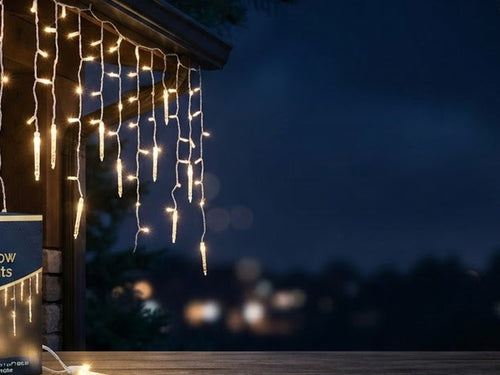
The roofline delivers the biggest visual payoff after dark. Icicle lights draped along the eaves trace the silhouette of the house, while string lights work for straight runs along gutters and gables. On Colorbond and tiled roofs, use plastic gutter clips rather than staples or nails, which rust, pierce the sheeting and void warranties. Run transformer leads down a downpipe so cabling stays neat and clear of rain runoff.

Zone 3: Windows
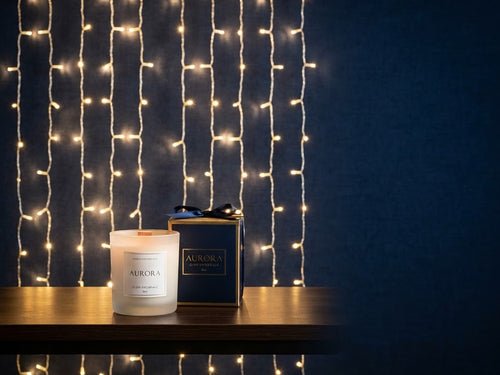
Windows bridge the gap between your roofline lights and ground-level displays. Curtain lights hung inside the glass create a waterfall effect that glows outwards, or use outdoor-rated silhouettes on sills facing the street. Stick to low-voltage, cool-touch LED sets behind glass: enclosed sills can trap serious heat in an Australian December afternoon.
Zone 4: Fence and front boundary
A dressed boundary line pulls the display together at street level. Wrap solar rope lights along the top rail, drape net lights over a front hedge, or zig-zag solar string lights between pickets. Fasten everything with UV-rated zip ties, and keep strands clear of footpaths so nothing dangles where pedestrians walk past.
Zone 5: Garden beds, pathways and lawn
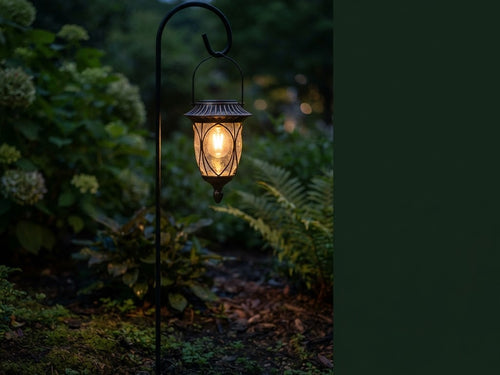
This is where solar light displays come into their own: candy-cane stakes, pathway lights and illuminated mini trees guiding visitors from the letterbox to the door. Deeper in the garden, freestanding 2D and 3D motifs and characters act as lawn centrepieces. Group pieces into vignettes rather than scattering them randomly: a cluster of three around a tree reads far better than five lonely items spread thin.

Weatherproof outdoor Christmas decorations: IP ratings and UV durability
"Weatherproof" is not marketing fluff in Australia; it is the difference between a display that lasts the season and one that dies in the first storm. Every decoration worth buying carries an IP (Ingress Protection) rating. The first digit measures dust protection, the second water protection. Treat IP44 as the minimum for covered porches and verandahs, and IP65 or higher for anything exposed to rain, sprinklers and roofline runoff. Indoor-rated decorations used outdoors will fail fast: cheap PVC wiring cracks under UV, and unsealed connections corrode in our summer humidity.
For longevity, look for UV-stabilised resin foliage, shatterproof LED bulbs and heavy-duty rubber cables. Christmas World recommends checking the sun exposure of each spot before you buy: dark-coloured plastics on a north-facing wall will fade within weeks unless they are UV-rated, and fabric motifs benefit from a clear UV-protectant spray before their first summer out.
Solar outdoor Christmas decorations vs mains-powered lights
Australia's December daylight is a genuine superpower: long clear days mean solar decorations charge fully and run late into the night at zero running cost. Point panels north, keep them out of shade cast by eaves and trees, and choose sets with lithium batteries and dusk-to-dawn sensors so overcast storm days do not leave you dark.
Mains power still wins where you need consistent, high brightness: large roofline runs, multi-function light patterns and big statement motifs. Modern low-voltage systems (24V or 36V transformers) are extra-safe for residential use, provided the transformer stays indoors or inside a weatherproof enclosure.
Front yard layout and design ideas by yard size
Small courtyard or townhouse entry? Decorate vertically: wrap verandah posts, frame the door and hang porch ornaments, keeping to a tight two-colour scheme like warm white and gold so the space feels styled rather than stuffed.
On a larger block, build the display in three tiers: background (roofline and tree wraps), mid-ground (lawn figures and motifs) and foreground (pathway stakes). That layering gives depth from the street, and a single strong focal point, like a glowing reindeer family, stops a wide lawn from looking sparse.
Staging large outdoor Christmas decorations and statement pieces
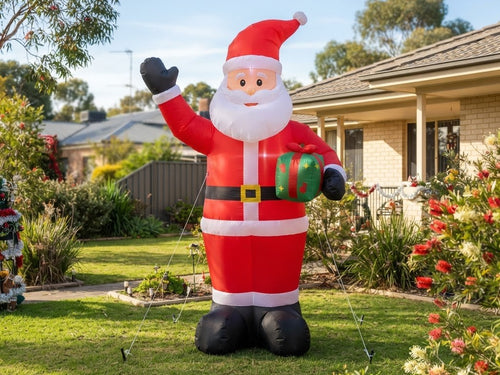
Inflatables and large motifs are the showpieces, but they are also the pieces summer storms love to relocate. Anchor inflatables with heavy-duty spiral ground pegs plus internal sandbags, and site them in sheltered spots away from sharp stakes and thorny plants. Wireframe reindeer, sleighs and stars should get multi-directional tie-downs and grouped placement: three figures around a tree beat three scattered across the lawn. When a severe weather warning lands, deflate and unplug as part of your storm prep.
Electrical safety, standards and storm preparation
- Only buy outdoor lighting with the RCM regulatory mark, and plug every outdoor set into an RCD-protected (safety switch) power point.
- House transformers indoors or in a weatherproof enclosure; keep plugs off the ground and out of pooling water.
- Keep high decorations clear of overhead service wires and tree branches, and run cables over walkways or under heavy-duty cord covers.
- Unplug everything and deflate inflatables ahead of forecast severe storms.
For a deeper dive into gutter mounting and cable routing, our roofline attachment guide covers Colorbond and tile roofs step by step.
Your outdoor decoration buying checklist
- Measure the roofline, gutter lengths and door frame before shopping so you buy the right run lengths first time.
- Locate outdoor power points and map which zones can run solar instead.
- Verify IP ratings: IP44 minimum for sheltered spots, IP65 for exposed positions.
- Confirm the RCM mark on all transformers and light sets.
- Stock mounting hardware: gutter clips, UV zip ties, outdoor hooks and lawn pegs.
Ready to dress your front yard?
Explore our full range of weatherproof outdoor Christmas decorations, from solar displays to icicle lights built for Australian summers.
Frequently Asked Questions — Outdoor Christmas Decorations
What are the best outdoor Christmas decorations for Australian weather?
The best outdoor Christmas decorations for Australian conditions carry an IP44 rating minimum for sheltered verandahs and IP65 or higher for exposed lawns and rooflines. Look for UV-stabilised resin foliage, rubber-cabled LED light strings, and solar-powered stakes with lithium batteries. Christmas World stocks all of these specifically rated for Australian summer heat, UV and sudden storms.
How do I weatherproof outdoor Christmas decorations for summer?
Weatherproofing starts with buying the right IP rating: IP44 for covered areas, IP65 for anything exposed to rain. Keep mains transformers indoors or in a weatherproof enclosure, use UV-rated zip ties instead of cheap plastic clips that go brittle in sun, and apply a clear UV-protectant spray to fabric motifs before they go outside. Never use indoor-rated decorations outdoors in Australia.
Can solar outdoor Christmas decorations handle Australian rain?
Yes, quality solar Christmas decorations rated IP65 or higher are designed to handle Australian rain and storms. The solar panel, battery housing and LED units are sealed against water ingress. Point panels north for maximum December charging, and choose sets with lithium batteries that store enough charge for overcast days. Avoid budget solar sets with unsealed battery compartments.
What large outdoor Christmas decorations work best in Australia?
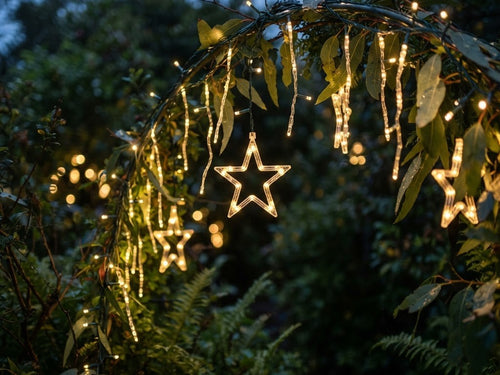
Large outdoor Christmas decorations that perform well in Australia include inflatables anchored with spiral ground pegs and sandbags, 3D wireframe reindeer and sleigh motifs with multi-directional tie-downs, and large acrylic star silhouettes mounted to fences or walls. Christmas World recommends choosing IP65-rated pieces and grouping them into vignettes around a focal point rather than scattering singles across a wide lawn.
How do I decorate my front yard for Christmas on a budget?
Start with solar stake lights along your pathway and a single wreath on the front door, the two highest-impact, lowest-cost additions. Wrap solar string lights along an existing fence or hedge, and add one statement piece like an inflatable or motif. Solar decorations cost nothing to run, so the bulk of your budget goes on visible impact pieces rather than electricity.
What are some outdoor Christmas decoration ideas for small front yards?
For small front yards and townhouse entries, decorate vertically: wrap verandah posts with string lights, hang a wreath on the door, and frame the entrance with a pre-lit garland. Keep to a tight two-colour scheme like warm white and gold so the space reads as styled, not cluttered. A few solar path stakes leading to the door add ground-level glow without eating precious lawn space.
Can I leave outdoor Christmas lights out in the rain?
Yes, if they are rated IP65 or higher. Outdoor LED Christmas lights with rubber cables and sealed connections are built for rain. The risk is not the lights themselves but the transformer and plug connection: keep transformers indoors or in a weatherproof box, elevate plugs off the ground, and unplug everything during severe storm warnings. IP44 lights are fine under covered verandahs but not in direct rain.
How do I stop Christmas inflatables from blowing away in summer storms?
Anchor inflatables with heavy-duty spiral ground pegs driven at an angle, plus internal sandbags for added ballast. Position them in sheltered spots away from prevailing wind, and deflate them when severe weather is forecast. Check tie-downs weekly through December, as summer storms can loosen stakes and shift lightweight pieces across the lawn.