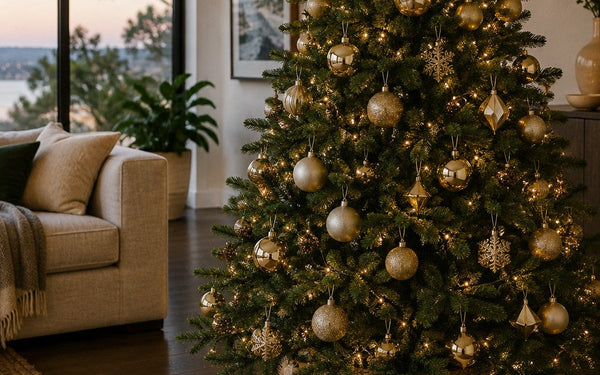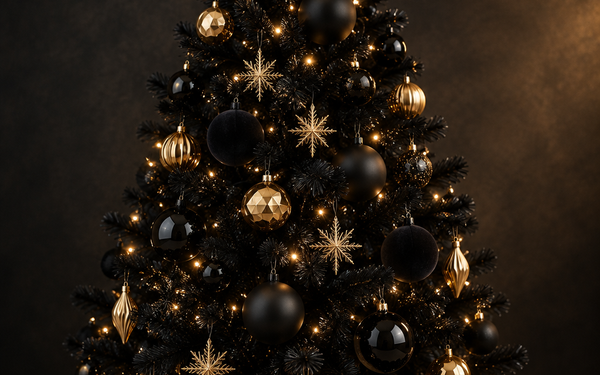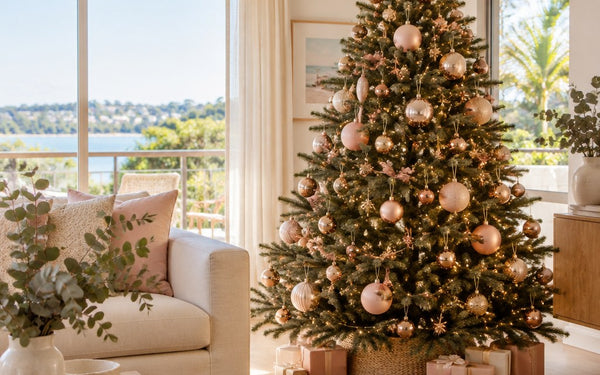


Quick answer: build the scheme around the tree, not against it
Green is the colour Christmas actually grows from, which makes it the easiest shade to build a scheme around. Anchor on the tree: most artificial trees carry a deep fir-green finish, and a 6ft tree wants roughly 600–900 fairy-light bulbs at the classic density of 100–150 bulbs per foot of height. Layer in emerald and sage baubles, then green tinsel — at roughly 590 Australian searches a month, it is the country’s single biggest green decoration search. Lift the lot with gold or white accents and mix matte and glossy textures.
Why Green Works at Christmas
Every plastic bauble traces back to something that grows. Fir, pine, spruce, holly, mistletoe — the plants Europeans brought indoors in midwinter were all green, and the colour outlived the foliage. That is why a green scheme never reads as a novelty the way pink or black can: it reads as Christmas with the dial turned up. Green is also the most forgiving festive shade in an Australian summer house. It sits comfortably against timber floors, linen sofas and the eucalyptus outside the window, and it does not fight the hot afternoon light the way deep red does in a bright room.
It is also practical. If you buy a green garland one year, green ribbon the next and a sage table runner the year after, nothing retires. A green scheme collects rather than resets, which matters when you are storing decorations through a Sydney January rather than a northern winter. Christmas World’s Natural & Green Christmas range is built exactly for that: pieces that keep working as the rest of the scheme changes around them.
The Shades of Green That Work
“Green” is a family, not a shade, and the fastest way to a flat-looking tree is buying every decoration in the same one. Work with three or four of the shades below and the scheme gains depth for free.
Start by matching the green to your tree. Deep fir-green decorations disappear against a deep tree, so the tree’s green sets your darkest shade and everything lighter builds from there. If your tree is a bright kelly green, lean on emerald and dark tones in the decorations instead.

A good working ratio is rough but reliable: about half your decorations in the tree’s own green family, a third in one lift colour such as gold or white, and the rest in texture — frosted, glittered, woven or wooden. More on ratios in our guide to choosing a Christmas colour palette.
Choosing a Green Christmas Tree
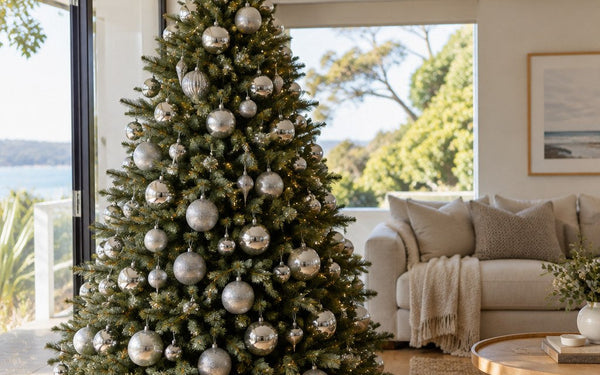
Almost every artificial tree is a green tree; what varies is the green. The realistic ones sit at the dark end — a fir or bottle green with slightly matte, slightly varied needles — while cheaper brightness tends to read as a single flat kelly green under lights. If realism is the goal, dark and varied wins. If the tree is deliberately a style statement, brighter greens work so long as the decorations keep up: emerald and sage baubles pop against a kelly tree, whereas they can drown against dark foliage.
Green also plays well with the specialty finishes. A flocked or snowed tree is still green underneath, and a green base makes the heavy-lift decisions easier at the decoration stage — our guide to white and styled trees covers when to break from green entirely. Browse the full range, from dark firs to slim trees for apartments, in our Christmas trees collection.
How Many Lights a Green Tree Needs
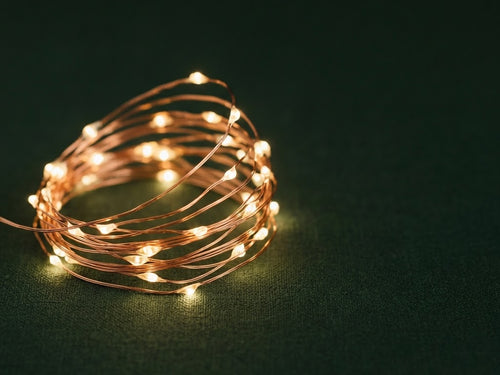
Green foliage swallows light, so a green tree takes proper counts rather than a polite sprinkle. The classic density is 100–150 bulbs per foot of tree height: around 600–900 bulbs on a 6ft tree, 700–1,050 on a 7ft. For a rich, dense look push toward 150–200 per foot — roughly 1,200 on a 6ft — and cluster lights need only about half the classic bulb count for the same glow, since their grouped bulbs read far brighter. The full working-out, including the spiral and vertical wrapping methods, is in our Australian light-count formulas.
Warm white LEDs flatter green foliage more than cool white, which can make dark needles look grey at night. If the scheme is red and green, warm white through the tree with a single cool accent on the topper reads sharp without clashing.
Decorating with Green Baubles and Ornaments
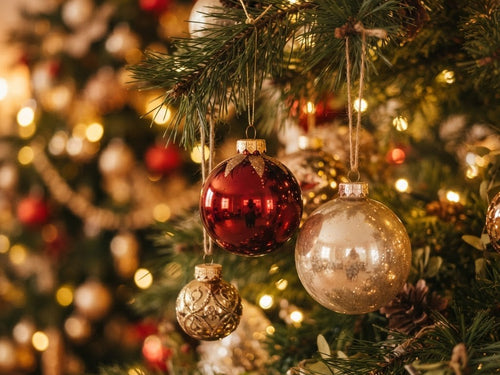
The rule that saves most green trees: vary the finish. Shiny emerald baubles throw light at night and look electric after dark, but by daylight they can look like one flat sheet. Matte sage and frosted greens carry a tree in the day, and shatterproof styles are also the sensible pick for Australian homes — timber floors and summer parties mean a glass bauble at shin height eventually loses. A mix of baubles across all three finishes, roughly a third each, gives the scheme round-the-clock depth.

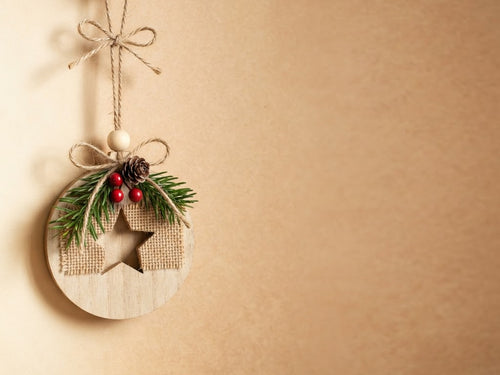
Ornaments are where green earns its keep. Green Christmas ornaments in wood, felt and woven fibres slow the scheme down and stop it feeling like a bottle-green wall. On the tree, place green pieces toward the branch tips on dark foliage so they are seen at all, and hang the best emerald pieces at eye height where the sightline lands.
Green Tinsel, Garlands and Wreaths
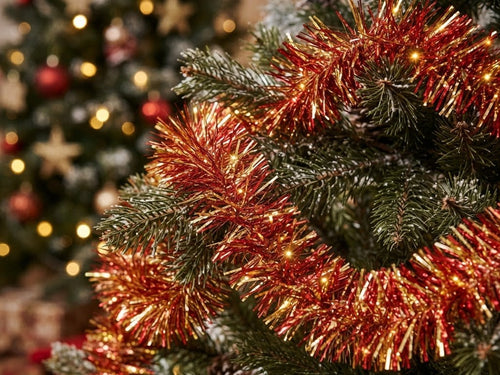
Green tinsel deserves more credit than it gets — it is, by our keyword research, the biggest single green decoration search in Australia at roughly 590 searches a month, ahead of green baubles and green decorations themselves. Thrown in wide bands from the trunk outward it reads as foliage filler; the reason it went out of fashion, thin strings draped over branch tips like tinsel garlands, had nothing to do with the colour. Our tinsel styling guide covers the modern wrap; green tinsel sits in the tinsel collection alongside the metallic shades.
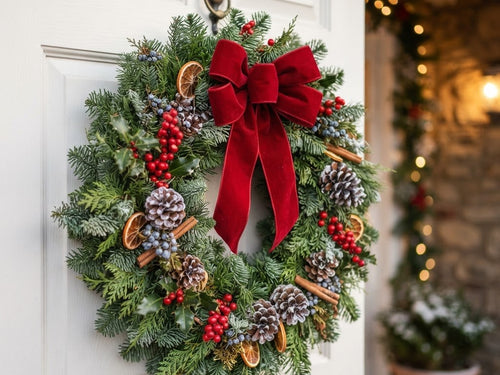
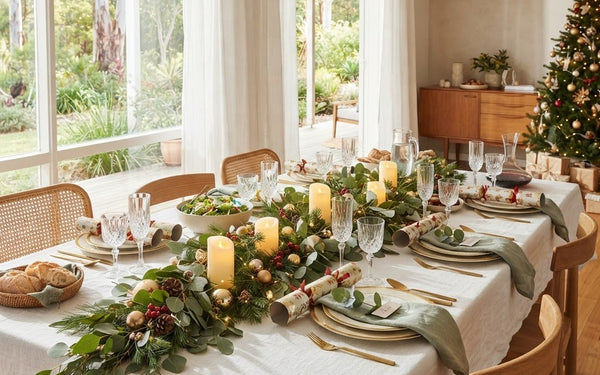
Out from the tree, green is strongest where it can be framed. A plain bottle-green wreath on a white or dark door needs nothing else, and green wreaths and garlands hold their own on balconies where red can bleat in the sun. Drape a garland along a stair rail or mantel the way you would a throw, and tuck baubles into it after it is laid, never before.

Colour Pairings for a Green Christmas
Green is the workhorse of festive palettes because almost every classic Christmas combination has green in it. The three that hold up best in Australian homes:
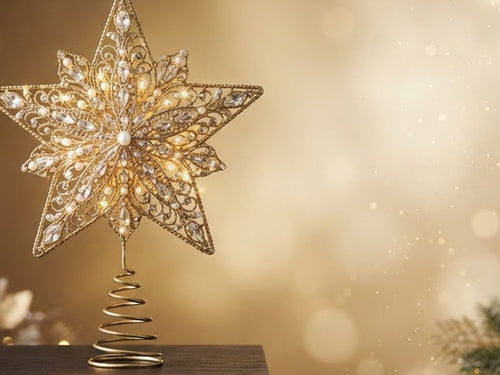
- Green and gold. The safest upgrade: emerald baubles with gold ribbon and a gold tree topper. Warm, and generous without shouting.
- Green and red. The traditional pairing still sells hard most Decembers, and structure is what keeps it from looking like a fire sale: deep bottle green and cherry red, not bright on bright. Our Red & Green Christmas range is that palette, pre-matched.
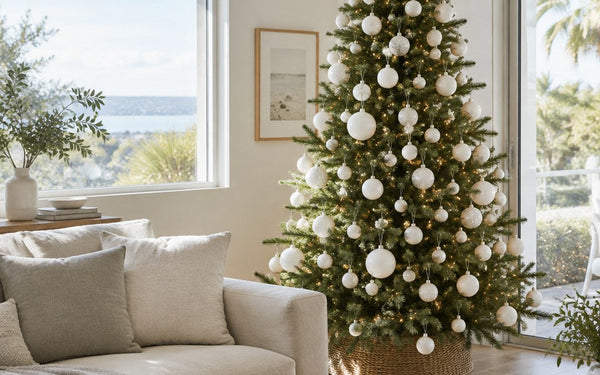
- Green and white. The modern Australian take: sage and fir against white walls, linen and pale timber. Reads coastal rather than traditional, and survives bright daylight far better than any dark-heavy scheme.
Whichever way you lean, keep green as the spine and let the pairing shade colour shift from year to year. Even the tree’s lights — warm white LED fairy lights through the branches — are technically part of the green scheme, because at night the glow sits on green needles.
Build Your Green Scheme
Shop the pieces that hold a green Christmas together — from deep-green trees and garlands to emerald and sage baubles.
Free shipping over $199, Australia wideFrequently Asked Questions — Green Christmas Decorations
What shade of green is best for Christmas decorations?
Work with your tree’s own green as the darkest shade, then add two lighter tones — typically emerald for richness and sage for softness. The mistake is buying every decoration in one green, which flattens the tree. A rough working ratio is half decorations in the tree’s green family, a third in a lift colour like gold or white, and the rest in varied textures.
Is green tinsel popular in Australia?
Yes — more than most people expect. Our keyword research puts green tinsel at roughly 590 Australian searches a month, more than any other single green decoration term. It has quietly become the biggest green search in the category, despite its old-fashioned reputation.
How do I decorate a green tree so it doesn’t look flat?
Mix finishes. Roughly one third of the decorations should be matte or frosted green to carry the tree in daylight, one third glossy emerald for sparkle after dark, and one third a lift colour. Place green decorations near the branch tips on dark foliage so they are visible instead of vanishing into the needles.
What colours go best with green at Christmas?
Gold is the most reliable partner, white gives a modern coastal feel in bright Australian homes, and red is the traditional pairing when both shades are kept deep. Silver suits emerald particularly well if the room is already cool-toned.
Are artificial Christmas trees green, or do they come in other shades?
Most artificial trees are a shade of green, but the green varies a lot — from realistic dark fir tones to brighter kelly greens. White, flocked and black trees are the common exceptions. A dark, varied green reads most realistic under lights.
How many lights does a green Christmas tree need?
At the classic density of 100–150 bulbs per foot of tree height, a 6ft green tree takes around 600–900 bulbs and a 7ft tree 700–1,050. For a denser look, push toward 150–200 bulbs per foot. Cluster lights need only about half that count for the same brightness.
Does green Christmas decorating suit outdoor displays?
Green is the most forgiving outdoor shade because it blends with real foliage rather than fighting it. A plain green wreath or garland suits doors and balconies well; pair festive lights separately so the green is visible at night.
Is a green Christmas scheme budget-friendly compared with other palettes?
It is one of the better ones, because green accumulates. Pieces in the tree’s own green family keep matching additions from any year, so a scheme builds over seasons instead of restarting. Gold accents redress older green decorations cheaply when the scheme needs a lift.