


Australian Christmas Traditions Guide | Christmas World
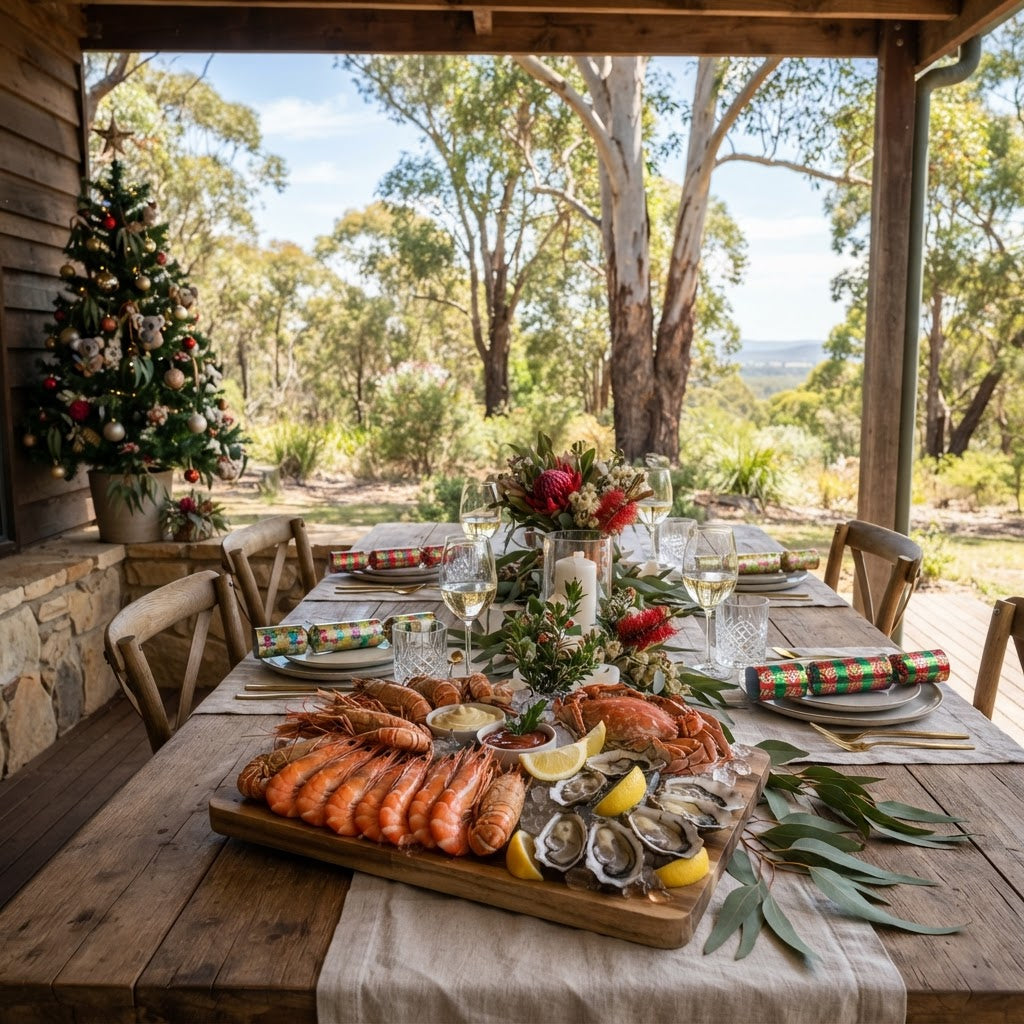
Quick answer: An Australian Christmas is its own tradition: a mid-summer feast of seafood and pavlova, bonbons on the table, carols by candlelight, and — since the 1980s — a whole second Christmas in July. This guide covers where each tradition came from, how we've made them ours, and how to turn the ones you love into family rituals that stick.
On this page
What Makes an Australian Christmas Different
Half the world's Christmas imagery — snow, fireplaces, roast dinners — belongs to the northern hemisphere. Australia flipped the script: Christmas falls at the start of summer, so our rituals moved outdoors. The lunch table lands under a verandah or a shady gum tree, the feast leans cold and fresh, and the afternoon settles into backyard cricket or the beach instead of a box by the fire.
That inversion created something genuinely ours. Even our decorations adapt — solar lights that charge in the long summer evenings, coastal palettes that match the light, native greenery instead of fir.
Christmas in July: The Tradition That's Ours Alone
Christmas in July is Australia's answer to a white Christmas: a full festive celebration — roast dinners, mulled wine, carols, decorated halls — staged in the depths of winter, when the weather finally matches the northern imagery. It grew from early winter-Yule celebrations into a nationwide tradition, anchored by the Blue Mountains' Yulefest, where guesthouses have hosted mid-year Christmas dinners since the 1980s.
Today it runs from dinners at home to full events in the Hunter Valley and beyond. The full history — from an 1892 opera reference to the Katoomba founding story — is in our guide to why Australians celebrate Christmas in July, including a hosting playbook if you're starting your own.
Bonbons, Carols and the Christmas Cracker
Nothing signals an Australian Christmas table like the crack of a bonbon. Christmas crackers arrived from Victorian England, but Australians adopted them so completely that the table isn't dressed without one at every setting — the paper crown, the terrible joke and the small gift are non-negotiable. Browse bonbons and Christmas homewares to set the table properly.
Carols by Candlelight is the other homegrown ritual: outdoor candlelit carol events in the warm evenings before Christmas, held in parks and town squares across the country every year — a tradition with its own century-long history in Australia.
The Aussie Christmas Feast
The December table bends to the heat. Prawns and seafood replace (or join) the roast, cold ham appears glazed or in sandwiches for days after, and pavlova — with its seasonally perfect berries and cream — outranks plum pudding on most tables. The most Australian Christmas lunch is genuinely relaxed: plates that can be prepared ahead, eaten outside, and survived by everyone in thirty-degree heat.
Make it a tradition: Baking is the part of the feast kids remember. A batch of decorated Christmas cookies — our tested no-spread recipe handles humid kitchens — becomes a yearly ritual faster than any bought gift.
Gifting and Wrapping
Australians open gifts on Christmas morning, and the wrapping matters almost as much as what's inside. A family wrapping night — everything wrapped together, one bad Christmas movie on — turns a chore into a tradition, and beautifully wrapped presents under the tree do half the decorating. Stock ribbons, tags and boxes in gift wraps, tags and boxes so the ritual is never rushed.
Decorating Together Is the Tradition
The tree going up is the moment Christmas starts in most Australian homes. Make it an event: the same weekend each year, everyone gets a section, new decorations commemorate the year's milestones, and the oldest decoration — the one with the story — goes on last. Our how to decorate a Christmas tree guide covers the method; the tradition is the people you do it with.
Quick tips: Give each child one decoration that's theirs forever. Date the box. Take the same photo in front of the tree every year — in twenty years it's the album everyone fights over.
The Traditions We Borrowed From the World
Almost every "traditional" Christmas element arrived from somewhere: decorated trees from Germany, Christmas cards from England, stockings from a legend about St Nicholas, carols from across Europe. Australia kept them all and gave them a summer accent — which is the honest history of most traditions everywhere.
Starting Your Own Family Traditions
A tradition is just a thing done twice on purpose. Keep the barrier low and the feeling high.
Four steps to a tradition that sticks
- Pick one ritual to start this year — one baking session, one wrapping night, one tree-decorating afternoon.
- Anchor it to something fixed: the same weekend, the same playlist, the same recipe.
- Give everyone a role — traditions survive when they're shared jobs, not performances.
- Repeat it next year without renegotiating. The second year is what makes it a tradition.
Complete the look: Bonbons & homewares · Gift wraps & tags · Table decorations · Wreaths
Build your traditions with us
From bonbons to gift wrapping — everything for the rituals, with free shipping over $149.
Shop bonbons & homewares Shop gift wrapping
Free shipping over $149 · Flat-rate delivery Australia-wide
Keep reading
Why Australians Celebrate Christmas in July The Ultimate Christmas Cookies Recipe: Australian Holiday Tradition How to Decorate a Christmas Tree, Step by StepAustralian Christmas Traditions FAQs
Why do Australians celebrate Christmas in July?
Christmas in July gives Australians the "white Christmas" experience at the right time of year — mid-winter, with roasts, mulled wine and carols. It grew from winter-Yule celebrations and was popularised by Blue Mountains guesthouses in the 1980s. Our full history guide covers it all.
What do Australians eat on Christmas Day?
The classic table is built for summer: prawns and fresh seafood, glazed cold ham, salads, and pavlova for dessert. Roasts survive in the southern states and on cooler days, but the seafood-and-ham spread is the national signature.
What are Christmas bonbons?
Bonbons are Christmas crackers — a foil-wrapped tube that two people pull apart with a bang, releasing a paper crown, a joke and a small gift. They came from Victorian England and became a firm fixture of the Australian Christmas table.
Is Christmas hot in Australia?
Yes — Christmas falls at the start of the Australian summer, so December days commonly reach the high twenties and thirties. That's why our traditions moved outdoors and the feast leans cold and fresh.
What are typical Australian Christmas traditions?
Seafood Christmas lunches, bonbons on every plate, carols by candlelight in parks, backyard cricket, and Christmas in July — plus all the borrowed favourites like trees, stockings and carols, adapted to summer.
How do I start a family Christmas tradition?
Pick one small ritual, anchor it to a fixed moment, give everyone a role, and repeat it without renegotiating the second year. The second year is what makes it a tradition — our four-step method is on this page.
Where does the Christmas tree tradition come from?
Decorated evergreen trees come from 16th-century Germany, spreading through Europe and then the world via royalty and migration. Australians adopted the tree enthusiastically — we just pair it with solar lights and summer.
What should I bring to an Australian Christmas lunch?
Nothing that needs the oven: a pavlova or festive slice, a quality box of bonbons for the table, or a wrapped something small for the host. Bonbons are the safest and most welcome — see bonbons & homewares.