

Quick answer: the clearance rule for perfect sizing
Always allow at least 15cm (6 inches) of clearance between the top of your tree topper and the ceiling, factoring in an extra 10–15cm for the stand and 15–30cm for the topper itself. For standard 2.7m Australian ceilings, a 6ft to 7.5ft tree hits the sweet spot while leaving 30cm of breathing room around surrounding furniture. If floor space is tight, switch to a slim profile rather than sacrificing height to keep dramatic visual impact.
Measure twice, buy once. It's the golden rule of Christmas trees, and it saves more holiday heartbreak than any other piece of advice we can give. Every December, families walk into our Sydney stores, fall in love with a magnificent 9ft tree, and get it home to discover it swallows the entire lounge room — or worse, doesn't fit at all. This guide walks you through exactly how to measure your space and choose a tree height and width that fits your home perfectly, whether you're buying an artificial tree or a fresh-cut tree from our real Christmas tree range.
The Three Measurements That Matter
Before you even start browsing, grab a tape measure and take three simple measurements. It takes five minutes and it's the difference between a tree that looks like it belongs in a magazine and one that looks like it's wearing the room.
1. Ceiling height
Measure from the floor to the ceiling in the exact spot where the tree will stand. Don't guess from your door frames — ceilings vary between rooms, and if your home has raked or raked cathedral ceilings, measure at the wall where the tree will actually live, not in the middle of the room where the ceiling is highest.
2. Available floor space
Measure the width of the display area. A tree's base is typically about half to two-thirds of its height in diameter — a standard 7.5ft full tree can be 1.5 metres wide at its base. Make sure walkways stay clear, doors still open, and the tree isn't blocking a fireplace or air conditioner.
3. Distance from viewing spots
Where will people actually look at the tree from? A big tree in a small space feels cramped; a small tree in a two-storey void looks lost. Stand where you'll usually sit and picture the tree in the spot — if you have to crane your neck, go bigger; if it feels like a wall of branches, go smaller.
How Tall Should Your Christmas Tree Be?
The classic rule: allow at least 15cm (6 inches) of clearance between the top of your tree topper and the ceiling. That leaves breathing room for a star or angel, keeps the topper from touching ceiling fixtures, and lets lights disperse instead of pooling against the plaster.
If you're buying an artificial tree, remember the stand adds 10–15cm of height, and a topper adds another 15–30cm. A "7.5ft tree" is the tree itself — your total display height is the tree plus the stand plus the topper.

Quick ceiling height chart
- 2.4m (8ft) ceilings: choose a 5ft–6.5ft tree. The classic 6ft tree was made for this ceiling.
- 2.7m (9ft) ceilings: choose a 6ft–7.5ft tree. This is the sweet spot for most Australian homes built in the last 30 years.
- 3m (10ft) or higher: go bold with an 8ft–10ft tree, or let a slim profile punch above its weight.
- Stair voids and two-storey entries: 9ft–12ft trees, ideally slim profiles so they don't crowd the space.
Australian homes mostly have 2.4m–2.7m ceilings, which is why our 6ft and 7.5ft trees are consistently our best sellers. If you're decorating a small apartment or office, a tabletop or 4ft tree delivers the full festive feel without demanding floor space.
Tree Width and Profile: The Forgotten Measurement
Height gets all the attention, but width is where most sizing mistakes happen. Trees come in three broad profiles, and choosing the right one lets you keep the height you love in the footprint you have:
- Full: the classic wide, lush silhouette. Best for open lounge rooms and dedicated display corners.
- Slim / narrow: roughly two-thirds the diameter of a full tree at the same height. Perfect for hallways, corners, units, and beside furniture.
- Pencil / corner: ultra-narrow trees designed for apartments, offices, and small spaces — all the height, a fraction of the floor space.
As a rule of thumb, a full profile tree has a base diameter around 40–45% of its height. A 7.5ft full tree spans about 1.5 metres; a slim version of the same height is closer to 1 metre. If your display area is tighter than that, drop to a slim profile rather than sacrificing height — you'll keep the dramatic impact without the crowding.
Real Trees vs Artificial: Sizing Differences
Fresh-cut trees are measured differently. A real tree's stated height includes the trunk and is taken at the farm — the stand adds height, and the branches will relax and widen slightly over the first few days indoors. If you're buying fresh, shave about 15cm off your maximum height calculation compared to an artificial tree, and expect the width to grow a little as the branches settle. Our real trees are cut fresh from NSW plantations and sized on arrival at our Dural farm, so you always know exactly what you're getting.
Artificial trees are more predictable: the height on the box is the height you get, and hinged branches mean the width is consistent every year. If you're choosing a fibre optic or pre-lit tree, remember the lights are already built in — so no need to budget extra room for light boxes in your storage plan. When the season wraps, a tree storage bag sized to your tree keeps next year's setup painless.
Don't Forget the Supporting Cast
Your tree's footprint is bigger than the tree itself. Before finalising your size, check:
- Tree stand: a sturdy stand for a 7.5ft+ tree needs a wide, stable base — measure its footprint too.
- Tree skirt: your tree skirt should be at least 10cm wider than the tree's base diameter so it shows from every angle.
- Furniture clearances: leave 30cm between the tree's widest branch tips and any sofa, wall, or walkway.
- Power access: where's the nearest outlet? A tree standing in the middle of the room for symmetry can mean cords snaking across the floor.
Matching Tree Profile to Your Room Layout
Beyond height, the profile of the tree — how wide it spreads — determines whether it sits comfortably in your room or dominates it. A full-profile tree in an open-plan living area looks generous and traditional, but the same silhouette in a narrow hallway or beside a dining table becomes an obstacle. Slim profiles (roughly two-thirds the diameter of a full tree at the same height) are the secret weapon for rooms where you want height without losing floor space. Pencil profiles go further still, offering the full vertical drama in a footprint narrow enough for a corner or beside a staircase.

Christmas World's rule of thumb: measure the available floor width first, then choose the profile that fits. A full tree needs at least 1.5 metres of clear floor space for a 7.5ft model. If you have 90cm to 1 metre, a slim profile gives you the same height with room to walk past. Under 60cm, a pencil tree is the answer. Browse our artificial trees to compare profiles side by side.
Setting Up in Tight Spaces: Apartments and Units
Apartment living does not mean skipping the Christmas tree — it means sizing it right. A 4ft to 5ft tree on a side table or console delivers the full festive atmosphere without claiming floor space, and a slim 6ft profile in a corner gives you the height impact of a much larger display with a footprint of under one metre. The key is vertical thinking: in a unit with standard 2.4m ceilings, a slim 6ft tree with a slim tree topper looks intentional and proportioned, where a full 7.5ft tree would feel crowded.

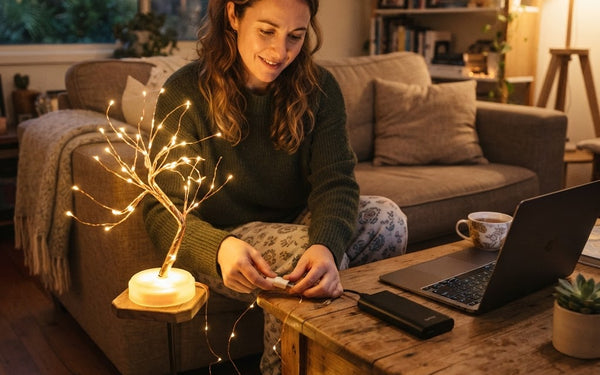
For the smallest spaces — studio apartments, reception desks, kitchen benches — a potted or tabletop tree under 3ft brings the same warm glow without demanding any floor area at all. Pair it with a battery-operated fairy string and there is no power lead to route either.
Frequently Asked Questions — Tree Sizing
How much clearance should I leave between my tree and the ceiling?
Allow at least 15cm between the top of your tree topper and the ceiling. This keeps the topper from touching ceiling fixtures and gives the display room to breathe visually.
Is a 6ft or 7.5ft tree better for standard Australian ceilings?
With the most common 2.7m ceiling, both work — a 6ft tree suits cosier rooms and units, while a 7.5ft tree makes a bolder statement if you have the floor space. For 2.4m ceilings, stick with 6ft–6.5ft.
How wide is a 7.5ft Christmas tree?
A full-profile 7.5ft tree is about 1.4–1.5 metres wide at the base. Slim profiles of the same height are closer to 1 metre, and pencil profiles narrower again.
Do I include the stand and topper when measuring tree height?
Yes. The tree's stated height plus 10–15cm for the stand and 15–30cm for a topper should still fit under your ceiling with 15cm to spare. Real trees also relax slightly wider indoors, so budget a little extra for those.
What size tree fits a small apartment or office?
A 4ft–5ft tree, or a slim 6ft profile, fits most apartment corners without sacrificing the festive feel. Tabletop trees under 3ft work beautifully on kitchen benches, reception desks, and side tables.