

Quick answer: the five-minute setup and storm rule
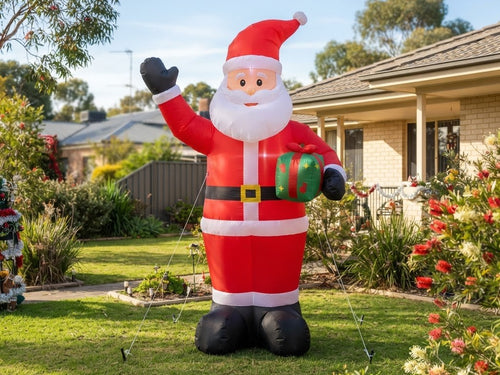
Inflating a lawn display takes just one to five minutes, provided you close the base zip completely — the cause of 90 percent of setup issues. Always drive ground stakes through every tether point and keep one metre of clear space around the figure so it inflates freely without snagging. During heavy Australian summer storms or high winds, switch off and pack the display inside to prevent motor or fabric damage.
A giant Santa rising out of your front lawn in ninety seconds — it's the most theatre-per-dollar in Christmas decorating. Airpower inflatables set up fast, store small and stop traffic. They're also the decoration most often killed by weather and rushing, which is why this guide leans hard on anchoring, weather rules and the pack-away.
Here's everything you need to run inflatables for many seasons.

How Inflatables Work
An Airpower inflatable is a sealed fabric figure with a small fan built into the base. The fan runs continuously, pumping the figure full of air — it stays inflated while the fan runs and softens within moments of switching off. The fan runs off an extra-low-voltage transformer, which is why the whole thing is safe, cool-running and cheap to power. You'll find the full cast of characters in our Christmas inflatables range.
Choosing Your Spot
Pick the spot before anything leaves the box. You want flat ground, room for the figure at full height, a power point within extension-lead reach, and clear sightlines from the street — that's the whole point, after all. Keep a metre of clear space around the figure so it can't snag on branches, fences or gutters as it inflates and moves in the breeze.
Choosing the Right Size for Your Space
Size is the decision people get wrong most often, and it's always the same mistake: buying the biggest inflatable on the shelf without measuring first. A figure that looks manageable in a product photo can swallow a small courtyard or block the front path entirely. Before you buy, measure the footprint you have available and compare it to the product's stated height and width on its page. Allow at least half a metre of clearance around the figure for the fan to push it fully upright without snagging on fences, garden edges or low branches. A compact inflatable on a narrow verandah reads better than a giant one crammed into a space that can't breathe. If you're planning a multi-piece display, start with your hero figure and work outward, leaving walking access to the front door clear at all times.
Setup: Step by Step
- Unpack and lay the figure flat, zips and tethers on top where you can reach them.
- Zip the figure fully closed — the number one cause of half-inflated Santas.
- Position it and anchor it before powering up: stakes through every tether point, driven close to the ground.
- Connect the fan to the transformer and the transformer to power — outdoor-rated points only.
- Watch the first full inflation: a figure rising evenly, standing square, with nothing rubbing the fan.
Anchoring: The Non-Negotiable
An inflatable is a fabric sail with a fan in it. Ground stakes through every tether point are part of the product, not an optional extra — a properly staked inflatable shrugs off the breezes that send unstaked ones over the fence. On concrete or decking, sandbags or water weights on the tie-down points do the same job.

Weather Rules
Inflatables are seasonal decorations, not all-weather items. Switch off and bring figures inside ahead of storms, sustained heavy rain and strong wind forecasts — a wet inflatable in a gale is how they die. Never operate in standing water, keep the transformer and connections sheltered and dry, and let a rain-soaked figure dry fully before you pack it away. Follow these rules and the same figure headlines your yard for years.
Safety & Warranty Notes
Inflatables are low-voltage and safe for outdoor use, but they are not designed to withstand all weather conditions.
- We recommend avoiding use in strong winds, as any tears or rips caused by wind exposure are not covered under warranty.
- Please store the item under cover and avoid use in wet weather. Keep the motor and light away from free-flowing water — water damage to the motor is not covered under warranty.
Please read the instructions inside the box, or visit our Care, Storage & Safety guides for further product care instructions and information.
On behalf of the team at Christmas World we wish you a very Merry Christmas and thank you for your understanding. — The Christmas World Management Team
Power and the Fan Unit
The fan is the heart of the inflatable, and it asks very little: keep its air intake clear of fabric, grass and leaves, keep it dry, and power it from an outdoor-rated point. The transformer should sit sheltered. A quality outdoor extension lead is fine; a frayed indoor lead dragged across a wet lawn is not. Our lighting accessories range has the safe options.

Quick Tips for Inflatables
- Zip check first. Ninety percent of "my inflatable is broken" is a zip that isn't fully closed.
- Anchor before inflating. A figure rising while unanchored is a figure about to travel.
- Use a timer. Six hours of evening show beats running all day in the sun.
- Keep the intake clear. Fabric pulled over the fan is the silent killer.
- Dry before storage. Pack a wet figure and you'll unpack a mouldy one in eleven months.
- Stage the display. One big hero figure plus outdoor signs reads better than a crowd.
Pairing Inflatables with Lights and Greenery
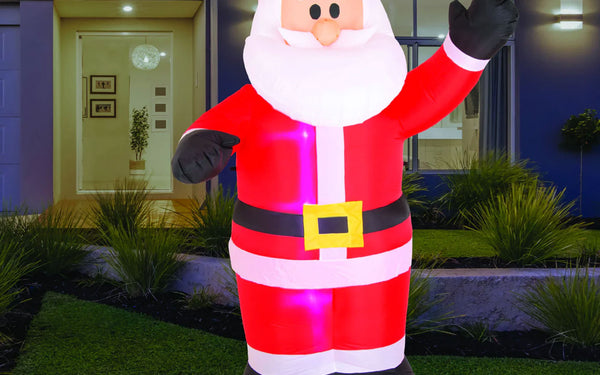
An inflatable is the headline of your front yard, but it reads best with supporting acts. A pair of rope lights tracing the garden edge draws the eye toward the display and defines the viewing zone after dark. Solar stake lights along the front path add low-level glow without competing with the inflatable's internal lighting. If you're styling around the figure, keep planted greenery and garden lighting at least a metre away so nothing presses against the fabric when it inflates and shifts in the breeze. The goal is a layered front-yard scene — one glowing focal point, a defined border, and a clear path to the door — rather than a single inflatable standing alone in the dark.
The Pack-Away
When the season ends, deflate fully and let the figure air-dry for hours — completely dry, seams to shell. Fold loosely, never crushed or compressed, with the fan unit packed separately in its box if it came with one. Stored dry and folded in the original box in a cool spot, your inflatable comes back next December exactly as it left.

Inflatables vs Static Displays
Ready to Shop?
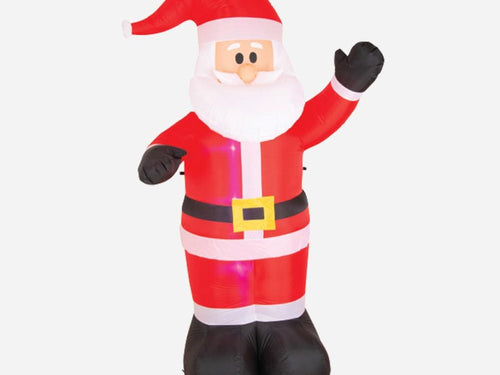
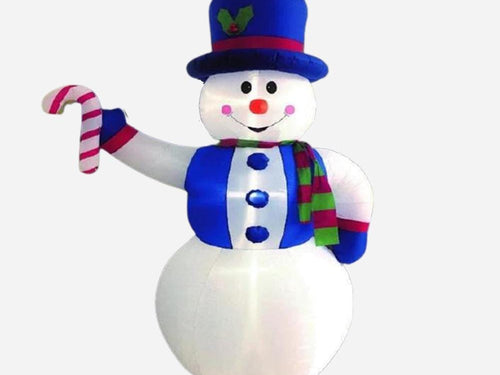
Christmas World's inflatable range covers Santas, snowmen, nativity scenes and Aussie characters in every size — plus the outdoor displays and figures that complete the front-yard show.
Frequently Asked Questions — Christmas Inflatables
How long does a Christmas inflatable take to inflate?
One to five minutes for most sizes — the built-in fan does all the work. If it's still floppy after five minutes, check the zip is fully closed and nothing is blocking the air intake before you suspect the fan.
Can I leave my inflatable out in the rain?
Most inflatables are rated for light rain, but they are not all-weather items. In sustained heavy rain, and especially storms with wind, switch off and bring them inside — a wet, wind-struck inflatable is the classic December casualty.
Why won't my inflatable stand up properly?
Three usual suspects: the zip isn't fully closed, the fan intake is blocked or the tethering is uneven. Check the zip first — nine times out of ten, that's the whole problem.
How much power does a Christmas inflatable use?
The internal fan is a small, low-wattage unit — typically 10 to 50 watts, roughly a light bulb. Running one all evening for the season costs a few dollars.
Can I put an inflatable on concrete or decking?
Yes — swap the ground stakes for sandbags or water weights on the tie-down points. The inflatable needs anchoring on every surface; on hard ground the weight does the job the stakes do on grass.
Why does my inflatable deflate overnight?
A timer or smart plug switching off, or a tripped outdoor circuit. Check the power before the fan — inflatables deflate within minutes of losing power, so the timing points straight at the source.
How do I store an inflatable after Christmas?
Fully deflate, let it air-dry for hours — completely dry before it goes in the box, moisture causes mould — then fold it loosely with the fan unit packed separately. The original box is the best home for it.
Are inflatable fans noisy?
Modern inflatables use quiet low-voltage fans — a soft hum you won't hear from the street. If yours suddenly gets loud, check nothing is rubbing against the fan intake.