

Quick answer: the secret to maximum battery runtime
Quality LED sets run for 30 to 60 hours on a fresh set of brand-name alkaline batteries, while cheap cells sag under load much faster. Engaging the built-in six-hour timer mode automatically turns the lights off overnight, effectively tripling your usable battery lifespan across the festive season. When packing down in January, always remove the batteries from the pack to prevent corrosion and acid leaks from ruining your lights.
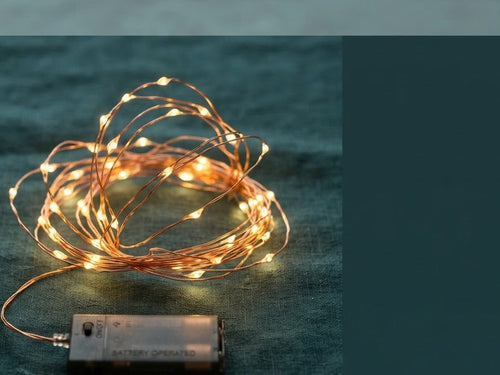
Battery lights are freedom in a box. No power point, no extension lead, no cable run to plan — just a small battery pack and hours of warm sparkle. They're the reason jars, wreaths, table centres and rented homes can glow in December, and they're easier to care for than any other light type. The whole game is batteries: choosing them well and using them smartly.
Here's the full guide to getting the most from battery Christmas lights.

Why Battery Lights Win
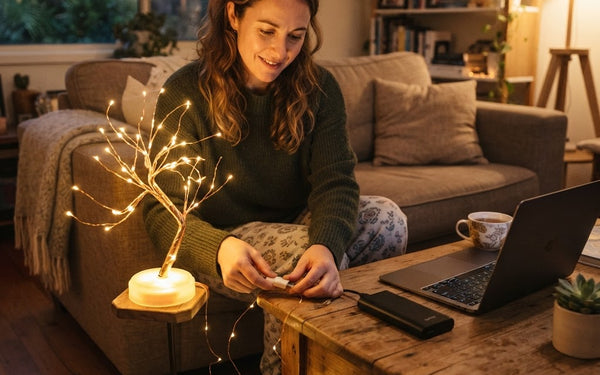
Battery packs free your decorating from the floor plan. A wreath on the front door, a centrepiece in the middle of the table, lights inside a bookshelf — all the spots mains lights can't reach without a trail of cable. Battery strings are also low voltage and low heat, which makes them the safe choice near fabric, foliage and paper decorations.
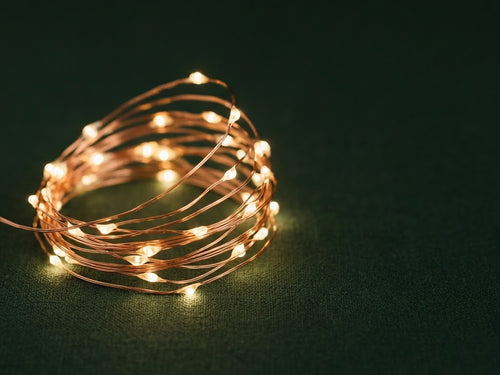
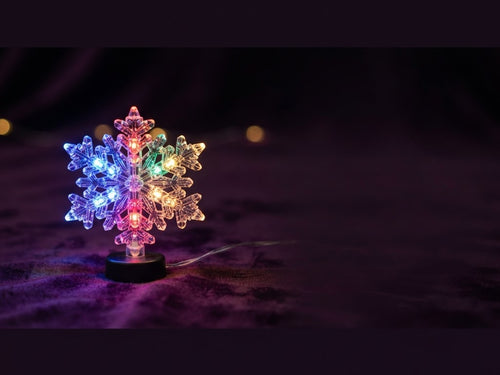
The range is bigger than most people realise — our battery operated lights cover fairy strings, micro strings, cluster lights and candle-style sets, and there's natural crossover with the fairy lights range.
Choosing Your Batteries
This is where runtime is won or lost. Quality alkaline batteries outperform budget brands dramatically under the constant small load of a fairy string — the difference between 60 hours and 20 is usually just the battery brand. Lithium primaries cost more and win outdoors in the heat. Rechargeable NiMHs pay for themselves by the second season and are the environmentally better choice.

- Open the pack and check the contacts for any sign of last season's corrosion before new batteries go anywhere near it.
- Insert a fresh, matched set — never mix old and new or different brands in one pack.
- Set the mode and timer before you place the display, while the pack is still in your hands.
- Position the pack so you can reach the switch — a pack buried behind the display is a pack that stays on all night.
- Test the whole arrangement in place before you call it done.
Getting More From Every Set
The single best runtime trick is the timer. Most quality battery sets include a six-hour timer — switch them on at dusk and they light the same six hours every night, then switch themselves off. You save batteries and never come home to a dark wreath.

Quick Tips for Battery Lights
- Buy good batteries. Under constant small load, brand-name alkalines genuinely last twice as long.
- Use the timer mode. Six hours a night beats 24 — and the set remembers the schedule.
- Remove batteries for storage. Left-in batteries leak; a leaked pack is a ruined pack.
- Match your sets. Same brand, same age, same charge state in one pack — always.
- Keep spares in the box. A spare set of AAs in the decoration box saves a Christmas Eve dash.
- Shelter outdoor packs. Even outdoor-rated sets last longer with the pack tucked out of the rain.
Where Battery Lights Shine
The classics: a wreath on the front door with no trailing cable, jars of fairy lights down the table, curtain lights in a rental window, micro strings through a mantel garland, battery icicle lights along a fence line. If a spot glows but has no power, a battery set is the answer. And when the season ends, our light storage range keeps every pack and string organised.

Battery Lights Outdoors: Australian Summer Realities
December in Australia means rooftop temperatures in the high thirties and humidity that creeps into every connector. Heat above roughly 35 degrees accelerates the self-discharge rate of alkaline batteries, which means a pack sitting in direct sun on a hot afternoon loses capacity before the lights even switch on. For outdoor battery displays — a wreath on a sun-exposed door, a garland along a fence line — lithium primary batteries are the better choice. They operate reliably from well below zero up to 60 degrees, so a December heatwave won't cut your runtime short. The battery pack itself almost never carries a weatherproof rating, so tuck it behind the display, under an eave, or inside a small weather-resistant box. Even outdoor-rated string lights expect the power source to stay dry. If in doubt, treat the pack as indoor-only and shelter it accordingly.
Cost of Running Battery Lights: The Arithmetic
It is worth understanding the seasonal cost before committing to battery lights for a large display. Here is the rough arithmetic: a quality four-pack of AA alkalines costs around $8 to $12 and delivers 30 to 60 hours of runtime. Using the six-hour timer across a 45-evening season (270 hours total), you will need roughly 5 to 9 battery changes — call it $40 to $108 in alkalines for the season. A set of four NiMH rechargeables costs about $20 to $25 upfront plus a charger (around $30), but after the initial investment each season costs effectively nothing since the cells last hundreds of cycles. Lithium primaries cost more per pack (around $15 to $20 for four AAs) but run longer in heat and won't leak in storage, making them the strongest pick for outdoor sets that live in the pack all season. Christmas World's rule: for one or two indoor sets on the timer, alkalines are fine. For a bigger outdoor display or multiple sets, rechargeables pay for themselves by the second season.
Troubleshooting: When They Won't Light
Work through the simple causes before assuming the worst: fresh batteries the right way around, clean contacts, the switch actually on, the timer set, and the cable between the pack and the string seated properly. In the overwhelming majority of cases one of those five is the fix — genuine string failures are rare.
Battery vs Mains Lights
Ready to Shop?
Christmas World's battery range covers fairy strings, micro strings, clusters and candle sets — timer options, quality packs, and the freedom to decorate absolutely anywhere.
Frequently Asked Questions — Battery Christmas Lights
How long do battery Christmas lights last on one set of batteries?
Quality LED sets run 30 to 60 hours on a fresh set of good alkaline batteries — longer on the timer setting. Cheap batteries and constant-on mode are what shorten runtime the most.
Why do my battery lights die so quickly?
Almost always the batteries, not the lights. Budget batteries sag under load, cold nights cut alkaline performance, and leaving lights on around the clock runs any set down fast. Quality alkalines plus the timer mode typically triples runtime.
Can I use rechargeable batteries in my Christmas lights?
Yes — NiMH rechargeables work well in AA and AAA battery packs and pay for themselves in two seasons. Just start each season fully charged, and expect slightly lower per-charge runtime than fresh alkalines.
What batteries do battery Christmas lights take?
Most standard sets take AA or AAAs; micro fairy strings often take coin cells. The battery pack is labelled, and the product page lists the type — always match what's written, never force a fit.
Can battery lights get wet?
Only if the set is rated for outdoor use — most battery packs aren't. For outdoor spots without power, outdoor-rated battery sets or solar lights are the answer; keep the battery pack itself sheltered either way.
How do I clean corrosion out of a battery pack?
Remove the batteries, then gently scrub the contacts with a cotton bud dipped in white vinegar, wipe with a dry bud, and let the pack air-dry fully before new batteries go in. Badly corroded packs should be replaced.
Why won't my battery lights turn on at all?
Work through the simple causes in order: fresh batteries inserted the right way around, no corrosion on the contacts, the switch or timer actually on, and the connection between the pack and the light string seated properly.
Can I leave battery lights on overnight?
They're safe — low voltage and low heat — but you'll waste most of the battery. Use the timer mode: six hours of evening glow and the set switches itself off until the same time tomorrow.