

Quick answer: how the tech and lifespans compare
LED pre-lit Christmas trees produce a room-filling glow and typically last 7–10+ years because diodes are wired across continuous branch circuits. Fibre optic trees pipe light from a single base unit to create a soft, colour-shifting shimmer for 3–5+ years, making them ideal for tabletop or compact spaces up to 6ft. Both run safely on certified low-voltage adapters drawing under 25 watts during warm December evenings.
The Short Answer
Both are light-up trees — but they light up in completely different ways, and that difference decides which one belongs in your home. Fibre optic trees carry light from a single source in the base up through clear fibre strands to the branch tips, producing that magical, colour-shifting starry shimmer. LED pre-lit trees have individual light diodes wired along the branches, producing a full, even glow that fills the room — exactly like a traditionally decorated tree that happens to light itself.

Here's the comparison at a glance, then the detail on each.
How Fibre Optic Trees Work
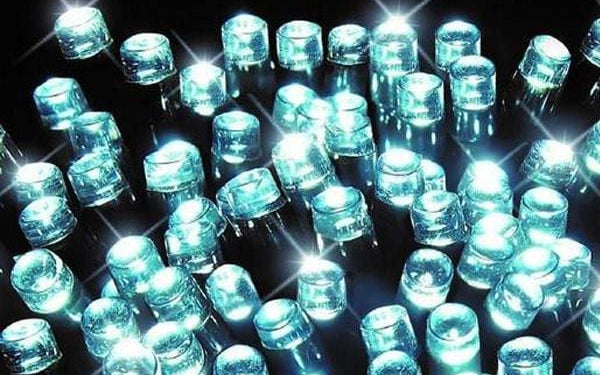
A fibre optic tree has one job in its base: a light source — often with a rotating colour wheel — that fires light up through hundreds of flexible acrylic fibres woven into the branch tips. No electricity travels up the tree at all; only light does. That's why the tips glow in pinpoints of shifting colour while the branches stay dark, and why the fibres carry zero heat — the tree is genuinely cool to touch at every tip.
The upside is the effect: nothing else looks quite like it, especially in a dark room. The trade-offs are structural. Light fades over distance, so fibre optic trees are best compact — tabletop models to around 6 feet. And everything depends on that single base unit: if the motor or light source fails, the whole tree goes dark until the base is serviced (usually a replaceable part, and Christmas World keeps transformers on hand).
How LED Pre-Lit Trees Work
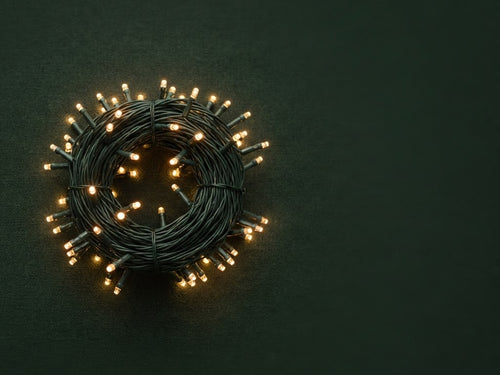
A pre-lit LED tree has individual diodes fixed along the branches, wired in modern continuous circuits — if one diode is ever damaged, the rest keep glowing. Setup is famously easy: the power-pole design means lighting circuits connect automatically as you stack the sections, so there's nothing to plug in but the base cord.
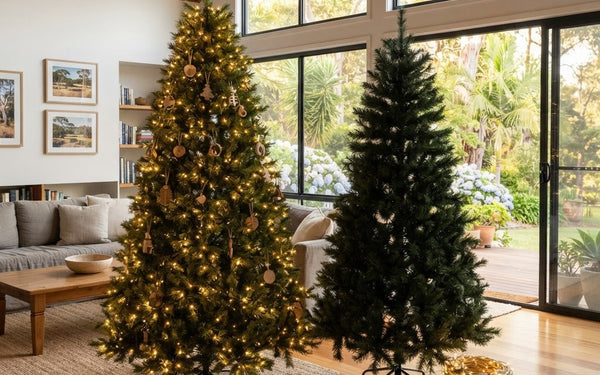
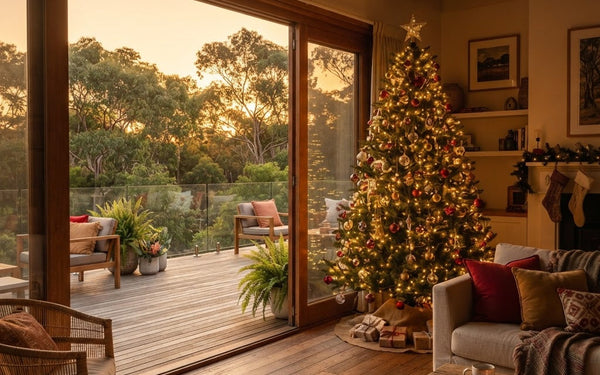
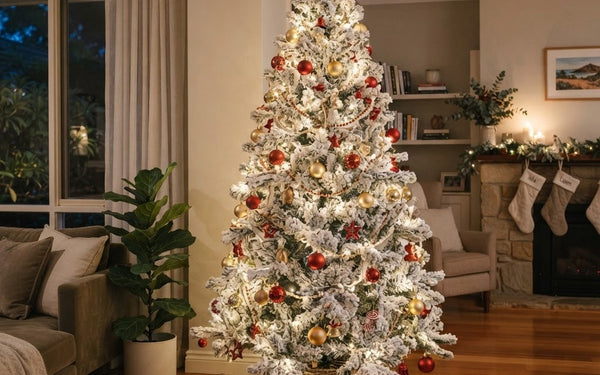
Brightness is the big difference. A pre-lit tree emits broad, multi-directional light — it fills the room and backlights your decorations like a traditionally strung tree. Modern warm-white sets glow golden rather than icy, and many pre-lit trees offer multi-function controllers if you want twinkle or colour effects on demand.
Decorating: The Honest Difference
Here's the practical question most guides skip: what happens when you hang ornaments? A pre-lit LED tree is built for traditional decorating — heavy baubles, layered garlands, the works, with the lights doing the backdrop. A fibre optic tree is at its best lightly dressed: the glowing tips ARE the display, and heavy ornaments bend branches and block the star points. If you love the full decorating ritual — family bauble collection, tinsel, the lot — pre-lit wins. If you want a zero-effort spectacle that looks incredible at night with minimal decoration, fibre optic is magic.
- Apartments, kids' rooms, entries and offices: fibre optic tabletop trees shine — small footprint, huge night impact.
- Open-plan living rooms and family rooms: pre-lit LED, 7ft and up, does the heavy lifting.
- Both types run on certified low-voltage adapters — safe to run all evening, cool in a hot December.
- Match the tree to the room's other lighting: warm-white pre-lit pairs with warm lamps and candles.
Lifespan, Maintenance and Australian Summers
Both tree types run on low-voltage transformers (12–24V) drawing well under 25 watts — a full season's evening use costs cents. Heat is a non-issue for both: fibre tips carry zero heat, and quality LED diodes convert almost all their energy to light, not warmth. Every light-up tree Christmas World sells uses a certified adapter compliant with AS/NZS electrical safety standards, which matters in a dry Australian summer.
Longevity is where they part ways. Pre-lit LED trees typically run 7–10+ years — the diodes simply don't wear out, and branch wiring is protected under the foliage. Fibre optic trees average 3–5+ years, mainly because the base unit has moving parts. Neither needs bulb changes along the branches, ever: fibre tips are sealed, and LED sets are maintenance-free.
Storage tip for both: UV-resistant cabling matters when a tree lives in a hot garage or roof space for eleven months — quality trees are built for it, but a cool, dry storage spot extends any tree's life.
Setup, Storage and Everyday Care
Both tree types are low-maintenance by design, but a few care habits extend the life of either. When setting up, fluff each branch by pulling tips outward and upward so the tree reads full rather than flat — this matters more than any single feature for how the finished tree looks. Pre-lit LED trees benefit from gentle shaping around the wired branches so lights sit evenly. Fibre optic trees need less fluffing since the fibre tips are the display, but the base unit should sit on a flat, stable surface with nothing pressing against the vents.

For storage, both types prefer a cool, dry spot — a linen cupboard or internal wardrobe beats a baking roof cavity every time. Fold branches gently rather than crushing them into the box, and keep the transformer and base unit packed separately to protect connectors. Never store either tree type in damp conditions; humidity corrodes contacts and degrades fibre strands over time. With these simple habits, a pre-lit tree delivers its full decade and a fibre optic tree stays vivid well past its expected lifespan.
Which One Should You Buy?
- Choose the ritual first. Full family decorating with heirloom baubles → pre-lit LED. Minimal decorating, maximum night-time wow → fibre optic.
- Size the room. Under 6 feet of display space or a tabletop/apartment setting suits fibre optic. A main family tree in a living room suits pre-lit, 7ft+.
- Pick your brightness. Tree as the room's light feature → pre-lit LED. Tree as an ambient glow alongside other lighting → fibre optic.
- Plan the years. A tree for many seasons of family Christmases → pre-lit LED's decade-plus lifespan. A spectacular couple of seasons or a themed space → fibre optic delivers.
Cost and Value Over the Years
The upfront price gap between fibre optic and pre-lit LED trees has narrowed over time, but the long-term value equation still favours LED for buyers planning to keep the same tree for years. A pre-lit LED tree's longer lifespan means you spread the purchase cost across more seasons — buy once and decorate for a decade. A fibre optic tree's shorter lifespan makes it better value for a specific use case: a child's bedroom, a themed space, or a few spectacular seasons where the starry effect is the whole point.

Neither tree type carries meaningful running costs — both draw under 25 watts, so a full season's evening use adds only a couple of dollars to your power bill. The real cost difference is replacement timing: a pre-lit LED tree is a one-off decade purchase, while a fibre optic tree may need replacing every few seasons. For most families choosing a single main tree, the LED's longevity and traditional decorating canvas make it the stronger long-term investment.
Christmas World stocks both worlds: full-size LED pre-lit trees ready for traditional decorating, and fibre optic showpieces in tabletop to 6ft — all with certified low-voltage adapters, and local support plus replacement transformers if you ever need them.
Frequently Asked Questions — Fibre Optic vs LED Trees
What's the main difference between a fibre optic and a pre-lit LED tree?
A fibre optic tree pipes light from a single base unit through fibre strands to glowing branch tips — a starry, colour-shifting effect. A pre-lit LED tree has light diodes wired along the branches for a full, traditional, room-filling glow.
Can you replace individual bulbs on a fibre optic tree?
Individual fibre strands can't be replaced, but they rarely fail — the component that can is the base light unit or transformer, which is usually serviceable or replaceable.
Which is brighter — fibre optic or LED pre-lit?
Pre-lit LED trees are significantly brighter and can light a whole room. Fibre optic trees give a softer, ambient starry glow that's beautiful in a dim room but doesn't illuminate the space.
Which uses more electricity?
Both are frugal — low-voltage, typically under 25 watts. Fibre optic trees often draw slightly less, since a single base light does all the work.
Are pre-lit LED trees safe in hot Australian summers?
Yes. Quality LED diodes run cool and convert almost all energy to light, so a pre-lit tree is safe to run all evening in December heat — provided it uses a certified low-voltage adapter, as all Christmas World trees do.
How long does each tree last?
A pre-lit LED tree typically lasts 7–10+ years; a fibre optic tree averages 3–5+ years because its base unit contains moving parts. Neither needs branch-level bulb replacement.
Can you hang heavy ornaments on a fibre optic tree?
You can hang lightweight decorations, but fibre optic trees look best sparsely dressed — ornaments bend branches and obscure the glowing tips. For full traditional decorating, pre-lit LED is the better canvas.
Are pre-lit LED trees hard to set up?
No. Modern pre-lit trees use power-pole construction — sections stack and the lighting circuits connect automatically. You plug in one cord at the base and the whole tree lights.