

Quick answer: the energy savings and lifespan facts
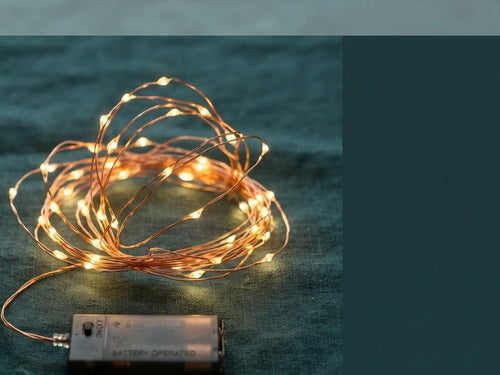
Upgrading from incandescent bulbs cuts your display's electricity draw by 80–90% compared to traditional light strings, lowering running costs for 1,000 lights to under $5 for the entire month of December. Sealed LED diodes offer a lifespan of 25,000 to 50,000 operating hours while remaining completely cool to the touch on hot summer nights. Modern 2700K warm-white LEDs recreate classic golden illumination, allowing up to 25 connected sets per outlet without blowing fuses.
The Switch Worth Making
If you're still running the old incandescent strings — the ones with the glass bulbs that burn out two days into December — this is the season to make the change. LED Christmas lights aren't a marginal upgrade; they use 80–90% less power, last ten to twenty-five times longer, run cool enough to touch in a 35-degree summer, and modern warm-white LEDs look every bit as golden as the old ones did. Here's the honest breakdown.

*1,000 lights, 6 hours a night for 30 days, at an average Australian tariff of roughly 38c/kWh.
The Money Argument
Start with the bill. Running 1,000 incandescent lights six hours a night through December costs around $38–$45 in Australia at current tariffs. The same display in LED costs under $5. That's not a rounding error — it's the price of a new set of lights, every single season, saved from the electricity bill alone.
The rest of the money story is in what you stop replacing. An incandescent bulb averages 1,000–3,000 operating hours — one to three seasons of evenings before failures start cascading down the string. Quality LED diodes are rated at 25,000 to 50,000 hours: a decade-plus of Decembers. Add the connection maths — you can run 20-plus LED strings end-to-end off one outlet where incandescents blow fuses past four or five — and a big display becomes genuinely practical.
The Safety Argument, Australian Edition
An incandescent bulb turns up to 90% of the electricity it draws into heat. Around a dry live tree in the branches, on a timber verandah, or along sun-baked eaves in a hot December, that heat is a real risk. LEDs run cool to the touch — you can wrap them around foliage and leave them on all evening without a second thought.
- RCM mark: legal requirement for mains-powered lights in Australia — the triangle-with-tick proving AS/NZS compliance. No mark, don't buy it.
- Extra-low voltage: quality LED sets step 240V down to 24–30V via the transformer, so the strings themselves are safe to handle and reposition while lit.
- Fewer safety-switch trips: ELV transformers dramatically cut the earth-leakage trips that damp weather triggers with old transformers.
- IP44 under eaves, IP65 exposed: sealed LED strings carry proper ingress ratings for summer storms; glass bulb strings don't.
"But LEDs Look Cold" — The Myth, Busted
This objection was true fifteen years ago, when early LEDs skewed icy blue. It isn't anymore. Modern 2700K warm white LEDs replicate the exact golden glow of traditional tungsten — the nostalgic Christmas warmth — and quality suppliers bin their diodes so every set on your roofline matches, with no off-colour stragglers. If you love the classic look, buy warm white; if you want crisp and contemporary, cool white is a deliberate style choice, not a flaw.
- Replace one surface at a time — do the whole roofline at once so LED and incandescent colours never mix mid-line.
- Never connect LED and incandescent sets on the same run — voltage mismatches kill both.
- Keep transformers shaded and joins boxed, same as always — LEDs don't change those rules.
- Buy one spare length with your order; matching a colour next year is the hard part.
Why the Upfront Price Is Worth It
Yes, a quality LED set costs more than the bargain-bin glass one. But the honest comparison is total cost of ownership: the glass string costs less today and then charges you every December — in electricity, in replacement sets, in the hour spent hunting the dead bulb killing half the string. The LED set pays its difference back inside one or two seasons on running costs alone, then keeps working for a decade. There's a reason every professional display, every council lights festival, and every shopfront in the country converted years ago.
Christmas World's LED range covers warm white through full colour, in fairy, icicle, rope, net and solar — all RCM-compliant, extra-low voltage, and binned for consistent colour across every set.
Smart LED Features Worth Considering
Modern LED Christmas lights do more than just glow. Many sets now include smart features that add convenience and flexibility to your display without complicating the setup.
App control and scheduling is the biggest upgrade. Bluetooth or Wi-Fi enabled sets let you adjust brightness, switch between static and animated effects, and set on/off schedules from your phone. A simple timer that turns the display off at midnight and back on at dusk saves you from running outside every evening, and it cuts power costs further by ensuring lights never run all night by accident.
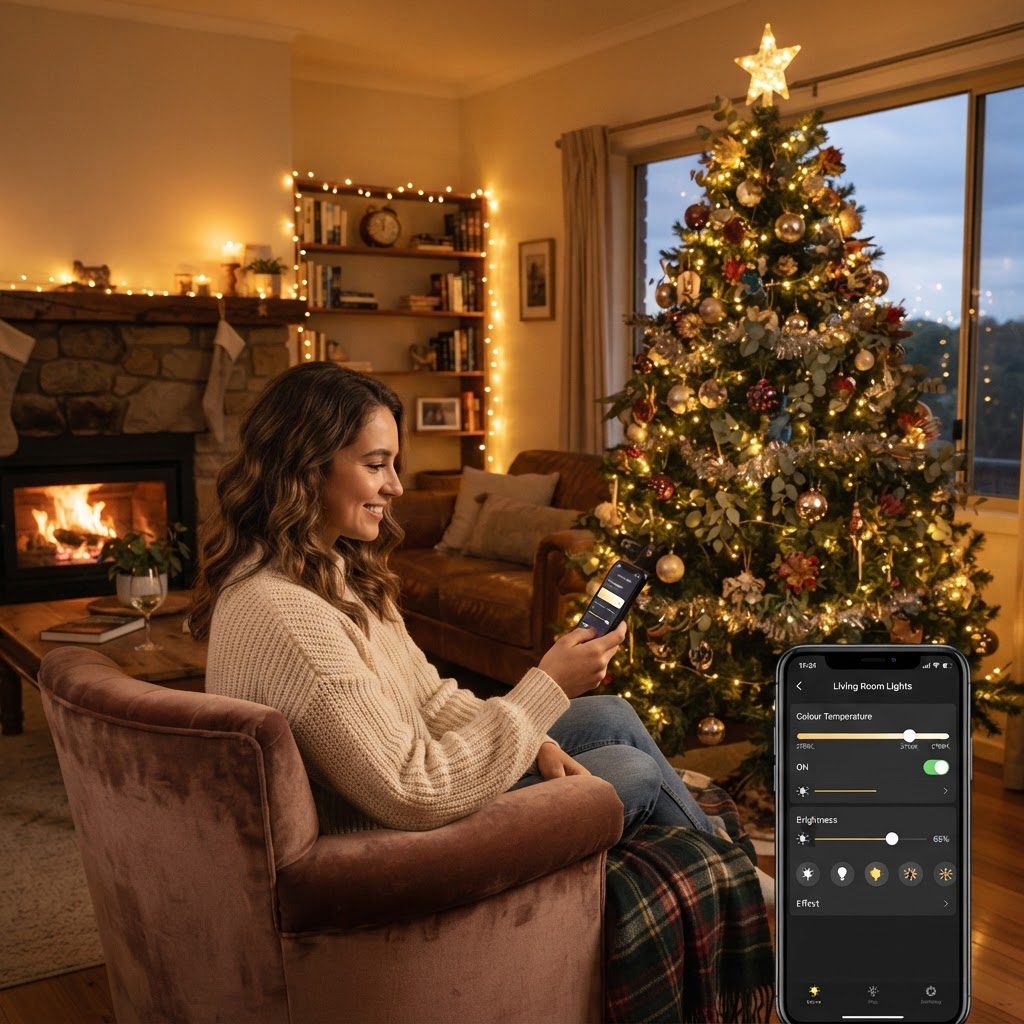
RGB colour-changing sets let you switch between warm white for dinner, multicolour for parties, and a subtle static colour for everyday — all from the one string. The diodes mix red, green and blue in each bulb, so you get dozens of colour options without swapping sets. For a verandah or roofline that you want to redecorate across the season, this is the most versatile option available.
Dimming capability is underrated. Not every evening needs full brightness — dimming your LED strings to 50% for a quiet dinner or late-night gathering changes the mood entirely, and it extends battery life for solar and battery-powered sets by hours.
Weatherproof smart controllers are worth checking before you buy. If your smart set is going outdoors, the controller unit needs the same IP rating as the lights themselves. A controller that's only rated for indoor use will fail at the first summer storm, even if the lights survive.
Upgrading Your Display: A Practical Checklist
If you're moving from incandescent to LED across your whole display, a little planning prevents a half-finished look. Here's a straightforward approach:
Take inventory first. List every string you currently use — location, length, colour, and whether it's incandescent or LED. This gives you a shopping list that matches your existing layout rather than starting from scratch.
Upgrade one surface at a time. Replace all the lights on your roofline in one go, then the verandah, then the fence line. Mixing incandescent and LED on the same surface creates a visible colour mismatch — the warm white from an LED string reads slightly different to the warm white of an old tungsten bulb, and side by side the difference is obvious.
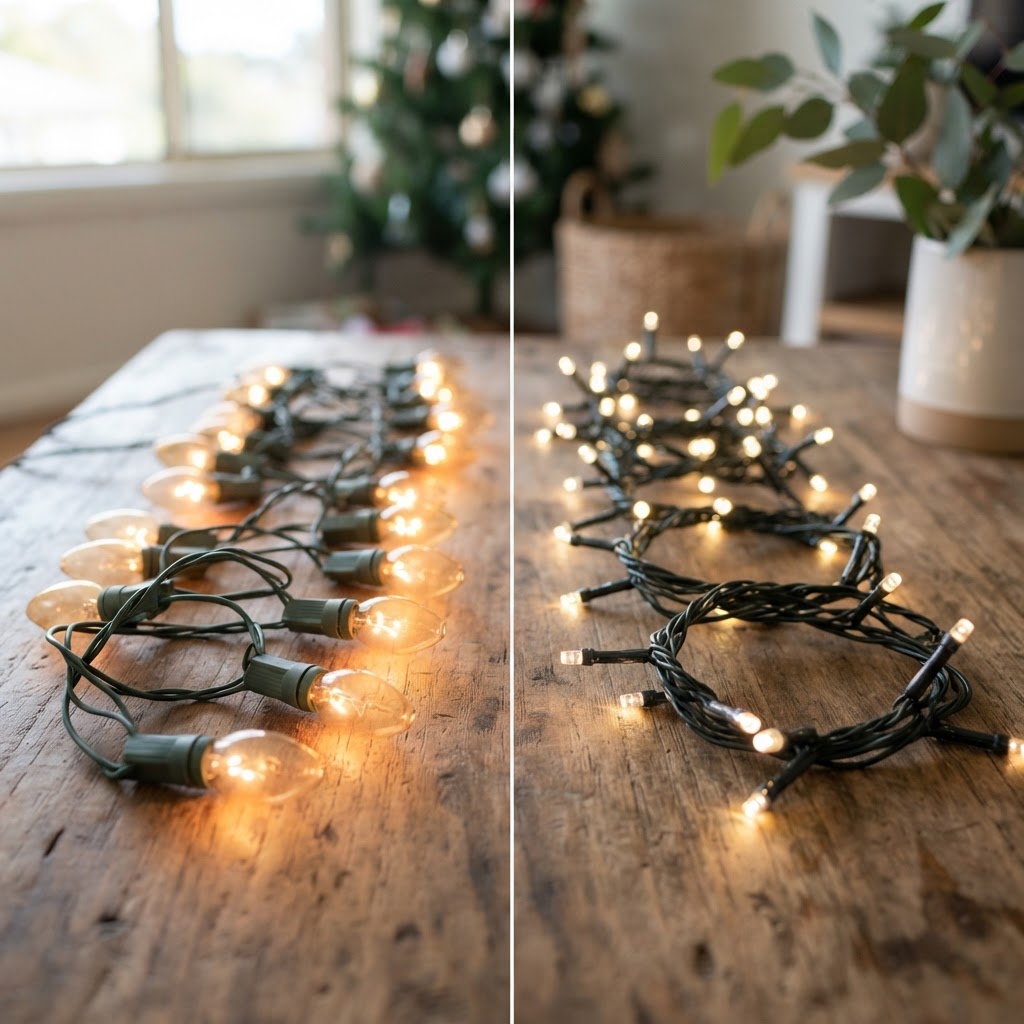
Buy matching sets in one order. LED warm white can vary slightly between batches and suppliers. Ordering all your sets together from the same range ensures consistent colour across the whole display. Adding one more string next year and finding it's a slightly different shade of gold is a common frustration.
Test before hanging. Plug every set in on the floor before you get on a ladder. A dead-on-arrival set is a five-minute exchange; a set that fails after you've clipped it to the eaves is an hour of rework. Lay them out, check every bulb lights, then install.
Keep one spare set. Accidents happen — a storm pulls a run down, a possum chews through a cable. Having one matching spare length means a same-night repair rather than a dark patch on your roofline until January.
Frequently Asked Questions — LED Christmas Lights
Do LED Christmas lights really use less electricity?
Yes — LED strings draw 80–90% less power than incandescent. A 100-bulb incandescent string pulls 40–45 watts; the LED equivalent pulls 2–4 watts.
Are LED lights safe to leave on all night in Australian summer heat?
Yes. LEDs run cool to the touch and dissipate very little heat, so they're safe around dry trees, timber and eaves even on 35°C evenings — ideally with a timer for the sake of the power bill.
Why do LED Christmas lights cost more upfront?
Semiconductor diodes and proper weatherproof casings cost more to build than glass bulbs. The difference is paid back in one to two seasons of lower running costs, then the set keeps going for a decade or more.
Can I connect LED lights to my old incandescent sets?
No. Never join LED and incandescent strings on the same run — the voltage mismatch damages both sets. Convert one surface at a time instead.
How long do LED Christmas lights last?
Quality LEDs are rated for 25,000–50,000+ operating hours — ten to fifteen festive seasons. Incandescent bulbs average 1,000–3,000 hours before failures begin.
Do LED lights look as warm as traditional tungsten bulbs?
Modern 2700K warm white LEDs recreate the same golden glow as incandescent — the "cold blue LED" complaint belongs to the first generation, years ago. Cool white exists, but as a deliberate style choice.
What IP rating do I need for outdoor LED lights?
IP44 minimum for under-eaves and verandah use; IP65 for fully exposed positions that cop rain and storm water directly. All joins still belong in elevated weatherproof boxes.
Will switching to LED stop my safety switch tripping in wet weather?
Largely, yes. Extra-low-voltage LED transformers (24–30V) dramatically reduce the earth-leakage trips that old transformers and damp joins trigger on rainy nights.