

Quick answer: connection limits and cool-running efficiency
Mains-powered LED strings use up to 90% less power than old incandescent bulbs and run cool against foliage, but you must respect the manufacturer's connectable limit of three to five sets per power point. Always run a five-minute ground check to inspect cables before hanging, using gutter clips rather than staples to avoid damaging insulation. Using an automatic six-hour timer reduces running costs further and protects lights from exposure during harsh summer heatwaves.
Mains-powered Christmas lights are the workhorse of the season — the strings that dress the big tree, the roofline, the windows and the verandah. They're brighter, longer and more reliable than anything else on the market, and with a little basic care they'll serve for many years. The key is treating them like the electrical appliances they are.
This guide walks through safe indoor and outdoor setup, the checks that prevent problems before they happen, and the storage habits that protect your investment.

Before You Plug In: The Five-Minute Check
Every season starts the same way — a quick inspection that takes minutes and saves the most common failures:
- Unroll and untangle each string on the floor — look for crushed or chewed cable as you go.
- Check the plug and every connector for cracks, discolouration or bent pins.
- Confirm the packaging still says what you need: indoor-only or outdoor-rated, and connectable-set limits.
- Test each string before hanging it — a fault found on the ground is a five-minute fix.
- Plan your runs: where the power points are, how many strings each run needs, where the timers go.
Indoor Setup That Protects Your Lights
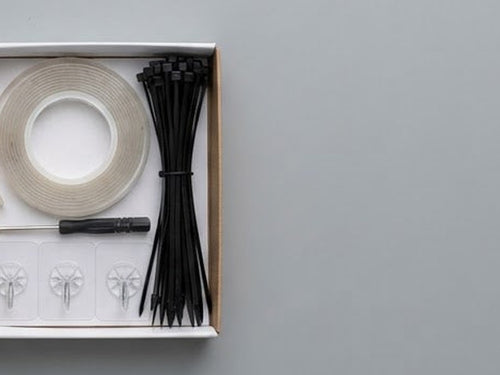
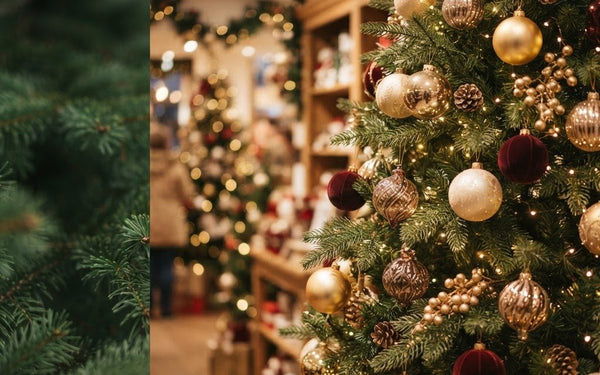
Around the tree and windows, the rules are simple. Plug into a standard power point — not a multi-board already loaded with other appliances — and never nail or staple cables in place. Damage to insulation is invisible at first and dangerous later. Use clips and hooks instead; they're cheap, and they hold strings straighter anyway.

Outdoor Setup: Weatherproof and Secure
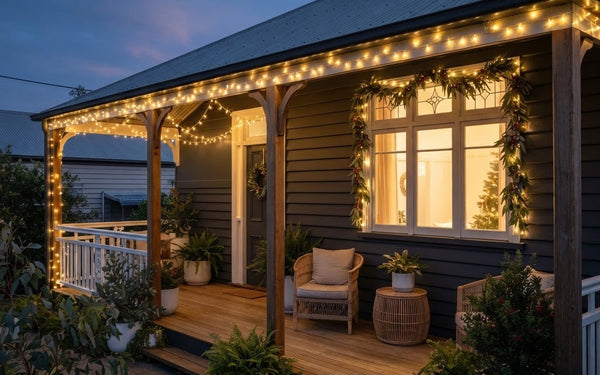
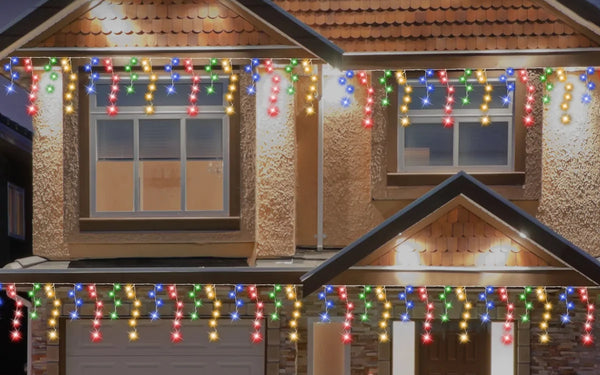
Outdoor lights live or die by their connections. Use only strings rated for outdoor use — our icicle lights and Christmas lights ranges label this clearly. Keep every connection point off the ground and out of pooled water, and hang strings with gutter clips rather than fastening through the cable. Along eaves, work from the ladder once, not up and down a dozen times: lay the full run out on the ground first.

Safety Essentials
Christmas lights are electrical items. Keep them out of reach of small children and pets. Never modify the plug or cable, never overload power boards, and always switch off at the wall before replacing bulbs or fuses. Use outdoor-rated power points and keep transformers sheltered. Lights that are damaged, discoloured or smell hot come down immediately — no exceptions. Following these rules keeps your warranty valid and your family safe.
Quick Tips for Electrical Lights
- Timers pay for themselves. Six hours of evening glow beats 24 hours of running cost.
- LED only. They run cool near foliage and use a fraction of the power — see our LED Christmas lights.
- One board, one job. Don't stack a light run on a power board feeding anything else.
- Replace fuses, not strings. A blown fuse in the plug is a 30-cent fix, not a dead string.
- Check curtain and net lights flat. Lay curtain lights and net lights out flat before hanging so you can spot tangles.
- Label your runs. A tag saying which string went where makes next year a plug-and-play job.
Storage That Adds Years
How you store lights matters more than how you hang them. Wind each string around a reel or a piece of cardboard — never tightly or under tension — and keep sets in their original boxes with their spare bulbs taped to the lead. A dry, cool spot away from the garage roof space is ideal; our light storage range has winders and cases built for the job.

LED vs Incandescent: The Comparison
Understanding the RCM Safety Mark
If you buy only one thing right this Christmas, make it this: check every light set you own for the Regulatory Compliance Mark, or RCM. It's the triangle-with-tick symbol printed on the plug or transformer label, and in Australia it's not optional — it's the legal proof that a product has been tested and certified against Australian electrical safety standards.
Uncertified lights, typically cheap imports bought online, bypass the testing and approval process entirely. The risk isn't theoretical: uncertified transformers have caused house fires in Australia, and insurance claims involving uncertified electrical products can be declined. The RCM mark tells you the set has passed insulation, temperature and endurance testing appropriate for Australian conditions and 240V mains supply.
Here's what to look for on the label: the RCM triangle symbol, the supplier or manufacturer's name or registration number, and the rated voltage and wattage. If any of these are missing or appear tampered with, the set hasn't been through the certification process. Quality retailers display RCM compliance prominently because it's a genuine safety differentiator, not a marketing claim.
For outdoor sets specifically, also look for the IP rating alongside the RCM. The RCM confirms the product is electrically safe; the IP rating confirms it can handle the weather it's going into. Both matter independently — a set can be RCM-certified but only IP20 rated, meaning it's safe to plug in indoors but will fail in the rain.
Timer and Power Management
A timer is the single most cost-effective addition to any Christmas light display. Instead of lights running from dusk until someone remembers to switch them off, a timer ensures they're on for the hours that matter — typically 6pm to midnight — and off the rest of the time. For a display drawing 200 watts, that six-hour window versus running all night saves roughly 70% of the electricity cost over a month.
Two types of timer suit most displays. A mechanical dial timer plugs into the power point and uses pins to set on and off times — simple, reliable, and under $20 from any hardware store. A smart plug timer connects to your Wi-Fi and lets you set schedules from your phone, including sunrise and sunset tracking that adjusts automatically as daylight hours shift through December and January.
For multi-outlet displays, a power board with built-in surge protection serves double duty. It protects your lights and transformer from summer storm voltage spikes, and it consolidates several runs into one switched point so you're not hunting behind furniture for individual plugs. Look for a board with individual switches — you can turn off the outdoor run during the day while keeping the indoor tree lights on.
One thing to avoid: daisy-chaining power boards. Australian wiring rules limit power boards to one level of extension. If you need more outlets, use a single board with enough sockets, or have a licensed electrician install an additional power point. Overloading circuits is the most common cause of safety switch trips during Christmas, and it's entirely preventable with a bit of planning.
Ready to Shop?
Christmas World's mains range covers fairy strings, icicles, clusters, curtains and net lights — all low-energy LED, all rated and certified for Australian conditions, indoor and out.
Frequently Asked Questions — Electric Christmas Lights
How many Christmas light strings can I connect together?
Check the packaging — quality Australian-rated strings state a maximum number of connectable sets, usually three to five for mains strings. Exceeding it overloads the circuit and is the most common cause of dead strings.
Can I use indoor lights outside?
No — unless the packaging specifically rates them for outdoor use. Indoor strings lack weatherproof insulation and connectors; moisture gets in and the string fails, sometimes dangerously. Choose lights marked outdoor-rated.
Why do only half of my lights work?
Usually a loose bulb or a broken series circuit — LED strings are wired in sections, so one failed connection kills everything after it. Check the fuses in the plug first, then work along the string for unseated bulbs.
Are LED Christmas lights cheaper to run than old-style bulbs?
Dramatically cheaper — LEDs use up to 90% less power and barely get warm, which also makes them far safer near foliage and fabric. They're the only kind we stock.
Can I leave my Christmas lights on overnight?
Modern LED strings are safe to run for long periods, but the smart habit is a timer — six festive hours a night, off automatically. You'll save power and extend the life of the lights.
How do I change the fuse in a Christmas light plug?
Unplug first, then open the fuse compartment in the plug with a flat screwdriver and swap the blown fuse for one of the same rating — spares are usually taped into the lead or supplied in the box.
What does an IP44 weatherproof rating mean?
IP44 means the light is protected against splashing water from any direction — fine for eaves, railings and sheltered outdoor walls. It is not rated for submersion or direct jet pressure.
When should outdoor lights come down?
In Australia, take them down in early January — the longer they stay out through summer heat and storms, the shorter their lifespan. Pack them away properly and they'll last many seasons.