

Quick answer: the sun-warm trick for easy installation
Before hanging rope light, lay the flexible PVC tube flat in the sun for ten minutes so it softens and handles easily without kinking. Secure the run using mounting clips spaced every 30 to 40 centimetres, and never cut or staple through the sealed tube as piercing it breaks the internal LED circuit. Keep single runs under 50 metres from one power transformer to prevent dimming, then store in loose figure-eight coils for five or more seasons of use.
Rope light is the most versatile light in the Christmas kit — a flexible, sealed tube of LEDs you can trace along verandah rails, wrap around palm trunks, outline windows and line driveways. It bends around corners, shines evenly along its whole length, and shrugs off the weather in a way fairy strings can only dream about.
Here's how to plan, install and care for rope light so it looks its best and lasts for many seasons.

What Is Rope Light?
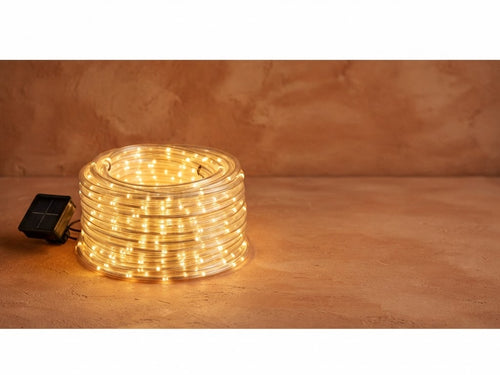
A rope light is a string of LEDs sealed inside a flexible PVC tube — usually sold as a set length with a transformer and controller attached. The tube protects the circuit from weather and knocks, which is why rope light is the go-to for outdoor structural lighting. Ours meet Australian safety standards and come in warm white, cool white and colour ranges across our rope lights collection.
Plan Before You Buy
Rope light rewards planning more than any other light type. Measure each run before you buy, and add a little slack for corners and to reach the power point — but don't massively overbuy. Excess can be tucked away, but the right length always looks better.

- Measure every run. Write down the lengths — rails, eaves, trunks, paths — then match them to set lengths.
- Count your corners. Rope light bends, but a sharp metal edge still needs a soft corner or clip.
- Locate the power points. The transformer end needs to land near power — plan the run direction around it.
- Check the IP rating. Outdoor runs need weatherproof tube and a sheltered connection point.
Installing Rope Light: Step by Step
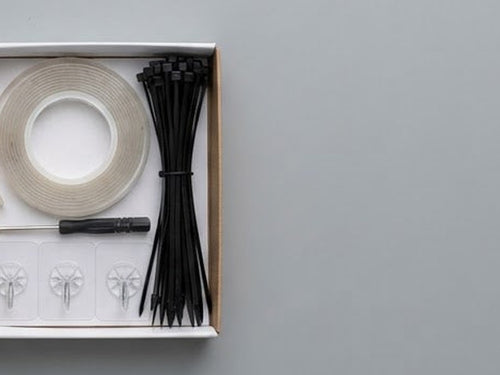
- Attach mounting clips to your surface first — spaced every 30 to 40 centimetres along the planned run.
- Lay the rope light out in the sun for ten minutes — a warm tube straightens and handles far more easily.
- Press the rope into the clips, working from the transformer end, and don't stretch it taut — let it sit naturally.
- Navigate corners with a gentle bend; never crease the tube, which crushes the internal circuit.
- Connect the transformer last, keep the connection in a sheltered spot, and test before the final clips go on.

Where Rope Light Shines
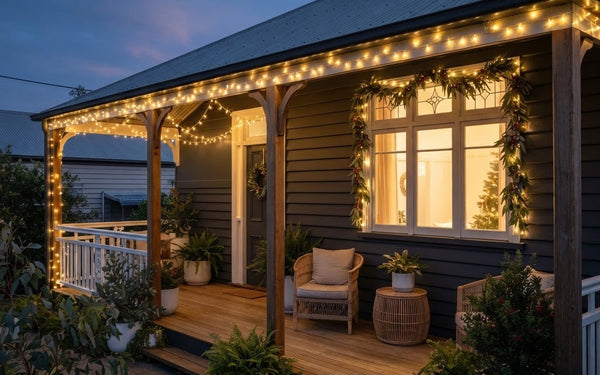
The classics: verandah railings, roof lines, fence tops and driveway edges. Then the Australian touches — a palm trunk wrapped in a spiral of warm rope light is a December icon, and it takes minutes. Indoors, rope light traces the underside of shelves, bar fronts and stair rails in one clean line.

For runs far from power, our solar rope lights deliver the same look with no cable at all, and pathway lights complement a rope-lined driveway beautifully.
Care and Storage
Rope light asks very little: wipe the tube down with a damp cloth before pack-up so grit doesn't scuff it in storage, coil it in loose figure-eight loops — never tight circles — and store the transformer in its box in a dry spot. Handled this way, rope light gives five-plus seasons of service. Spare transformers and connectors live in our lighting accessories range. Our light storage range keeps the coils tidy.
Rope Light vs Fairy Lights
Choosing Your Rope Light Colour
The colour you pick determines the entire mood of your display, and the three options each serve a different purpose in Australian settings.
Warm white (2700K) is the classic choice and the safest bet for verandahs, railings and living spaces. It reads golden and inviting against timber decks and brickwork, and it flatters warm Australian interiors the way a candle would. Most homes use warm white as their base colour for the whole display.
Cool white delivers a crisp, contemporary look that pops against dark greenery and white rendered walls. It reads brighter to the eye, which makes it a strong choice for fence lines and long garden paths where you want maximum visibility. Pair cool white with warm white on separate surfaces to create depth — a cool white fence line against a warm white verandah gives a layered, designed feel.
Multicolour rope light is pure festivity and works best as a feature rather than a base. Use it along a garden path or wrapped around a palm trunk where the colour mix feels playful rather than busy. If you're combining multicolour with warm white runs, keep them on different surfaces so the colours don't compete.
A simple rule: pick one base colour for your main runs and use a second colour as an accent on one or two feature surfaces. The result reads intentional rather than random.
Common Rope Light Mistakes and How to Avoid Them
Most rope light failures come down to a handful of avoidable errors. Here are the ones we see most often:
Stretching the tube too tight. Rope light has a minimum bend radius — bend it sharper than that and the internal LED strip fractures. Follow the tube's natural curve and never force it around a tight corner. Where you need a right angle, use a dedicated corner connector rather than bending the tube.
Wrong clip spacing. Clips every 30 to 40 centimetres is the standard. Wider spacing lets the tube sag between fixings, which looks sloppy and puts stress on the points that are attached. More clips is always better than fewer on long horizontal runs.
Exceeding the maximum run length. Every rope light has a rated maximum continuous length from one transformer — typically 50 metres for 240V and shorter for low-voltage sets. Past that point, voltage drop causes the far end to dim noticeably. If you need longer runs, start a new run from a second transformer rather than daisy-chaining past the limit.
Ignoring the IP rating outdoors. Not all rope light is rated for full weather exposure. Check the IP rating on the packaging — IP44 is fine under eaves, but any run exposed to direct rain needs IP65 or better. The transformer also needs weatherproof housing; leaving it exposed on the ground is the most common cause of premature failure.
Storing coiled tightly. Tight coils kink the tube and stress the internal circuit. Always use loose figure-eight loops and keep the transformer in its box. A well-stored rope light gives five seasons or more; a badly stored one lasts one.
Ready to Shop?
Christmas World's rope light range covers set lengths, colours and solar options — sealed, weatherproof and certified for Australian conditions, indoors and out.
Frequently Asked Questions — Rope Lights
Can I cut rope light to length?
No — unless the product specifically marks cutting points, never cut rope light. The LEDs and circuit are sealed inside the tube, and cutting breaks the circuit, kills the run and voids the warranty. Buy the length you need; any excess can be tucked behind the run.
How long can a rope light run be?
Check the packaging for the maximum single-run length — typically 30 to 50 metres from one power point. Longer runs lose brightness at the far end, so plan a second run with its own transformer instead of stretching one.
Can rope lights get wet?
Outdoor-rated rope light is sealed against rain and splashing — check the IP rating on the product. The connection between the rope and its transformer is the vulnerable point: keep it in a sheltered spot or a weatherproof connection box.
Why is part of my rope light dim?
Usually the run is too long for its transformer, or a section has been crushed — a heavy pot or a car tyre on the tube kills a stretch. Shorten the run or replace the damaged section; dimness past a crush point won't recover.
Can I wrap rope light around a palm tree?
It's the classic Australian Christmas look — wrap the trunk in a spiral of warm rope light. Wind it snug but not strangling, and keep the transformer at the base in a sheltered spot. Our solar rope lights do the same job with no cable at all.
How do I attach rope light to brick or eaves?
Use mounting clips — screw-fixed or adhesive clips made for rope light, spaced every 30 to 40 centimetres. Never nail or staple through the tube; a pierced rope light fails instantly.
Can I join two rope lights together?
Yes, with proper joiner connectors made for your rope's diameter and pin configuration. Never twist bare wires together. Joiners also let you add an inline controller or extend a run within its maximum length.
How should rope light be stored?
Coil it in loose loops — a figure-eight is ideal to avoid twisting stress — and keep the transformer in its box in a dry spot. Wipe the tube clean before storage so grit doesn't scuff it in the box.