

Quick answer: What do Christmas lights cost to run?
LED Christmas lights cost roughly $1.30 to $2.40 for an entire season (45 evenings at 6 hours a night) based on around $0.35/kWh — the average Australian residential tariff. A 700-bulb display drawing 2 to 3.6W per 100 bulbs uses just 3.8 to 6.8 kWh over the whole season. Solar lights cost nothing to run after the initial purchase, and battery lights cost a few dollars in batteries per season. The cheapest option overall is solar; the cheapest for reliability and brightness is LED on mains power.
How Much Power Do LED Christmas Lights Use?
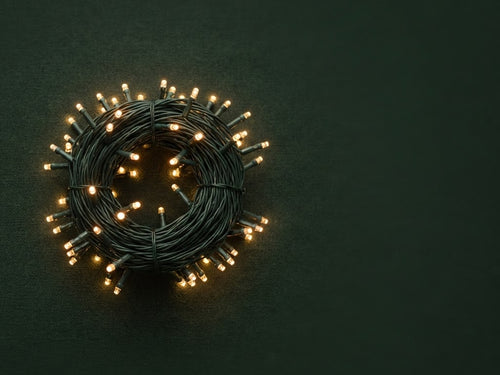
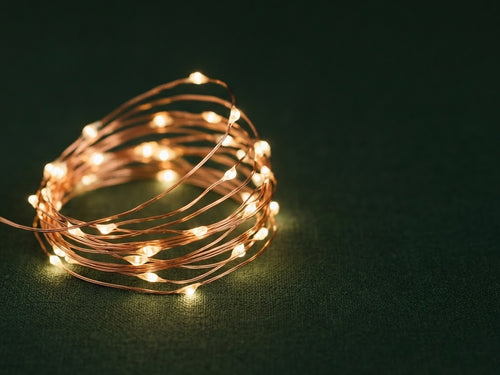
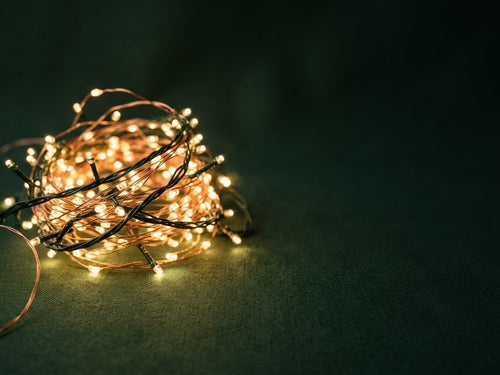
LED Christmas lights are remarkably energy-efficient. A strand of 100 LED bulbs draws roughly 2 to 3.6 watts — about one-tenth of what the old incandescent fairy lights used. To put that in perspective, a single old-style 100-bulb incandescent strand drew around 40W, while a modern LED equivalent draws under 4W for the same glow.
For a typical Australian display — say a 6-foot tree with 700 fairy lights, a roofline with 200 icicle lights, and a few garden stakes — the total draw is around 25 to 40W. That is less than a single halogen downlight. Over a full Christmas season (roughly 270 hours — 45 evenings at 6 hours each), that display uses about 6.8 to 10.8 kWh. At around $0.35/kWh, that is $2.38 to $3.78 for the whole season.
Christmas World recommends LED for any display that runs on mains power. The savings over incandescent are dramatic: swap a 500-bulb incandescent display (200W) for the same count in LED fairy lights (about 18W) and you cut running costs by roughly 90%.
Solar Christmas Lights: The Zero Running Cost Option
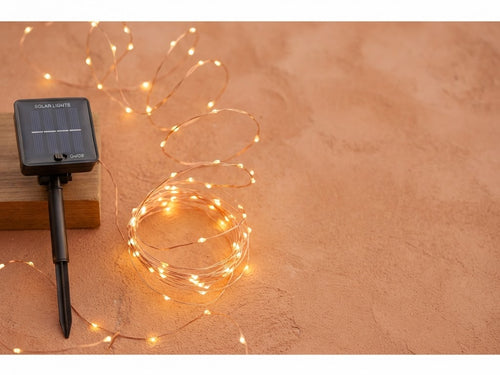
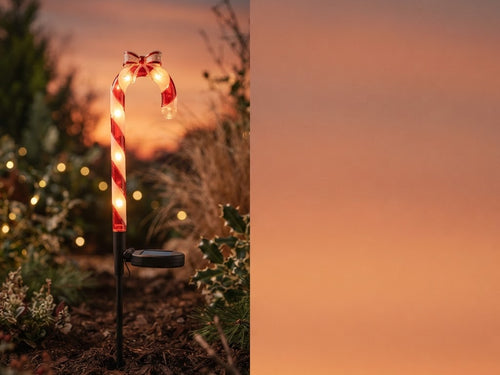
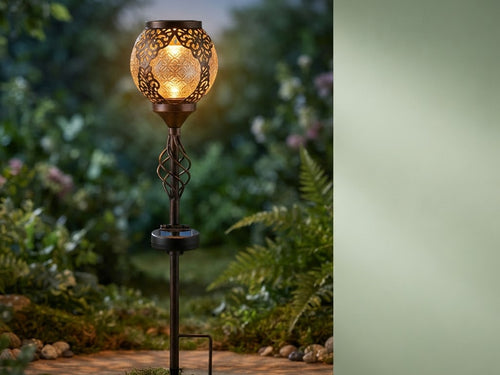
Solar Christmas lights charge a small built-in battery during the day using an integrated solar panel, then switch on automatically at dusk. Once you have bought the lights, the running cost is exactly $0 — no electricity, no batteries to replace. They are ideal for areas away from power points: fence lines, garden beds, pathway edges, and distant trees.

The trade-off is brightness and reliability. Solar lights typically use fewer bulbs per strand and depend on a full day of sun to charge. During overcast summer days — common in Sydney and coastal areas — they may run dimmer or for fewer hours. For Australian homes, placing the solar panel where it gets at least 6 hours of direct sun is critical. All solar light styles from fairy to icicle to pathway stakes are available, but keep expectations realistic on cloudy days.
Battery-Operated Lights: The True Cost of Portability
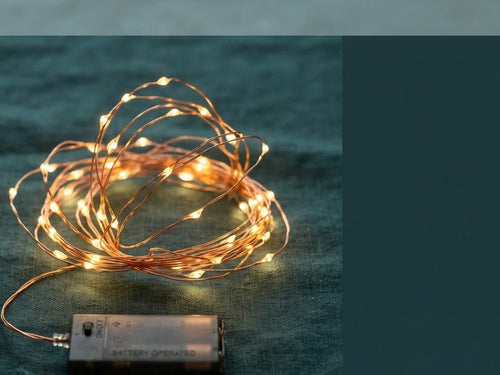
Battery-operated lights offer ultimate placement freedom — no power point, no solar panel, no extension cord. They run on AA or AAA batteries, making them perfect for mantels, table centrepieces, wreaths, and indoor spots far from a wall outlet.

The running cost depends on battery type and usage. A set of 3 AA batteries powering 100 LED micro-lights typically lasts 40 to 72 hours. Over a 270-hour season, that is 4 to 7 battery changes. Using quality alkaline AAs at roughly $1.50 per pack of four, a single battery light strand costs about $4 to $8.50 per season in batteries. Switching to rechargeable solar lights where possible keeps long-term costs near zero.
LED vs Solar vs Battery: Running Cost Comparison
How to Calculate Your Christmas Light Running Costs
You can work out your own running cost in four steps. All you need is the wattage of your lights (check the packaging or product page), your daily hours, and your electricity tariff.

Running Cost Formula
- Find total wattage. Add up the watts for every strand. For example, 700 bulbs at roughly 2.5W per 100 = 17.5W total.
- Multiply by daily hours. If lights run 6 hours per evening: 17.5W × 6h = 105 Wh per day.
- Multiply by season length. A typical season is 45 evenings: 105 Wh × 45 = 4,725 Wh = 4.7 kWh.
- Multiply by your tariff. At around $0.35/kWh (the average Australian residential rate): 4.7 kWh × $0.35 = $1.65 for the season.
This is an estimate — your actual cost depends on your electricity plan, which state you are in (tariffs range from around $0.30/kWh in Victoria to $0.40+/kWh in South Australia), and how long you run your lights each night. The key takeaway: even a generous LED display costs under $5 for the whole season.
What Affects Your Running Costs?
Three factors determine how much your Christmas lights add to your power bill:
Cost Factors at a Glance
- Display size. A 200-bulb tree display costs cents. A full house with 2,000 bulbs across roofline, trees and garden still costs under $10 per season on LED.
- Hours per night. Running lights 6 hours costs half as much as running them 12 hours. A timer pays for itself in convenience alone.
- Electricity tariff. Australian rates vary from around $0.30/kWh (VIC) to $0.40+/kWh (SA). Check your latest bill for your exact rate.
- Light type. LED uses up to 90% less power than incandescent. If you still have old strands, replacing them with LED Christmas lights is the single biggest saving you can make.
RCM Compliance: Safe and Legal Power Use
Every set of Christmas lights sold in Australia must carry the RCM (Regulatory Compliance Mark), confirming it meets AS/NZS electrical safety standards. This applies to mains-powered lights and ELV (extra-low voltage) plug-pack lights alike. The RCM is your assurance that the lights have been tested for electrical safety, insulation, and heat resistance.
Power Safety Basics
- Use RCM-marked lights only. Lights bought overseas may not meet Australian standards and are not insured if they cause damage.
- One power board, no daisy-chaining. Plug strands into a single rated power board with overload protection. Never plug one power board into another.
- Check total wattage. A standard 10A power point handles 2,400W. LED strands at 2 to 3.6W per 100 mean you can run hundreds of bulbs on a single circuit safely.
- Use outdoor-rated lights outside. Look for IP44 (splash-proof) or IP65 (water-jet resistant) ratings on the packaging. Indoor lights are not weatherproof and are a hazard in rain.
- RCD protection. Plug outdoor displays into a circuit with a residual current device (RCD) — standard in NSW homes built after 2000.
Tips to Keep Your Running Costs Down
Keeping your Christmas light running costs low is straightforward with a few smart habits:
Money-Saving Tips
- Switch to LED. If you are still running incandescent strands, replacing them with LED cuts power use by up to 90%.
- Use solar where you can. Garden paths, fence lines, and balcony rails are perfect for solar garden lights — zero running cost, no extension cords.
- Add a timer. A smart plug or mechanical timer set to 6 hours means lights are never left on overnight by accident.
- Go cluster for density. Cluster lights have bulbs every centimetre, so you need fewer strands for a full look — half the bulb count of standard fairy lights at the same brightness.
- Choose warm white. Warm white (2700K) LED fairy lights use the same power as cool white but look more traditional and inviting.
Choosing the Right Lights for Your Budget
The best approach for most Australian homes is a mix: LED mains-powered lights for the main tree and roofline, solar lights for the garden and pathways, and a few battery sets for indoor accents. This keeps your total running cost to a couple of dollars for the season while giving you flexibility in every part of your display.
Shop Energy-Efficient Christmas Lights
Explore Australia's largest range of LED, solar and battery Christmas lights. All RCM-certified, built for Australian summer conditions. Free shipping on orders over $149.
Frequently Asked Questions — Christmas Lights Running Costs
How much do Christmas lights cost to run per hour?
A typical 700-bulb LED display drawing around 17.5W costs roughly 0.6 cents per hour at $0.35/kWh (17.5W × 1h ÷ 1000 × $0.35 = $0.006). Even running 6 hours a night, that is under 4 cents per evening. A full-house display of 2,000 LED bulbs costs about 1.8 cents per hour.
How much do LED Christmas lights cost to run for a season?
A 700-bulb LED display costs roughly $1.65 for a full season (45 evenings at 6 hours each, at around $0.35/kWh). Larger displays up to 2,000 bulbs cost around $4 to $5 per season. These are estimates — your cost depends on your electricity tariff and how many hours per night you run the lights.
Do LED Christmas lights use a lot of electricity?
No. LED Christmas lights draw roughly 2 to 3.6 watts per 100 bulbs, compared with about 40W per 100 bulbs for old incandescent fairy lights. That means a full LED display typically adds under $5 to your electricity bill for the entire Christmas season.
Are solar Christmas lights free to run?
Yes. Solar Christmas lights charge during the day via a built-in solar panel and run on stored battery power at night. There is no electricity cost and no battery replacement cost. The only caveat is brightness on cloudy days — solar lights depend on sunlight to charge fully.
How much do battery Christmas lights cost per season?
A set of battery-operated LED lights running on 3 AA batteries typically lasts 40 to 72 hours. Over a 270-hour season, that is 4 to 7 battery changes costing roughly $4 to $8.50 in batteries. Using rechargeable batteries can cut this to near-zero over time.
How many Christmas lights can I run on one power point?
A standard Australian 10A power point handles 2,400W. LED strands at 2 to 3.6W per 100 bulbs mean you can safely run thousands of bulbs on a single circuit. The limiting factor is usually the number of plug connections, not the power draw. Use one rated power board with overload protection and never daisy-chain multiple boards.
What is cheaper: LED, solar, or battery Christmas lights?
Solar lights are cheapest to run at $0. LED mains-powered lights cost $1.30 to $3.80 per season. Battery lights cost $4 to $8.50 per season in replacement batteries. For overall value, a mix of solar for the garden and LED for the main display gives the lowest running cost with the best brightness.
Do Christmas lights increase your electricity bill noticeably?
Not with LED lights. A typical display adds under $5 for the entire season. Even a large display of 2,000 bulbs adds roughly $5 to $10. The only lights that significantly impact your bill are old incandescent strands, which draw up to 10 times more power. Replacing them with LED Christmas lights is the simplest way to keep costs down.