

Quick answer: why midwinter festive warmth appeals
A July celebration delivers the cozy winter festive experience that hot Australian summers prevent, trading 35°C beach days for 0–10°C temperatures, fireside warmth, and hearty roast feasts. The tradition began when Blue Mountains hoteliers hosted visiting tourists seeking cold-weather cheer, expanding into events nationwide that peak around July 25th. It offers a voluntary mid-year tradition with hot puddings and mulled wine without replacing traditional December gatherings.
The Midwinter Christmas, Explained
Here's the situation every Australian quietly understands: we grew up on Christmas movies full of snow, roaring fires and knit sweaters — and then our actual Christmas arrives as a 38°C day with prawns, air-con and a game of backyard cricket. Both are wonderful. But only one of them matches the Christmas in our imaginations.

Christmas in July is the fix. Every southern winter, Australians lean into a second, fully voluntary Christmas — complete with roasts, mulled wine, decorated trees and fireside cheer — during the coldest month of the year. It's not a replacement for December; it's the cozy, cold-weather Christmas we never had, celebrated mid-year.
Where the Idea Came From
The phrase has a longer history than most people assume, and it didn't start here:
- 1892 — an opera. The earliest known reference to "Christmas in July" appears in the French opera Werther, where children rehearse a Christmas carol in July.
- 1933 — a summer camp. The first documented real-world celebration: Keystone Camp in North Carolina staged a full Christmas in July — fake snow, tree, Santa and all — for its campers.
- 1940 — Hollywood. Preston Sturges' film Christmas in July pushed the phrase into mainstream English.
- 1980 — Katoomba. The Australian tradition gets its founding story: Garry Crockett, proprietor of the Mountain Heritage Hotel in the Blue Mountains, hosted a group of Irish tourists marvelling at the frosty July mist. They asked for a cold-weather Christmas feast — and Yulefest was born.
So no, it's not an urban legend, and no, it wasn't invented by a marketing department — though Australian hospitality absolutely ran with it. What began as one hotel's winter feast became a regional Blue Mountains institution, then a nationwide midwinter season.
Yulefest: The Blue Mountains Institution
Every July, the Blue Mountains towns — Katoomba, Leura, Blackheath — transform into Australia's midwinter Christmas capital. Hotels and restaurants run traditional Christmas dinners by the fire all month: roast turkey and ham, steaming puddings, mulled wine, waiters in festive gear, Christmas trees in lobbies. The whole region, which otherwise hibernates through its coldest month, makes July a genuine second peak season. It's the template every other Australian "Christmas in July" event descends from.
Why a Cold Christmas Appeals to Us
Two reasons, one nostalgic and one practical. Nostalgia: generations of Australians were raised on European and American Christmas imagery — snow, carols, firelight — so the winter version feels like the "real" Christmas our movies promised. Practicality: July is short, cold and grey, and a mid-year festive gathering brings exactly the light, warmth and social connection people run low on. There's a reason the tradition caught on in the mountains first — it's where winter is felt most.
Where It's Celebrated Now
New South Wales: the Blue Mountains Yulefest heartland, plus Hunter Valley's Snow Time in the Garden and Sydney's French-inspired Christmas in July festivities at The Rocks.
Victoria: Ballarat's Sovereign Hill runs its famous Winter Wonderlights — faux snow, light shows, a full Victorian-era winter village — drawing over 100,000 visitors across the season. Alpine resorts in the High Country join in too.
Everywhere else: Barossa Valley winter wine dinners, cozy Brisbane and Gold Coast pop-ups, and Tasmania's dark-winter festivities. The tradition now runs nationwide, with most events clustered in the second half of July, peaking on the weekend closest to the 25th.
The Feast: What's Actually on the Table
A Christmas in July menu is the winter dinner December never allows: roast turkey or glazed ham with all the trimmings, crackling pork, thick gravy, bread sauce, steamed pudding with brandy custard, warm mince pies, hot chocolate, and mulled wine (Glühwein) simmering on the stove. It's the full northern-hemisphere spread — the food simply doesn't work at 38°C, which is exactly the point of doing it in July.

The two Christmases aren't competitors — they're complements. December gives Australia its own sun-soaked tradition; July delivers the cozy winter fantasy. Most families who do both consider it the best of both worlds.
Hosting Your Own Midwinter Christmas
- Warm lighting is the whole mood: warm-white fairy lights and candles do more for a winter evening than any other decoration — save cool whites for summer.
- Put the tree up. An artificial tree in July is entirely normal in Yulefest country. It comes down by August; that's the deal.
- Dress the table like December: a garland runner, candles, wreath centrepiece, bonbons — the works. Indoors, out of the UV, decorations look their best.
- Theme the night: ugly Christmas sweater dinners, Secret Santa with a set budget, a fondue station, or a classic carols playlist.
- Reuse and store smartly: July is the perfect dress rehearsal for December — pack decorations back into labelled boxes and December-you will be grateful.
One honest note: Christmas in July is not a public holiday, so pick your weekend, send the invites early, and treat it as the mid-year Christmas party it is. And when July's tree comes down and December rolls around, you'll have done Christmas twice in one year — which, in our view, is simply good planning.
Decorating for a Winter Christmas
July decorations get a different treatment to December ones, and it comes down to light and temperature. Indoors, away from the summer sun, colours read deeper, materials feel richer, and you can lean into elements that don't survive an Australian December outdoors: real candles, fresh greenery, and heavier textile ribbons.

Start at the door. A wreath tells guests something festive is happening before they step inside. Native eucalyptus and wattle wreaths suit the season naturally, or a pre-lit design with warm LEDs keeps the glow going after dark. Inside, a garland along the mantelpiece or dining table with fairy lights woven through it anchors the room in seconds. Drape it, light it, and the space is transformed.
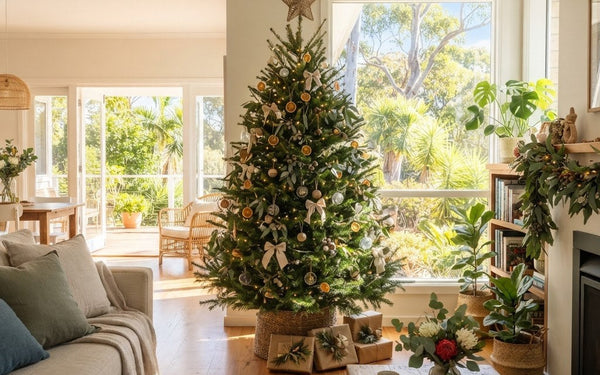
Colour shifts with the season too. Where December often runs bright and coastal, July rewards deeper palettes: forest green, burgundy, warm gold, and cream. The artificial tree you'll use again in December works perfectly here, styled with richer ornaments that suit a fireside setting. The whole look comes down by August, but the practice of setting it up twice means your December decorating runs faster and smoother.
Whether it's a midwinter feast or the real thing in December, Christmas World has the trees, warm lighting, garlands, table styling and bonbons — in-store across NSW and online with delivery Australia-wide.
Frequently Asked Questions — Christmas in July
Why do Australians celebrate Christmas in July?
To experience the traditional cold-weather Christmas — roasts, fires, decorations, sweaters — during our coldest month. December is a summer Christmas; July delivers the cozy winter version.
Is Christmas in July an official public holiday?
No. It's a cultural tradition and seasonal celebration, not a public holiday. Events and home gatherings are scheduled on chosen weekends, usually in late July.
When is Christmas in July celebrated?
Across the whole month of July, with most events and dinners held on the weekend closest to July 25. Some alpine regions stretch the season from June through August.
What is Yulefest in the Blue Mountains?
The original Australian Christmas in July tradition: Blue Mountains hotels and restaurants host full Christmas dinners — roast, pudding, mulled wine, decorations — throughout July, turning the region into the midwinter Christmas capital.
Where did the term "Christmas in July" come from?
The phrase traces back to an 1892 French opera, was first celebrated at a North Carolina summer camp in 1933, and went mainstream via a 1940 Hollywood film before Australia made the tradition its own from 1980.
How did Christmas in July start in Australia?
In July 1980 at the Mountain Heritage Hotel in Katoomba, when proprietor Garry Crockett hosted a winter Christmas feast for visiting Irish tourists — the dinner that grew into Blue Mountains Yulefest.
What food is eaten at Christmas in July?
The full winter feast: roast turkey or glazed ham, stuffing, gravy, steamed pudding with brandy custard, mince pies, hot chocolate and mulled wine — everything too heavy for a 38°C December day.
How is Christmas in July different from December Christmas?
December is our summer Christmas — seafood, beaches, backyard cricket. July is the fireside version — cold weather, roasts, jumpers and candles. Australians who do both get the best of both worlds.