

Quick answer: the 30/70 ornament depth formula
To give a holiday tree magazine-style dimension, place 30–40% of your baubles deep inside near the trunk using larger matte designs that conceal the centre pole and scatter light outwards. Apply the 60-30-10 colour principle across dominant, secondary, and accent shades to maintain visual balance throughout the room. Complete the look with wired ribbon cascades and allocate about 100 LED bulbs for every 30cm of tree height to maintain consistent brightness.
Pick a Theme Before You Buy a Single Bauble
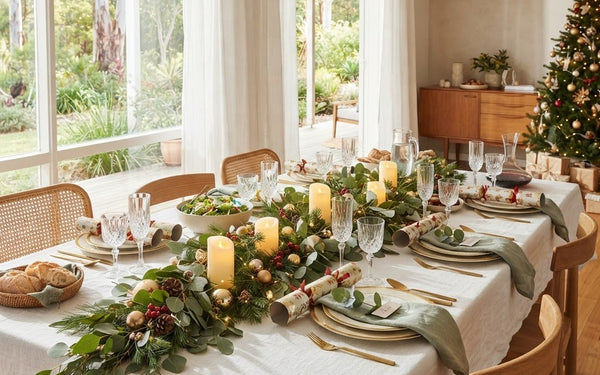
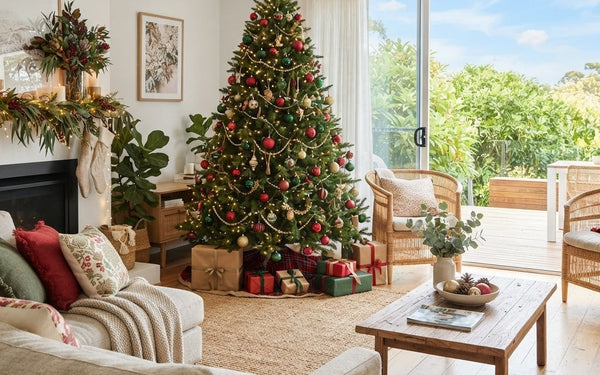
Every magazine-worthy tree starts with one decision made early: the theme. The tree is the largest object in the room for a month — it needs to agree with your home, not fight it. Four looks suit Australian houses beautifully:

Whichever you choose, apply the 60-30-10 rule to the colour: roughly 60% one dominant shade, 30% a secondary tone, 10% a statement accent. That single ratio is the difference between "curated" and "everything from the cupboard".
Palettes with current legs: eucalyptus-sage-antique brass (the native look refined), champagne gold-blush-velvet ochre (warm luxe), and midnight navy-emerald-frosted silver (deep evening elegance). All three sit comfortably in bright, open-plan Australian interiors.
Lighting First: The Math That Gets It Right
Lights go on before anything else — and how you hang them matters as much as how many. The professional method is trunk-out wrapping: start at the base near the trunk, wind out along a branch, back in to the trunk, then up. It takes longer than spiralling the outside, and it's why designer trees glow from within instead of just outlining.
For quantity, the reliable formula is about 100 LEDs (5–6 metres of lit wire) per foot of tree height. A 6ft tree wants 600–800; a 7.5ft wants 800–1,200. And in bright Australian rooms, warm white is the safer choice over cool — cool white can read harsh against timber and linen in afternoon summer sun, while warm white flatters both.
The Bauble Rules: Depth Beats Quantity
The biggest amateur tell is every ornament hanging on the outside edge of the tree. Professionals decorate in three dimensions:
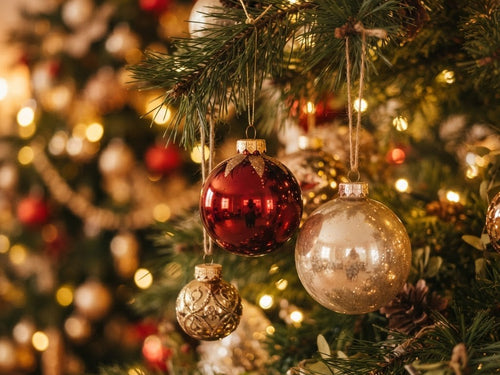
- The 30/70 depth rule. Put 30–40% of your baubles deep inside, near the trunk — larger, solid-colour, matte-finish pieces. They hide the pole, fill gaps, and bounce the lights back out. The remaining 60–70% hang on the outer tips.
- Size hierarchy. Roughly 20% large (10–12cm) anchored low and inner, 60% medium (6–8cm) spread evenly through the middle canopy, 20% small and delicate (4–5cm) out on the upper tips.
- Cluster in threes. Hang ornaments in small groups rather than evenly spaced singles — clusters read as richness, spacing reads as emptiness.
- Then the personal pieces. Heirlooms, kids' craft, travel ornaments go on last, on the outer tips where they're seen.
Ribbon: The Designer's Secret Weapon
Wired ribbon is non-negotiable — unwired ribbon collapses and can't hold a shape. Two professional methods:
The vertical waterfall cascade: cut lengths of 1–1.5 metres, loop the top over an inner branch, pin the tip, and let the tail fall. The loops and tails create movement down the full height of the tree.
The tuck-and-pinch weave: working diagonally, pinch the ribbon into a fold, tuck the fold deep into a branch, leave a loose arc showing, pinch and tuck again — zigzagging around the tree. This is the "diamond" pattern you see on styled trees.
Quantity: budget 3–4 metres of wired ribbon per foot of tree height — around 22–28 metres for a 7.5ft tree, in a 6–10cm width.
- Fluff every branch tip in a V-shape before lighting — an unfluffed tree can't be saved by decorations.
- Botanical picks and berry stems tucked into gaps do the "fullness" work of dozens of extra baubles.
- Keep 15–20cm between your topper and the ceiling; crowding the cornice shrinks the room.
- Position real and artificial trees at least 1 metre from hot glass, vents and heaters — December sun fades branches and dries needles.
The Finish: Topper, Base and Safety
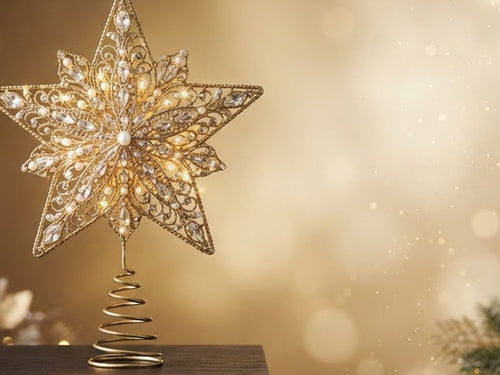
Scale the topper to the tree (an oversized star on a slim tree topples the balance), and secure heavy toppers properly: fold the top central branch in half to create a thick anchor stem, then fix the topper with green floral wire or a cable tie. At the base, a woven basket or tree collar hides the stand more cleanly than a fabric skirt if your style is modern — and keeps curious pets out of the water tray on real trees.
- Shatterproof baubles (plastic or polystyrene) on everything below knee height — save glass for the top half.
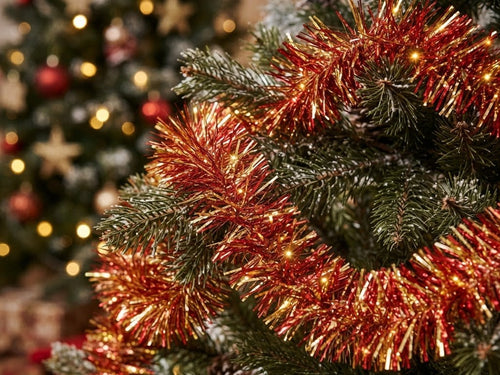
- Skip tinsel and small hanging pieces entirely in toddler and cat households; both are swallow risks.
- Anchor the tree to a wall stud with a discrete strap if anyone pulls on branches.
- Keep ribbon tails and light cords out of reach along the trunk line.
Three Quick Looks for Time-Poor Decorators
The 15-minute monochrome & metallic: warm white lights, one metallic bauble colour in two finishes (matte + gloss), ribbon in the same tone. Buy it as a pack; hang in the 30/70 pattern. Done.
The Aussie summer botanical sprint: eucalyptus picks and berry stems tucked through the branches, brass and glass baubles in the 60-30-10 ratio, no ribbon — the botanicals are the texture.
The apartment slim-tree formula: slim or corner tree, cluster lights (dense glow from fewer metres), 50–65 baubles on a 5ft, one statement ribbon cascade up the front. Maximum impact from a 40cm floor footprint.
Choosing the Right Bauble Material
Not all baubles are glass, and knowing the difference matters when you're buying for a tree that children, pets, or summer heat will be near. The main options:

- Glass: the classic, with real weight and reflectivity. Best on the upper half of the tree, away from reaching hands. Worth the investment for ornaments you'll keep for years.
- Shatterproof (plastic or polystyrene): looks remarkably close to glass at arm's length. Use these for everything below knee height, in kids' rooms, and anywhere a fall is possible.
- Wooden: matte, warm, and durable. Pairs beautifully with the Aussie native and botanical themes.
- Fabric and felt: soft, unbreakable, and ideal for the very bottom of the tree where toddlers and pets explore.
Most well-decorated trees mix two or three materials. Glass up top for sparkle, shatterproof in the middle for safety, and a few wooden or fabric pieces for texture and warmth.
Caring for and Storing Your Decorations
How you pack your decorations in January determines how they look when they come out the following December. The goal is simple: prevent breakage, tangling, and dust.

- Baubles: wrap glass ornaments individually in tissue paper and store in divided boxes with padded compartments. Shatterproof baubles are more forgiving but still benefit from dividers to stop scratching.
- Lights: wind each strand around a cardboard reel or a piece of folded cardboard secured with a rubber band. Never stuff loose strings into a box; you'll spend an hour untangling in December.
- Ribbon: roll wired ribbon onto a cardboard tube to prevent creasing. Store flat in a dry box.
- Tree: if your artificial tree breaks down into hinged sections, store each section in its original box or a dedicated tree storage bag. Keep it somewhere dry and cool, not a tin shed that bakes in summer.
Label every box. When December arrives, you'll know exactly where the warm-white lights are, which box holds the glass baubles, and which one has the tree topper. Twenty minutes of labelling saves hours of searching.
Christmas World's showroom teams decorate hundreds of trees every season — the baubles, wired ribbon, botanical picks, toppers and tree collars in this guide are all in-store and online, with showrooms across NSW and delivery Australia-wide.
Frequently Asked Questions — Tree Decoration
How many baubles do I need for a 6ft Christmas tree?
About 70–90 baubles for classic coverage on a 6ft (1.8m) tree, or 100–130 for a dense, lavish look. Apply the 30/70 rule: a third deep inside, the rest on the tips.
Do lights or baubles go on the tree first?
Lights always go first — trunk-out wrapping before any ribbon or baubles. Every layer added afterwards sits differently over a lit tree than it does on a dark one.
How many metres of lights do I need per foot of tree?
Budget roughly 100 LED bulbs or 5–6 metres of lit wire per foot (30cm) of tree height. A 6ft tree: 600–800 LEDs; a 7.5ft: 800–1,200.
How do you make an artificial tree look fuller?
Fluff every branch tip into a V-shape first, then place large matte baubles deep in the inner branches to hide gaps, and tuck botanical picks into any thin patches.
How much ribbon do I need for a 7.5ft tree?
Roughly 20–25 metres of 6–10cm wired ribbon for vertical cascades or tuck-and-pinch weaves — the rule of thumb is 3–4 metres per foot of tree height.
What order should you decorate a Christmas tree in?
Position and fluff, then lights, then ribbon and garlands, then inner filler baubles, then outer statement ornaments, then topper and skirt. Skipping the order is why trees look assembled rather than styled.
What is the 60-30-10 rule for a Christmas tree?
A colour-balance ratio: 60% one dominant shade, 30% a secondary tone, 10% a statement accent. It keeps the palette cohesive no matter how many ornaments accumulate.
How do I keep a heavy tree topper from falling over?
Fold the top central branch in half to create a double-thick anchor stem, then secure the topper's base to it with green floral wire or a cable tie. Sagging toppers are almost always loose-anchor problems.