

Quick answer: what are Christmas bon bons?
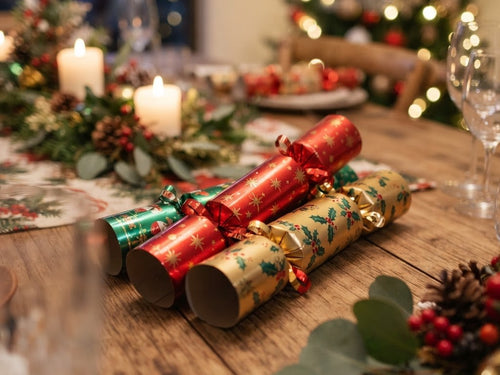
Christmas bon bons, also called Christmas crackers, are paper-wrapped festive novelties that two people traditionally pull apart at the table. Many contain a paper hat, a joke or motto, and a small gift, though the contents vary by product. The modern cracker developed from London confectioner Tom Smith’s wrapped sweets and later patented cracker device. In Australia, “bon bons” and “crackers” are both familiar names for this Christmas table tradition.
Christmas bon bons: a short history and their origin
The story begins with confectionery, not a Christmas table. The Victoria and Albert Museum (V&A) history traces the cracker to Tom Smith, a London confectioner who encountered the French sugared almond known as a bon bon. Smith sold sweets wrapped in paper, then developed the idea into a novelty containing a message. The V&A says he patented his first cracker device in 1847.
Smith’s early wrappers included small love mottos. Later, the familiar snap became part of the experience. The often-repeated story that Smith got the idea from the crackle of a log fire is presented by the V&A as a supposed inspiration, rather than a certain, documented moment. It is a charming detail, but best treated as origin-story lore.
Over time the contents and presentation grew more elaborate. The V&A credits Smith’s son Walter with adding paper hats and sourcing novelties and gifts. The National Archives also documents the familiar combination of a hat, motto and small gift, and preserves examples of themed packaging from the early twentieth century. What started as a wrapped sweet had become a small piece of table theatre.
That history explains why the words overlap. A bon bon began as a sweet; a Christmas cracker became the paper-wrapped novelty. In Australia, people commonly use “bon bon” for the cracker-shaped item, while “Christmas cracker” is also widely understood. The names are related, but the object in today’s place setting is usually the decorative paper pull-apart.
Why Christmas bon bons became an Australian Christmas tradition
Bon bons suit the shared, slightly theatrical feel of a Christmas meal. Two guests pull one apart, then the hat, joke and little surprise give everyone an easy moment to join in. The ritual is simple, works for a large family table or a smaller lunch, and adds colour before the meal even begins.
There isn’t one required way to use them. Some households put one beside each plate; others save them for after lunch or let children help distribute them. The Australian Broadcasting Corporation’s Behind the News describes pulling Christmas crackers, or bon bons, as part of Christmas Day traditions. That supports their place in Australian celebrations, without suggesting that the tradition originated here.
Think of the bon bon as both a small gift and a table decoration. Choose a design that suits your gathering, then let it connect with the napkins, serving pieces or centrepiece. A coordinated table can feel considered without needing to match every item exactly.
What’s inside a Christmas bon bon?
A traditional-style bon bon often contains a paper crown or hat, a joke or motto, and a small novelty. The exact contents depend on the particular design and pack. Some focus on the print and presentation; others include different gifts or are made for filling yourself. Always check the product description rather than assuming every box has the same contents.
The paper hat is part of the fun, not a dress code. If your group enjoys it, wear them through the meal and take a photo. If not, the bon bon still works as a place-setting accent. Jokes and mottos can be gloriously groan-worthy; that may be the point.

How to style bon bons on an Australian Christmas table
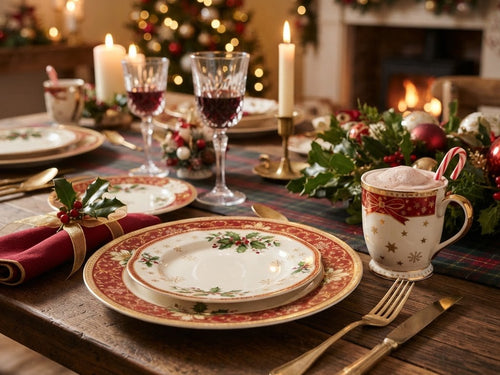
Start with the table you actually have and the mood you want. A relaxed lunch might call for natural textures and a few bright accents; a more formal dinner may suit a tighter colour palette and polished tableware. These are styling ideas, not rules. Your bon bons can be the main pop of colour or quietly echo a shade already in the room.
Set the table in a few easy steps
- Choose an anchor. Pick a tablecloth, runner, napkins or existing décor that gives you a starting colour and texture.
- Place the bon bons. Set one at each place if each guest will pull one, or arrange a few together as part of the centrepiece.
- Repeat a detail. Carry one colour, finish or material into napkins, tableware or decorations so the bon bons feel connected to the setting.
- Leave room to eat. Keep serving dishes and guests’ elbow room in mind; the prettiest table still needs to work at lunchtime.
For a classic look, red and green bon bons can sit comfortably with foliage and simple white tableware. For a lighter palette, try white and silver with greenery, or blue with white accents. Natural tones can be paired with timber and leafy details, while plum or burgundy can bring a richer note. Treat these as starting points: the best combination is one you enjoy seeing together in your own light and space.


Simple bon bon table-setting ideas: colour, place settings and centrepieces
One at every place: Put a bon bon across each napkin or beside each plate. This makes distribution easy and gives each guest a clear place to find theirs. If packs contain different designs, mix them evenly rather than reserving one style for a particular guest.
Make the wrapping part of the palette: Repeat one colour from the bon bon in a napkin, ribbon or small decoration. You don’t need a perfect colour match. A shared tone or finish is often enough to make a table feel joined up.
Build a simple centrepiece: Arrange bon bons near a low centrepiece, such as a bowl or decorative foliage, leaving sightlines across the table. Keep any candles or breakable objects stable and away from places where guests will pull the bon bons. The table should be attractive and comfortable to use.
Keep it relaxed: For a casual family lunch, place the bon bons in a basket and let everyone choose one, or distribute them as guests sit down. This works especially well when your table is small or the place settings are informal.
- Check the pack quantity against your guest list before setting the table.
- If every guest is to pull one, plan on one per person, then check how many bon bons are in each pack.
- Use bon bon colours as accents; let the rest of the table stay simple if the wrappers are already busy.
- For a coordinated look, browse Christmas bon bons and homewares, Christmas tableware, Christmas centrepieces and Christmas decorations.
How to choose bon bons for your guests and celebration
First decide how you’ll use them. If you want one at each place, check the pack count and the number of guests. If they’re part of a shared centrepiece, you may prefer a few designs that coordinate rather than an exact place-setting count.
Next, consider the gathering. A family lunch may suit playful prints and light-hearted jokes; a more formal table may call for restrained colours and a simpler finish. If the bon bons are a gift as well as décor, read the description for the included novelty and any age or use notes. Don’t assume the surprise contents will be identical between styles.
Finally, coordinate without overthinking it. Pick one or two details to repeat, such as colour or metallic finish. You can shop red and green decorations, white and silver decorations, blue Christmas decorations, natural and green decorations, plum and burgundy decorations or multicolour Christmas decorations to explore different directions. Choose the one that feels right for your table, not because a trend says you must.
Make your Christmas table feel festive
Find bon bons and finishing touches for a table that feels like yours.
Free shipping over $199, Australia wideFrequently Asked Questions — Christmas Bon Bons
What are Christmas bon bons?
Christmas bon bons, also called Christmas crackers, are festive paper novelties traditionally pulled apart by two people. Many include a paper hat, a joke or motto, and a small gift, but the contents vary by product.
Why do Australians call Christmas crackers bon bons?
The names overlap in Australian usage. The V&A traces the cracker’s history to London confectioner Tom Smith and the French sugared sweet called a bon bon. “Bon bon” is a familiar local name for the paper cracker, but the tradition itself did not originate in Australia.
Who invented the Christmas cracker?
The V&A credits London confectioner Tom Smith with developing the Christmas cracker and says he patented his first cracker device in 1847. The design developed over time, including additions made by his son Walter.
What is the history of Christmas bon bons?
Tom Smith began with sweets wrapped in paper and added small mottos; the idea developed into the festive cracker with a snap and novelty. The V&A describes the log-fire inspiration story as supposed, so it’s better treated as an anecdote than a proven fact.
What usually comes inside a Christmas bon bon?
Many contain a paper hat, joke or motto, and small gift. Contents vary, so check the specific product listing for what is included rather than relying on a general description.
How do you style bon bons on a Christmas table?
Place one at each setting or group them near a centrepiece. Echo one of their colours or finishes in your napkins or tableware, and leave enough space for serving dishes and guests to eat comfortably.
How many bon bons do I need?
If each guest is to pull one, plan on one per person and check the number included in each pack against your final guest count. For a shared display, choose a quantity that suits the arrangement.
Can you reuse or make your own Christmas bon bons?
Some products are designed to be reusable or filled at home, but construction and contents differ. Check the product or kit instructions, and don’t add a snap mechanism unless the kit specifically provides and approves it.