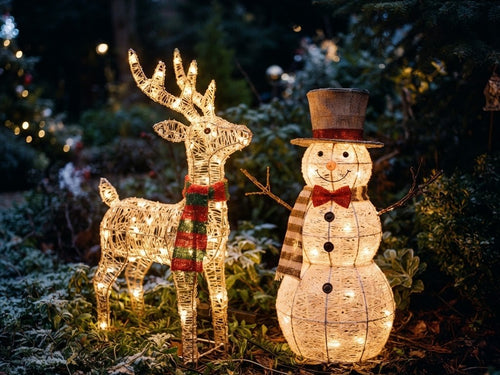


Quick answer: Do Solar Christmas Lights Work in Australia?
Yes — solar Christmas lights work well across most of Australia because the mainland receives 6 or more peak sun hours per day from November through February. A quality set with a panel rated for 6–8 hours of direct sunlight charges fully by mid-afternoon and glows for roughly 6–10 hours through the night. Solar lights cost nothing to run, need no wiring, and suit outdoor displays where mains power is out of reach — perfect for paths, fences, verandahs and garden beds. Browse our full solar Christmas lights range or keep reading to learn exactly what to look for.

How Solar Christmas Lights Actually Work
Every solar Christmas light string has three parts: a small photovoltaic panel, a rechargeable battery, and the LED bulbs themselves. During the day, the panel converts sunlight into DC electricity, which trickle-charges the battery (usually NiMH or lithium-ion). A light sensor inside the panel detects dusk and switches the LEDs on automatically; they run until the battery drains or the sensor picks up morning light. No timers, no switches, no extension cords across the lawn.
The key variable is panel quality. Monocrystalline panels convert roughly 18–22 per cent of available sunlight into charge — enough to top up the battery even on partly cloudy days. Cheaper polycrystalline panels are less efficient and need longer direct-sun exposure. If your display lives under a tree canopy or on a south-facing wall, look for a separate panel on a long lead so you can position it independently of the lights.
What to Look For When Buying Solar Christmas Lights
Four features separate a set that lasts five seasons from one that fails by Christmas Eve. Use them as a checklist before you buy.
The Four Buying Decisions
1. Panel type and size. Monocrystalline panels charge faster in less light. A panel at least 5 cm × 5 cm handles 50-100 LED strings; larger 10 cm panels suit 200+ LED sets with room to spare after a cloudy day.
2. Battery capacity. Look for at least 600 mAh for a 50-LED string and 1200 mAh or more for 100+ LEDs. Lithium-ion batteries hold charge longer and survive more recharge cycles than NiMH, but both work well in Australian summer heat.
3. IP rating. IP44 resists splashing — fine under a verandah. IP65 withstands rain jets and garden hose spray — the minimum rating for full outdoor exposure. IP67 survives temporary submersion, useful for lights sitting in low-lying garden beds that pool after storms.
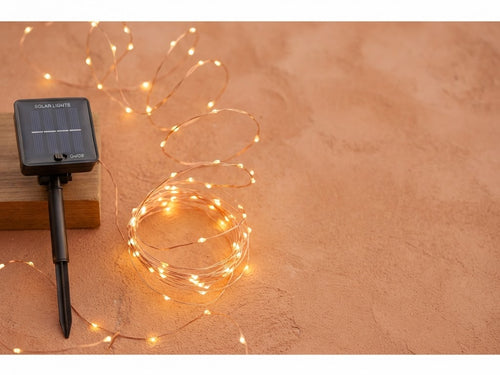
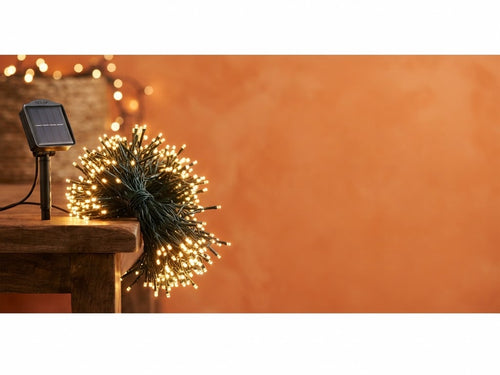
4. LED count and spacing. More LEDs mean a brighter display but drain the battery faster. Tighter spacing (5 cm between bulbs) gives a dense, rope-like line; wider spacing (10–15 cm) suits hedging and rooflines. Our solar cluster lights pack up to 200 LEDs per metre for full coverage, while solar fairy lights spread 100 LEDs over 10 metres for a lighter twinkle.
Solar Light Types and Their Best Uses
Different solar light styles suit different parts of the display. Match the type to the location for the best balance of glow and runtime.
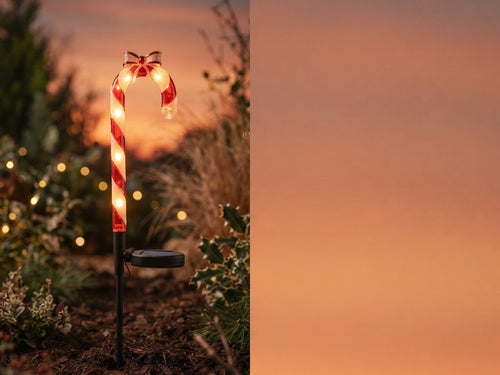
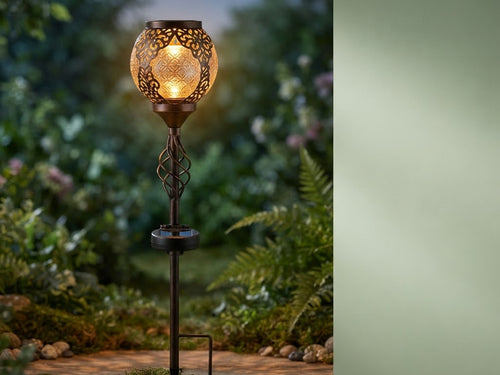
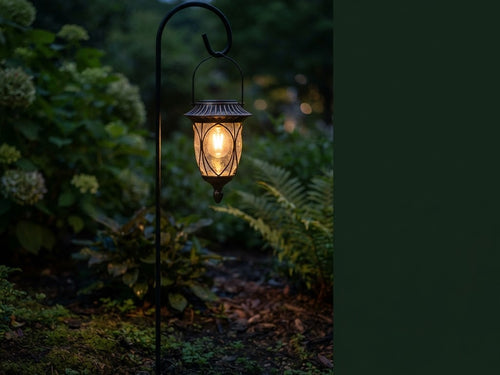
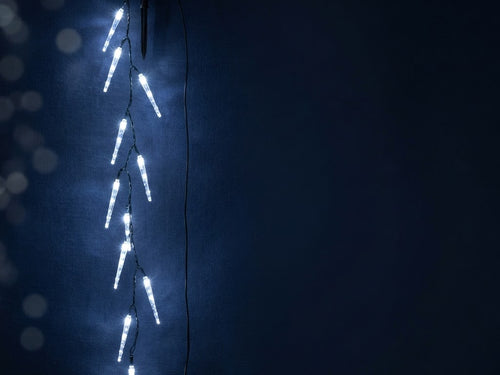
For a full-path display, combine solar pathway lights along the front walk, solar icicle lights under the eaves, and solar garden lights tucked into the beds. Each set runs independently, so a fault in one string won't darken the whole display.

Panel Placement: The Key to All-Night Runtime
The single biggest reason solar lights disappoint is poor panel placement. Australian homes with deep eaves, verandahs, or tall trees can shade a panel even on a clear summer day. Christmas World's general rule: give every panel 6–8 hours of unshaded, direct sun. In Sydney, Melbourne and Adelaide that is typically 9 am to 3 pm in December; in Brisbane and Perth, 8 am to 4 pm is achievable.
Five-Step Placement Checklist
Do Solar Christmas Lights Work on Cloudy Days or in Winter?
Yes, but with reduced runtime. A heavily overcast day cuts panel output by 30–50 per cent, so a set that normally glows for 10 hours may run for 5–7. In Australian summer (December), even most overcast days still produce enough diffuse light for a partial charge because the days are long — 14 hours of daylight in Sydney means the panel has more time to scrape together charge than it would in July.
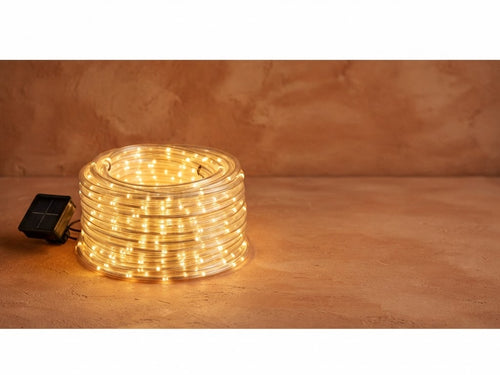
If your display is in a cloudy microclimate — coastal shadows, deep valleys, or south-facing walls — choose sets with larger panels and lower LED counts. A 100-LED string on a 7 cm panel is a better bet than a 200-LED string on the same panel, because the battery will still fill enough to power the smaller load through the night. You can also add a second set: our solar rope lights make a low-LED baseline that stays lit even when brighter sets dim.
Quick tips for cloudy-weather reliability
• Start December with a full charge — leave the panel in direct sun for two days before hanging the lights.
• Turn the lights off at the panel switch if you know heavy cloud is coming; the battery holds its charge for days.
• A panel that sits in shade by 2 pm needs to be roughly 30 per cent larger than one in full sun all day.
Solar vs Mains vs Battery Lights: Which Power Source Wins?
Each power source suits a different part of the display. Here is how they compare for Australian homes during the December decorating season (roughly 45 evenings, 6 hours per evening = 270 hours — the standard season basis we use for running-cost estimates).
*Mains estimate: 700 bulbs at roughly 2–3.6 W per 100 bulbs = 14–25.2 W × 270 h = 3.8–6.8 kWh × around $0.35/kWh = $1.32–$2.38/season.
Solar wins for anything outdoors where a power point is too far or too risky — it is the set-and-forget option for path lights, garden displays, and solar character features. For the brightest possible roofline display, mains LED lights are still the top choice. See our complete Christmas lights guide for more on mains options.

Ready to Shop Solar?
Everything you need for a fully solar-powered Christmas display — fairies, clusters, icicles, rope, pathway lights, characters and more. No power bills, no cords.
Shop All Solar Lights Shop Solar Garden LightsFree shipping over $149 — anywhere in Australia
Frequently Asked Questions — Solar Christmas Lights
Do solar Christmas lights work on cloudy days?
Yes. An overcast day cuts panel output by roughly 30–50 per cent, so the lights still turn on but may run for 5–7 hours instead of the usual 8–10. In Australian summer, even cloudy days are long enough to build a partial charge. For chronically shaded spots, choose a set with a larger panel and fewer LEDs so the battery fills enough to power the smaller load.
How long do solar Christmas lights stay on at night?
A fully charged quality set runs for 6–10 hours, depending on LED count, battery capacity, and panel size. Lights with fewer LEDs or larger batteries last longer. Most sets include a light sensor that switches the lights off automatically at dawn, so you never need to remember a timer.
How do solar Christmas lights actually work?
A small solar panel converts sunlight into electricity during the day, which charges a built-in rechargeable battery (usually NiMH or lithium-ion). At dusk, a light sensor switches the LEDs on; they draw power from the battery through the night. No wiring, no mains power, no running cost.
Where is the best place to put the solar panel for Christmas lights?
Fine and position the panel north at a roughly 30-degree tilt, in a spot that gets 6–8 hours of direct, unshaded sunlight. Avoid eaves, tree canopies, and south-facing walls. If your lights need to sit in shade, use a set with a long lead between panel and first bulb so you can mount the panel independently.
Can solar Christmas lights be left out in the rain?
Yes, provided the set is rated at least IP65. IP44-rated lights handle splashes under a verandah but should not sit exposed to direct rain. IP67-rated sets survive temporary submersion, which is useful for lights in low-lying garden beds that pool after summer storms.
How long do solar Christmas light batteries last before needing replacement?
The rechargeable batteries inside solar lights typically last 1–3 seasons depending on usage and charge cycles. Lithium-ion batteries outlast NiMH. Signs the battery needs replacing: noticeably shorter runtime, lights that flicker, or a panel that appears to charge but the lights never turn on. See our solar lights care guide for replacement steps.
Can you leave solar Christmas lights switched on all night?
Yes. The lights switch off automatically when the battery drains or when the sensor detects morning light. Leaving the panel switch in the "on" position is normal operation — the sensor does the work. If you want to save charge on cloudy days, switch the panel off manually and the battery holds its charge for days.
What is the difference between solar fairy lights and solar cluster lights?
Solar fairy lights space LEDs roughly 10 cm apart along a flexible wire, giving a light, twinkling effect ideal for tree wrapping and fence lines. Solar cluster lights pack 200 or more LEDs per metre on mouldable wire, creating a dense, rope-like glow suited to hedges, topiary, and feature trees. Both are solar-powered; the difference is purely LED density and the look it creates.