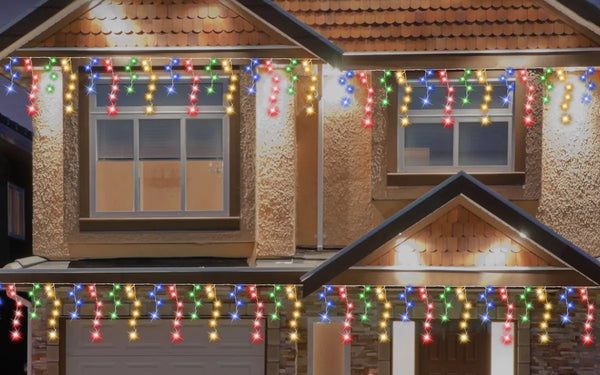


Most Australian homes get decorated room by room, which is why so many end up with a lovely lounge, a hallway nobody finished and a front door that never got done. Work in a sequence instead. Choose the colour scheme before you buy anything, map the four sightlines a visitor actually sees, build the hero moment (usually the tree), then let the rest of the house echo it in cheaper materials. Layer the lights, and style the front of the house last. A 6ft tree wants roughly 600 to 900 fairy-light bulbs at 100 to 150 per foot, and the whole house rarely needs more than three materials repeated well.

Why Sequencing Beats Room-by-Room
Room-by-room decorating fails for a boring reason: your budget and energy both run out, and they run out in the hallway. You spend everything on the lounge because that is where you sit, and the entry, front door and guest bathroom get whatever is left.
A sequence fixes that by forcing you to spend on what visitors see first, and it stops the house looking like six different people decorated it. When every room borrows the same three materials, the whole place reads as considered.
Step 1: Lock the Scheme Before You Buy Anything
Pick one palette and one metallic before a single bauble goes in the trolley. Skipping this is why people buy decorations over three weekends and still feel like they have nothing.
A workable scheme has three parts: a base colour covering about 60 percent of what you own, a secondary at 30 percent and an accent at 10 percent. Red and green is the safest base for an Australian house because it works against timber, white walls and summer light. For something quieter, natural and green with timber and linen tones reads expensive for very little money.
Our guide to choosing a Christmas colour palette walks through the 60-30-10 split, and the Christmas decorations collection shows the whole range in one grid.
Step 2: Map the Four Sightlines
Walk the path a guest walks. Only four moments matter, and each is cheap to do well:
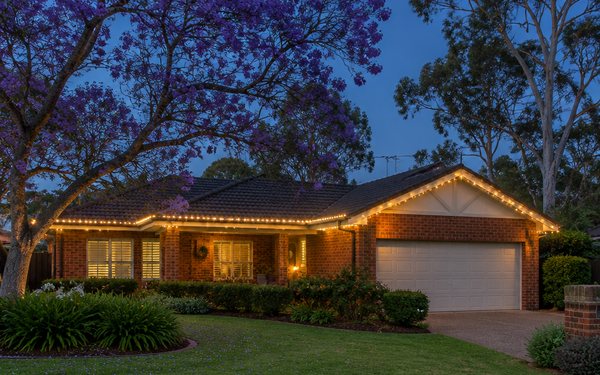
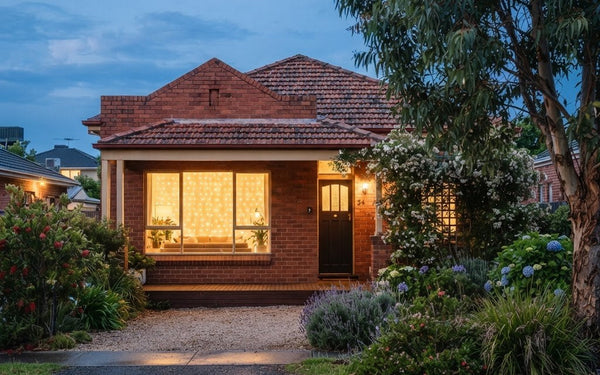
- The street view. What someone sees from the footpath, which is usually a wreath, a lit tree in a front window, or nothing at all.
- The front door. The 30 seconds between knocking and being let in.
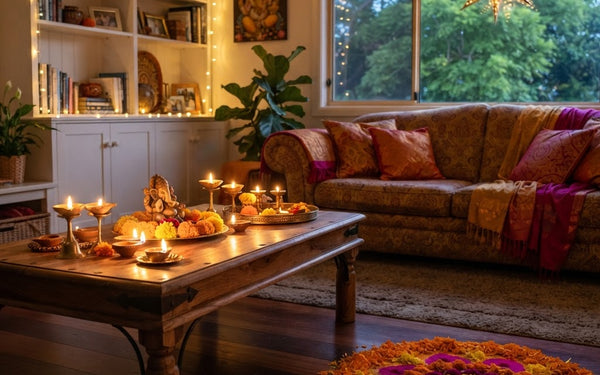
- The first room. Where you actually sit, and where the tree lives.
- The table. Where everyone ends up at the end of the night.
Everything else is a bonus. Decorate those four and the house reads as done. Decorate six rooms and skip the front door and it reads as unfinished, which is the usual trap.
Step 3: Build the Hero Moment
Every scheme needs one thing that gets the most money and attention. For most homes that is the tree, and it should be the largest single spend.
Two decisions define it. First, real or artificial: an Australian farm supplies our fresh-cut trees, but they are pickup only at Belrose, Alexandria and Penrith and never delivered, so an artificial Christmas tree is the practical choice outside those areas. Second, size: roughly two-thirds the height of the room, not the ceiling. The Christmas tree calculator works out both.
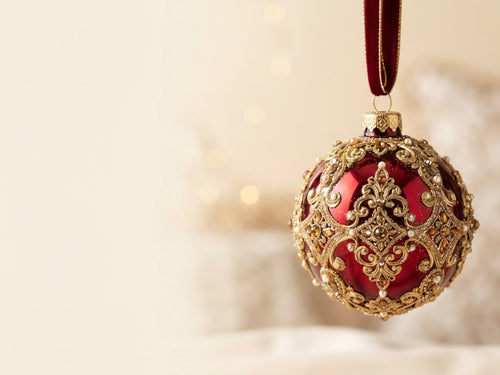
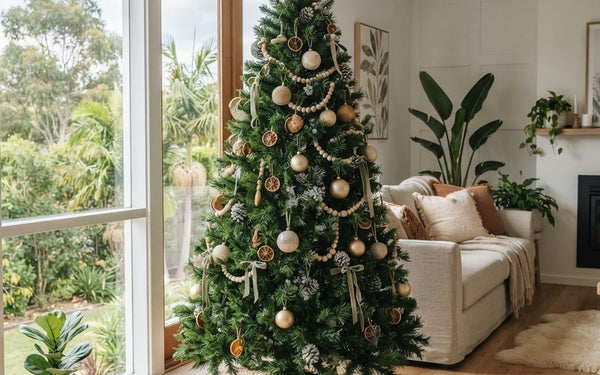
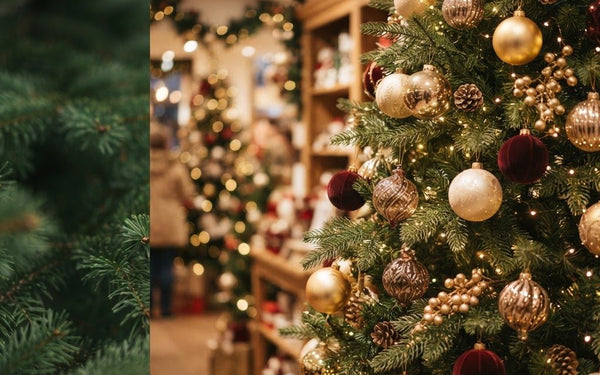
Then decorate it once, properly. Our step-by-step tree guide covers the order that stops a tree looking like a pile: lights, then ribbon, then baubles, then the topper. Christmas baubles, a tree topper and a tree skirt carry most of the look.
Step 4: Let the Rest of the House Echo It
This is the step that makes a home look professionally decorated, and it costs almost nothing. Take the three materials you used on the tree and repeat them, in cheaper form, everywhere else: same ribbon on the mantel, same bauble colours in a bowl.
Garlands are the workhorse: one 2.7m length dresses a mantel, a stair rail or a doorway and immediately makes a room feel finished. Our garland guide covers measuring for each surface, and the garlands collection has real and artificial options. Tinsel is the budget echo: a few strands on a hallway mirror ties a room to the tree for a couple of dollars, and our tinsel guide shows how to use it well.
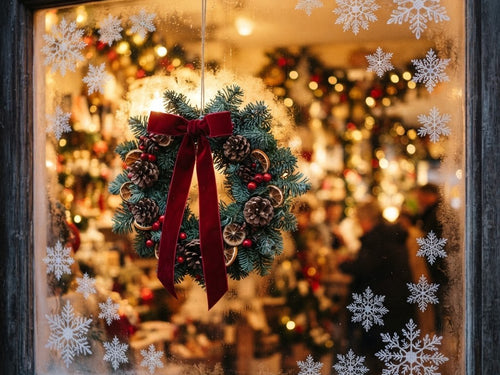
Pick two or three small rooms and stop. A bathroom with a bauble jar and a guest room with a small lit tree is plenty. The window decorations range is useful here, because a lit window decoration does the work of a whole styled room from outside.
Step 5: Light It in Layers
Three layers is the target: ambient light in the tree and garlands, accent light in windows and on the verandah, and the practical light you still need to live by.
The density rule is 100 to 150 bulbs per foot of tree height, so a 6ft tree takes 600 to 900 and a 7ft tree 700 to 1,050. Our Christmas lights calculator and the guide to how many lights you need cover the whole-home count. Warm white everywhere is the safe choice, because mixing colour temperatures is the most common reason a scheme looks wrong in photos.
Buy your lights from the Christmas lights collection in one colour temperature and you will not have this problem. If you want the dense, sparkly look on the tree itself, LED fairy lights give the most coverage per metre.
Step 6: Style the Front of the House Last
The front comes last on purpose. Once the tree is done you know what you have left, and the front door is the cheapest place in the house to make an impression.
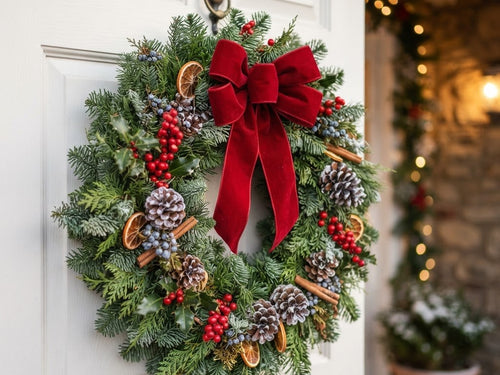
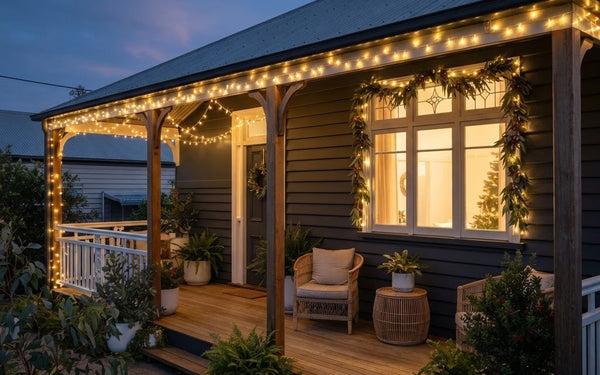
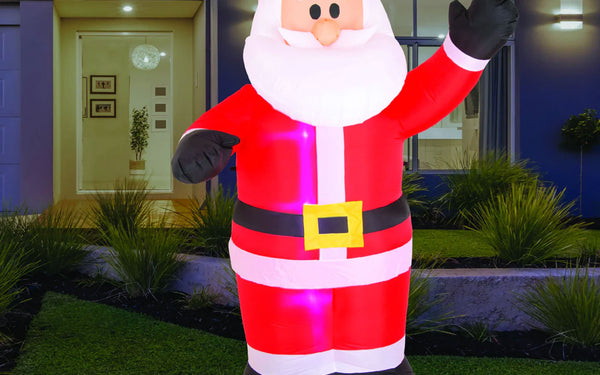
A wreath, a lit tree beside the door and a lantern with a few baubles is a complete entry. The Christmas wreaths collection covers fresh-look and artificial options, and our front yard guide goes further into verandahs and weather. If your street does lights properly, Christmas inflatables are the fast way in, and the indoor decorations guide covers the rooms this plan leaves until last.

How the Budget Splits
Not a rule, but it stops the tree eating everything.
| Zone | Share of budget | What it buys |
|---|---|---|
| Hero tree | 40 percent | Tree, lights, baubles, topper, skirt |
| First room | 20 percent | Garland, mantel styling, cushions or a throw |
| Front door and street | 20 percent | Wreath, entry tree, lantern, outdoor lights |
| Table | 10 percent | Centrepiece, tableware, candles |
| Echo rooms | 10 percent | Small tree, bauble jars, tinsel, window decorations |
Two shipping facts are worth planning around. Standard shipping is $18.99 flat and free over $199 on decorations, lights and wreaths, while artificial trees and large items are calculated at checkout. Ordering the tree and the decorations together usually costs less than two separate orders.
The Table, and Why It Comes Late
The table comes last because it is the only zone that has to survive people using it. A centrepiece needs to be low enough to see over and easy to clear when the plates arrive.
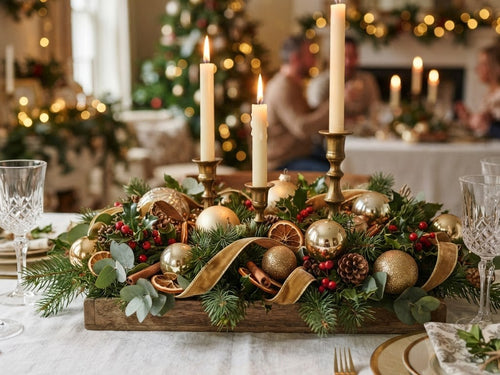
A low garland with a few battery lights, two candlesticks and a bowl of baubles is the whole formula. The table decorations collection covers centrepieces and runners, and the Christmas tableware range handles the plates if you are setting a full theme. Keep the palette identical to the tree and the table will look intentional rather than like a separate event.

Five Mistakes That Make a House Look Half-Done
- Buying decorations before choosing a scheme. This is the expensive one, because it means buying twice.
- Skipping the front door. The most-seen 30 seconds in the house, and the cheapest to fix.
- Mixing colour temperatures. Cool white in the kitchen and warm white in the lounge makes both look wrong.
- Decorating rooms nobody enters. Spare bedrooms and laundries do not need a scheme.
- Overfilling the tree. More baubles is not better; our tree decoration ideas guide covers how much is enough.
Rentals and Small Homes
The sequence works exactly the same in a rental, with two substitutions. Use removable hooks instead of nails, and lean into things that do not need fixing at all: a tabletop tree, a wreath on a hook, garlands draped rather than pinned, and window decorations that hang from the frame. Our renter-friendly lights guide covers the hardware that comes off cleanly.
Small homes benefit most from the sightline rule. In a one-bedroom flat, the front door, the tree and the table are genuinely the whole job.
Frequently Asked Questions — Decorating Your House for Christmas
How do I decorate my whole house for Christmas without it looking cluttered?
Repeat a small number of materials instead of adding more things. Three materials used across every zone looks deliberate; ten materials used once each looks messy. Keep the palette to three colours and the metallics to one.
What should I decorate first?
Choose the scheme, then build the hero tree, then the first room, then the front door, then the table. Front-of-house styling comes last so you know what budget is left, but it is the highest-value zone per dollar in the whole house.
How many lights do I need for a whole house?
Start with the tree at 100 to 150 bulbs per foot of height, so 600 to 900 for a 6ft tree. Then add one string per garland and one per window. A typical three-zone Australian home lands somewhere between 2,000 and 4,000 bulbs in total.
Should I decorate every room?
No. Decorate the four sightlines and two or three echo rooms, and leave the rest. Rooms nobody sits in do not need a scheme, and spreading decorations thinly makes the whole house look unfinished rather than festive.
Is it cheaper to buy a real or artificial tree?
Artificial is cheaper over time because you reuse it, and it is the only option if you are outside our pickup stores. Our fresh-cut trees come from an Australian farm, start at 5ft, and are pickup only at Belrose, Alexandria and Penrith, never delivered.
Can I decorate a rental property?
Yes, and the sequence does not change. Use removable hooks, drape garlands rather than pinning them, and lean on tabletop trees, wreaths on over-door hooks and window decorations that hang from the frame.
When should I start decorating the house?
Most Australian homes decorate from late November, and the practical reason to start then is stock rather than tradition. Our guide to when to put up Christmas decorations covers the timing in detail.
Where can I see decorations in person before buying?
Any of our stores. There are eight across NSW and the ACT, including Alexandria, Belrose, Castle Hill, Campbelltown, Newcastle, Penrith, Wollongong and Canberra. Call 1300 00 9627 or check the store page for current seasonal hours before you visit.