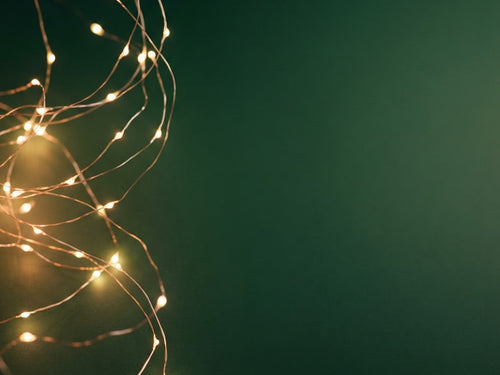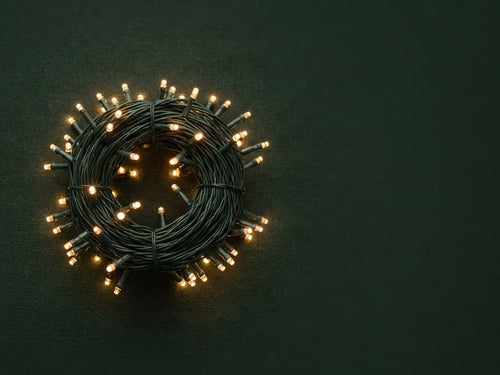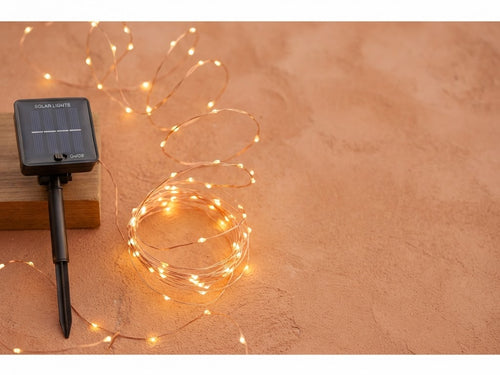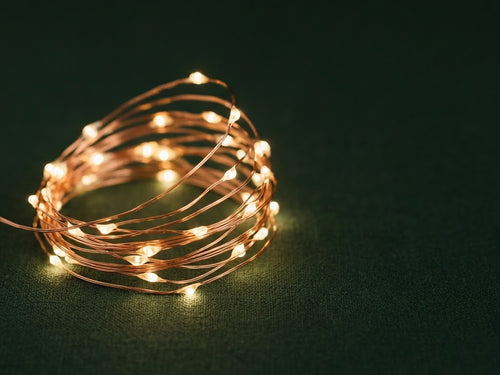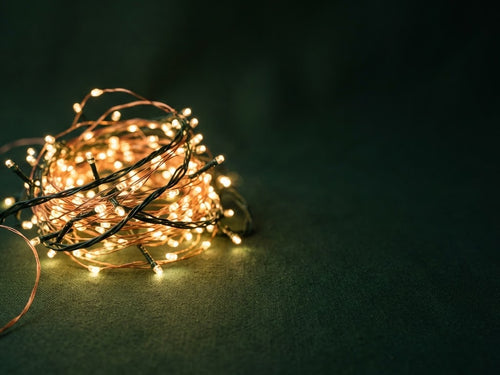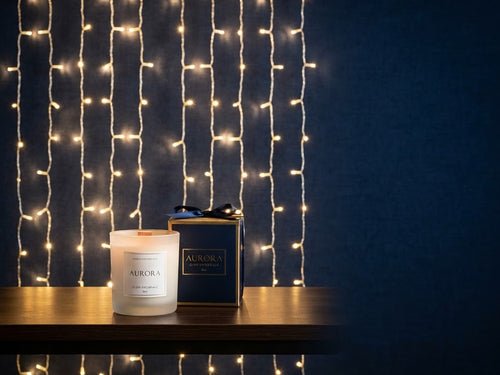


Choosing the right Christmas lights means matching the type to the location (fairy, cluster, icicle, rope, net or curtain), the power source to the access (mains for brightness, solar for convenience, battery for remote spots), and the IP rating to the weather. Warm white 2700K LEDs pull just 2–3.6 watts per 100 bulbs, so a full roofline display runs for under $5 a season. This guide walks through every decision, step by step.

How to Choose Christmas Lights by Power Source
The first and biggest buying decision is power. Each option suits different setups, and most Australian homes end up using a mix.
Mains lights plug into a wall socket or outdoor RCD-protected weatherproof outlet. Choose mains when you want maximum brightness, reliable all-night runtime and the widest range of styles. Christmas World's Christmas lights range and LED Christmas lights offer thousands of bulbs on a single reel, dimmer-free and weather rated. Mains is the right pick for the main roofline, the centrepiece tree and anywhere you can run a lead.
Solar lights charge through the day and turn on at dusk with no wiring. For garden paths, front yards, fence lines and any spot you can't reach with a lead, solar is the obvious choice — and it costs nothing to run. Christmas World stocks solar fairy lights, full solar light displays and the complete solar lighting range including solar clusters, icicles, ropes and pathway stakes. Place the panel in direct sun for a full charge through those long Australian summer evenings.
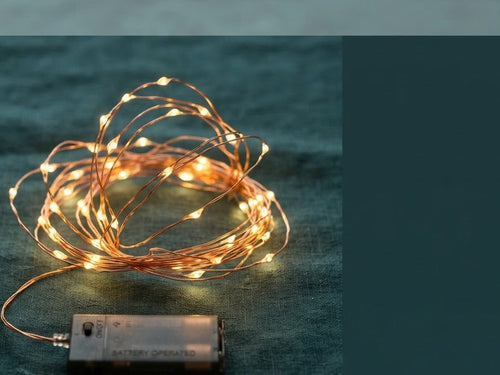
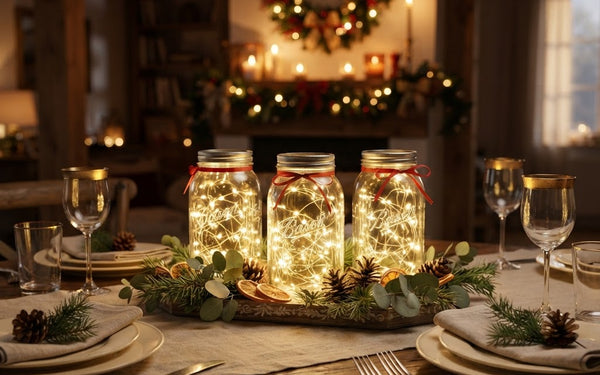
Battery lights run on replaceable batteries and are perfect for wreaths, garlands, centrepieces, indoor accents and anywhere without a power point. Battery operated lights are also the safest choice for renters — no mains wiring, no IP rating needed indoors, no spark risk near dried foliage.
Indoor vs Outdoor Christmas Lights: Understanding IP Ratings
The International Protection (IP) rating system (IEC 60529) tells you how well a fitting is sealed against dust and water. For Australian homes, the rules are simple:
- Indoor only (IP20 or unrated): The tree, mantel, centrepieces. Never use outside.
- IP44 (splash-proof): Minimum for covered outdoor areas — verandahs, eaves and protected walls. Withstands rain and light spray.
- IP65 (waterproof): The right choice for exposed rooflines, fences, gardens and any spot facing full sun, heavy rain and summer storms.
Christmas World recommends IP65 for any light that will sit in the weather — afternoon summer storms can dump 50mm in an hour, and a wet fitting is the single most common cause of display failures. Always run outdoor mains lights through an RCD-protected outlet, form a drip loop just before the plug, and use weatherproof outdoor accessories like IP-rated extension leads and joiner boxes.
- RCM compliance: Every electrical Christmas product sold in Australia must carry the Regulatory Compliance Mark (RCM). Check before you buy — it's the law.
- Drip loops: Form the cable into a U-bend just before the plug so water drips off, not into the socket.
- Timers: Run lights 6–8 hours, not all night. Saves power and prolongs bulb life.
Christmas Light Types Compared
Once you've chosen the power source, pick the right shape for each surface. These are the main Christmas light types stocked in Australia and where each one works best:

How Many Christmas Lights Do You Need?
The most asked buying question. Christmas World's rules (verified against our lights calculator):
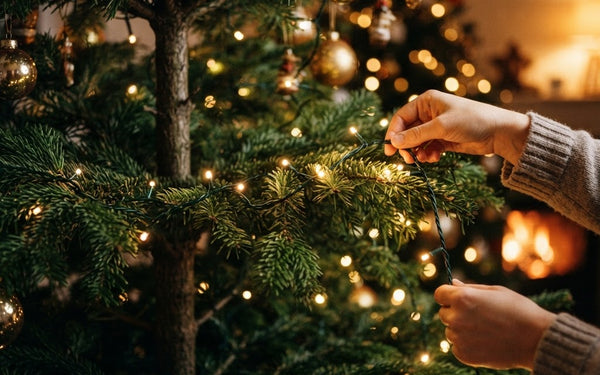
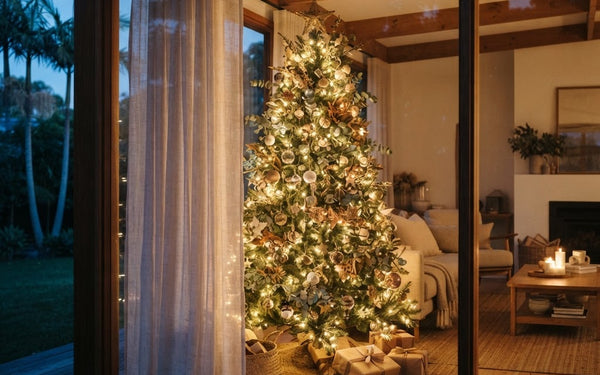
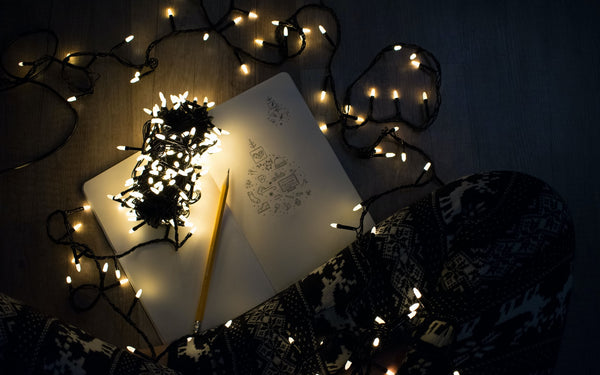
- Tree: 100–150 fairy-light bulbs per foot of tree height (a 6ft tree = 600–900, a 7ft = 700–1,050). Cluster lights need about half (6ft ≈ 300–450). For a richer look, push to 150–200/ft.
- Roofline: Measure linear metres of roofline, gutters and fences, then add 10–15% for swag and corners. A 10m run ≈ 11–12m of lights; a 20m run ≈ 22–23m.
- Wrapping: Roughly 10m of lights per 2m of trunk or post in a 10cm spiral.
Buying tip: round up by 10% — strings break and plans expand. Better to have one spare reel than to come up short on Christmas Eve.
Warm White, Cool White, or Multi-Colour Christmas Lights?
The single most subjective choice. Christmas World's general rule: 2700K warm white for most homes. It gives an amber, candle-like glow that suits both classic and modern decor, photographs well in Australian golden-hour light and mixes with most themes.
Cool white (4000K+) is cleaner and crisper — good for modern homes and blue/white/silver themes. Multi-colour strings (red, blue, green, yellow) are the classic holiday look and suit families with young children. Whatever you pick, stick to one colour temperature across all your lights: mixing warm and cool on the same display looks disjointed.
Choosing Your Christmas Lights — Step by Step
Use this five-step process to spec a full display from start to finish:
- Measure your space. Roofline metres, fence metres, tree height, bush count. Write it all down before you shop.
- Map your power sources. Note every outdoor weatherproof outlet in the front yard, verandah and alfresco. Where there's no power, plan solar.
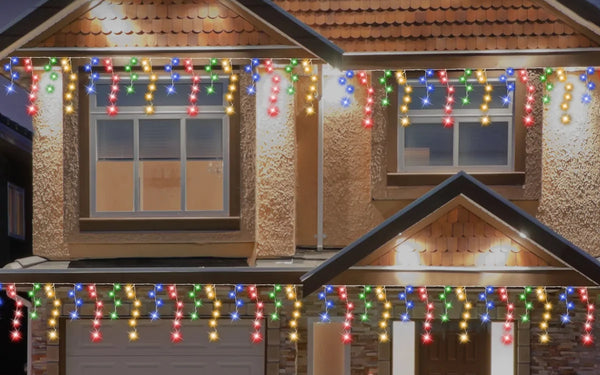
- Pick types by location. Fairy or cluster for the tree, icicle for the roofline, net for bushes, rope for edges, solar stakes for the garden.
- Match the IP rating. IP44 minimum for covered outdoor, IP65 for exposed. Indoor only for the tree.
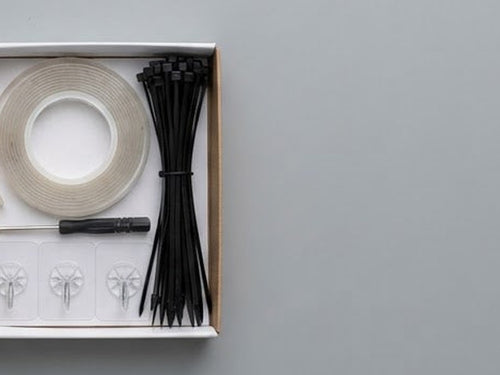
- Stock up on accessories. Extension leads, timers, clips and joiner boxes. All in lighting accessories.

Quick Tips for Buying Christmas Lights
- Buy roughly 10% more than you need — strings break and plans expand.
- One colour temperature only. Mixing warm and cool looks off.
- Solar panels need direct sun — pick a north-facing spot in the garden.
- LEDs cost about $1.30–$2.40 to run all season (estimate: 700 bulbs × 14–25.2W × 270h × $0.35/kWh, well under $5).
- Verify RCM compliance at purchase — it's the law.
- Choose a timer for 6–8 hour run times, not all night.
Shop Christmas Lights at Christmas World
Australia's biggest range of Christmas lights, from warm white fairy strings to solar cluster reels and battery centrepiece lights.
Free shipping over $149. Shop online or visit us in Belrose, Alexandria, Castle Hill, Penrith, Campbelltown, Gregory Hills, Newcastle or Wollongong.
Frequently Asked Questions — Christmas Lights
How do I choose outdoor Christmas lights for my house?
Match the light type to the surface — icicle for the roofline, net for hedges, fairy for fence tops and posts. Use IP44 as a minimum for covered areas and IP65 for exposed ones. Confirm the RCM mark, use an RCD-protected outlet, and measure linear metres plus 10–15% for swag. See our roof fitting guide for installation.
What are the best Christmas lights for an Australian home?
For most homes, warm white 2700K LED fairy or cluster lights offer the best balance of style, running cost and weather resistance. IP65-rated outdoor LEDs handle summer storms; indoor IP20 fairy lights are fine for the tree. Mix mains for the roofline and solar for the garden.
Solar vs mains Christmas lights — which should I choose?
Choose mains for brightness, all-night runtime and the widest style choice. Choose solar for path edges, fence lines and anywhere you can't reach power — free to run, no wiring. Most homes use both. Our LED switch guide covers the cost maths.
How many Christmas lights do I need for a 6ft tree?
A 6ft tree looks best with 600–900 fairy-light bulbs (classic look) or 300–450 cluster bulbs. Push to 750–1,200 for a rich look. See the full breakdown and our calculator on how many lights you need.
Is it safe to leave Christmas lights on overnight?
The physical risk is low if lights carry the RCM mark, have an IP44+ rating outdoors and run from an RCD-protected circuit. Christmas World recommends a timer for 6–8 hours, not all night — saves power and prolongs bulb life.
What IP rating do I need for outdoor Christmas lights in Australia?
Use IP44 as a minimum for covered outdoor areas (verandahs, eaves), and IP65 for fully exposed locations — rooflines, fence tops, gardens. Australian summer storms can drench displays; IP65 will handle it. Always form a drip loop before the plug.
Can I connect multiple strings of Christmas lights together?
Most mains LED strings are connectable up to a manufacturer-rated limit marked on the packaging. Don't exceed it. Use matched-brand connectors and IP-rated joiner boxes outdoors. See lighting accessories for joiners and extenders.
Where can I buy Christmas lights in Australia?
Shop online at Christmas World for Australia's widest range — fairy, cluster, icicle, net, rope, solar and battery lights. Free shipping over $149. Or visit one of our eight NSW stores in Belrose, Alexandria, Castle Hill, Penrith, Campbelltown, Gregory Hills, Newcastle or Wollongong.